Timing

When to Plant Garlic

Garlic goes in during the fall, but fall arrives in a different week in every garden, and the clove is running on two clocks at once: it needs soil cool enough to root in before winter, then the winter cold that decides whether a bulb can form at all. Plant when the soil has cooled to around 50°F, usually one to three weeks after the first killing frost, and mulch before the ground freezes. Miss that window and spring still gives you a crop, just a smaller one.

Reviewed & verified by GrowerBuddy Editorial TeamLast updated: 2026-09-27• Sources

At a glance

Ground trigger
Soil cooled to about 50°F, usually one to three weeks after the first killing frost.
Usual timing
Early to mid-October in most of the United States, four to six weeks before the ground freezes.
Depth and spacing
2 to 3 in. deep and about 6 in. apart, with the pointed end up.
Why fall
Six to eight weeks below 40°F is what lets the plant bulb, and the fall planting is where that cold comes from.
Where you are

Three states of ground, three different answers

Planting garlic is a fall job, but fall arrives in a different week in every garden. These are the three states the ground moves through, in order, and what each one asks of you.

  1. The ground is still warm

    Soil above 50°F

    South Dakota State's home-garden guide plants garlic when the soil is around 50°F. Above that, a clove roots quickly and starts growing leaves.

    What you can check
    The first killing frost has not arrived, or it came through with mild days behind it. Push a hand into the bed: if the soil is warm and the weeds are still growing, the cloves are looking at weeks of growing weather, not the weeks of settling they need.
    What the clove does
    A clove in warm soil does not sit still and wait. It roots, breaks dormancy, and pushes leaves above the surface, and those leaves are then standing in the first hard freeze with no way back.
    What to do
    Wait a couple of weeks. Nothing is gained by planting into warm ground, because the clove already has the whole winter ahead of it for its cold, and every leaf it makes now is a leaf the frost will take.
  2. Cooling, and still workable

    1 to 3 weeks after the first killing frost

    South Dakota State's offset for the planting window. Nebraska's guide describes the same ground from the other end — four to six weeks before the ground freezes — and Cornell's is six to eight weeks before the first expected fall frost.

    What you can check
    The frost has come, the soil has cooled, and a trowel still goes in without a fight. This is the window, and it stays open until the ground freezes.
    What the clove does
    A clove re-roots within about two weeks of going into cool soil, and then holds. Those roots are the point of planting now: they anchor the bulb against the freezing and thawing that heaves soil in winter, and they are what the plant restarts from in March.
    What to do
    Plant now, and do not wait for a better week. What matters is that the cloves are in before the ground closes, not whether the day is pleasant.
  3. Frozen, or already spring

    6 to 8 weeks below 40°F

    Georgia's extension guide gives the clove's cold requirement as six to eight weeks below 40°F. A fall planting buys that cold in the ground; a spring planting has to find it somewhere else.

    What you can check
    The ground is shut, or you are reading this in March with a bag of cloves still on the shelf.
    What the clove does
    A clove that never gets its cold still grows, but the bulb does not form properly: the usual result is weak shoots and a poorly developed bulb, whether it went into the ground in March or stayed in the bag.
    What to do
    If the ground is still open, plant anyway — cloves can go in until it freezes, and a late planting beats a clove in a bag. If the season is gone, plant as early as the soil can be worked in March or April with a softneck, then put a full crop in this October.
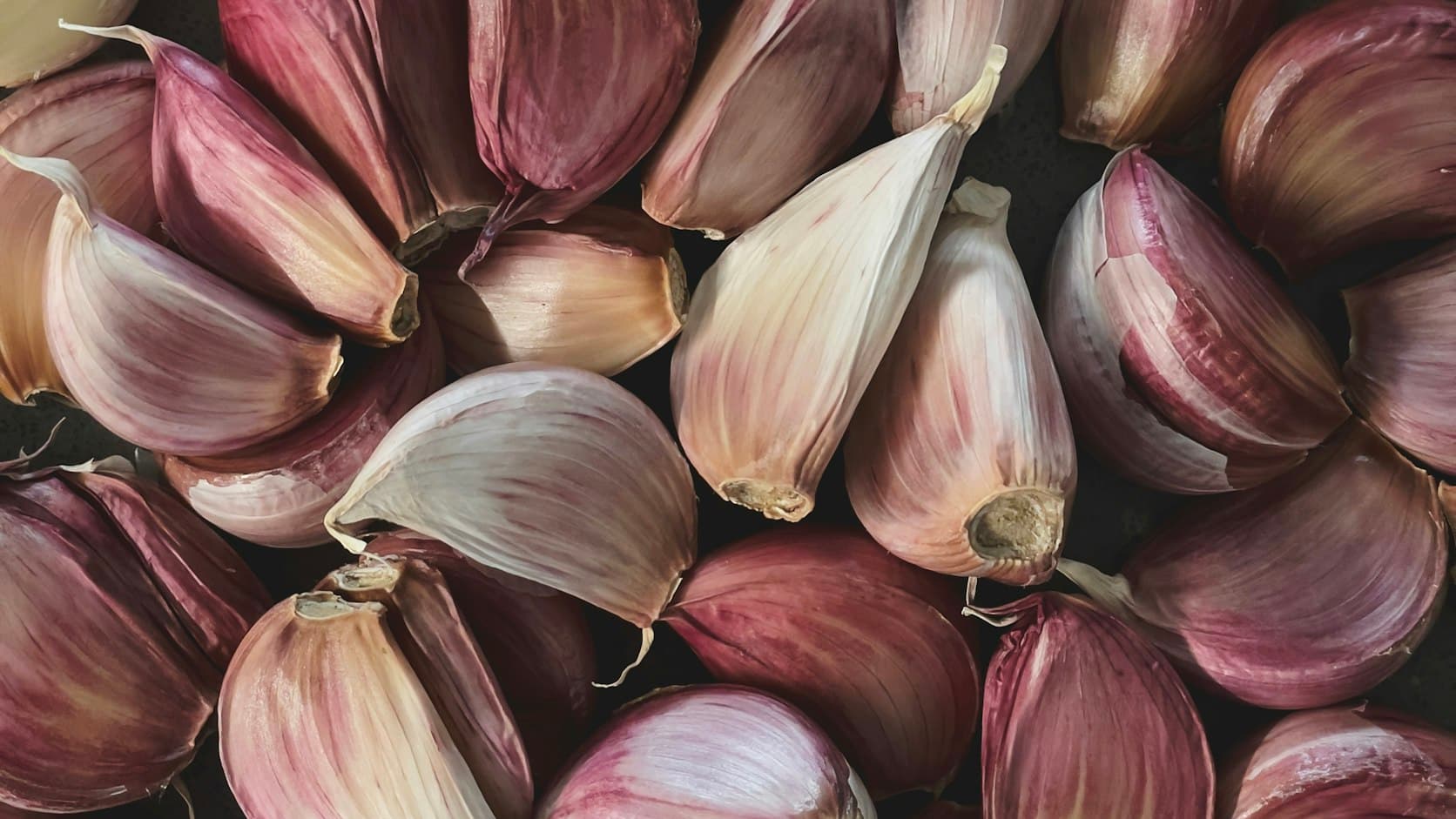
Purple-striped garlic cloves spread on a dark surface, ready to be planted.

Start with these three moves

  • The ground matters more than the month: a clove needs cool, workable soil long enough to root and a winter cold enough to make a bulb.
  • The planting itself is settled: 2 to 3 in. deep, 6 in. apart, pointed end up, into soil that drains.
  • Mulch with a few inches of straw after planting, and pull it back once the hard freezes are past.
  • If autumn is gone, plant early in spring with a softneck instead of planting a hardneck late and hoping.
The year after planting

What the clove is doing, and what you do about it

Months follow a northern-hemisphere year; south of the equator the same sequence starts about six months later. The two lines of a stage are a pair: the job is a response to what the plant is doing.

  1. September – November

    The cloves go in

    The plant

    A cured clove is dormant when it goes into the ground. Cool, moist soil ends that within a couple of weeks: roots come out of the base and the shoot stays where it is, under the surface.

    Your job

    Set each clove 2 to 3 in. deep and about 6 in. apart, pointed end up, in soil that drains and has seen compost. Break the bulb into cloves just before planting, keep the papery skin on, and water the bed in.

  2. December – February

    Cold, and nothing to see

    The plant

    Roots keep working while the soil stays above freezing, and the cold the clove sits in is the treatment that decides whether it can bulb at all next summer. Nothing appears above the surface.

    Your job

    Mulch with 3 to 4 in. of clean straw, then leave the bed alone. The mulch is not there to keep the cloves warm; it is there to stop the freezing and thawing that heaves unrooted bulbs out of the ground.

  3. March – May

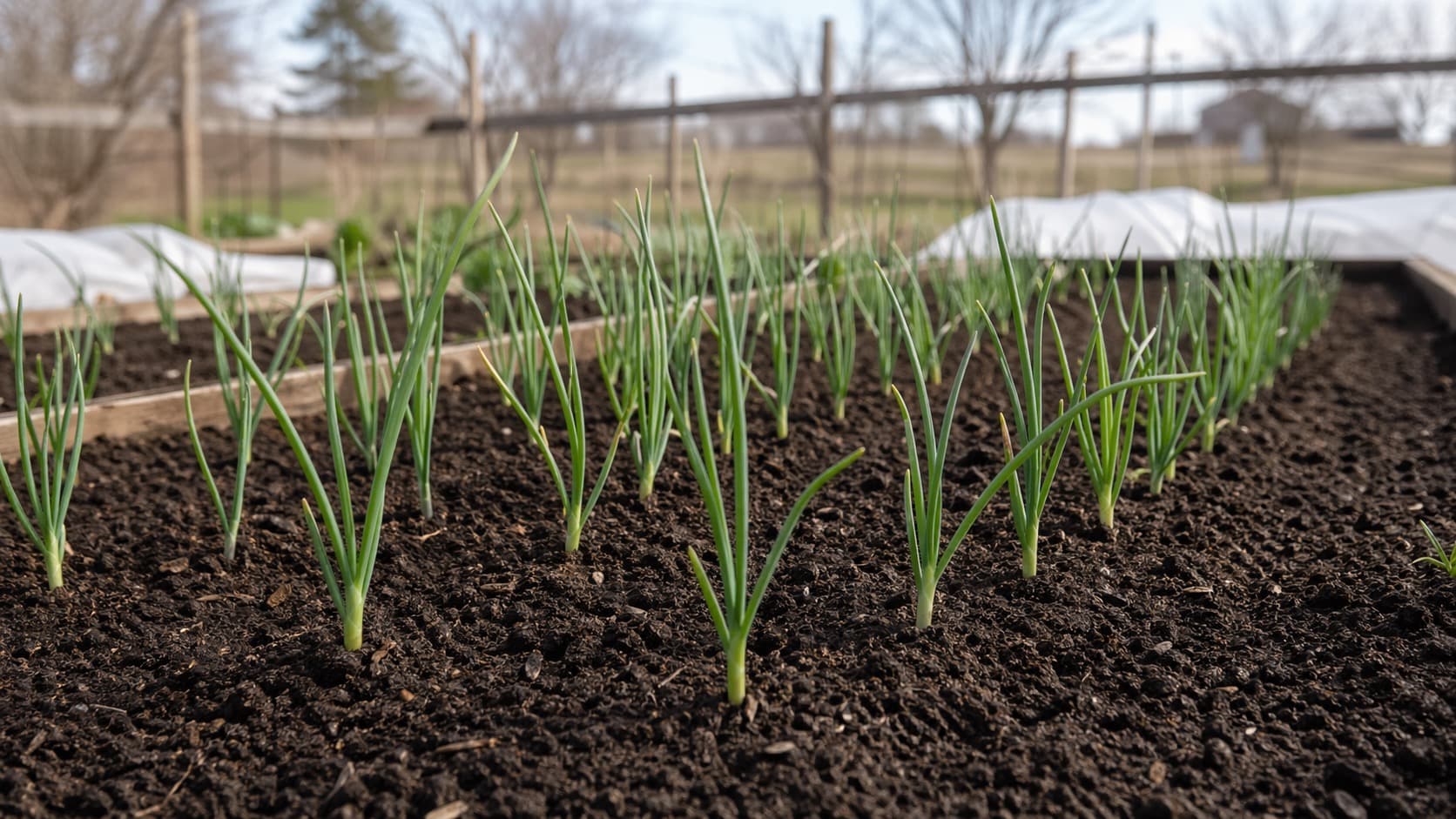
    Leaves, and the size of the crop

    The plant

    The shoot comes up as the days lengthen, and every leaf it unfurls belongs to a bulb that has not started to swell yet. Leaf production stops the moment bulbing begins, so the leaves made in this window are the whole basis of the harvest.

    Your job

    Pull the mulch back once the hard freezes are past so the shoots can come through, keep the bed weeded, and water about an inch a week when rain does not. Side-dress with nitrogen when the shoots are 4 to 6 in. tall.

  4. June

    Scapes, on the hardnecks

    The plant

    Hardneck varieties spend part of June on a flower stalk instead of more leaves. The scape comes up coiled, and the bulb pays for it.

    Your job

    Cut the scapes just after they curl, while they are still tender, and cook with them. On a well-fed bed, leaving them on costs less than 5% of the bulb weight; on a hungry one it can cost up to 30%, which makes the cut cheap either way.

  5. July

    The harvest sign

    The plant

    The bulb stops swelling as the leaves shut down from the bottom up, and the wrapper skins harden and dry at the same time.

    Your job

    Lift the plants when about half the leaves have turned brown and a test bulb has filled its cloves. Lift the plants with a fork, take the whole plant, and stop watering as the tops begin to fall.

  6. August

    Cure, then store

    The plant

    A harvested bulb is still losing water, and it is not ready to keep until that stops. A cured bulb then stays dormant for months, and it sprouts fastest between 42 and 52°F, so a cool dark room keeps it far longer than a warm one.

    Your job

    Cure in a warm, dry, airy place for two to four weeks, then trim the roots and the tops and store in a cool, dark, dry spot under 60°F. Keep the largest bulbs back to plant in October.

Hardneck and softneck

Pick the group that matches your winter

Every variety in a seed catalogue belongs to one of these two groups. In a home garden the differences that matter are the winter the plant can stand, how the cloves are arranged, and whether June brings scapes.

Hardneck

Choose it for A real winter, and a June crop of scapes.

Winter
Extremely cold-hardy, and the group for a garden that freezes hard.
Cloves
One ring of cloves around a central stalk: fewer of them, and larger.
Scape
Yes. A flower stalk in early summer — coiled in the rocamboles — and it should be cut.
Storage
Shorter. Three to four months at room temperature, about seven at 32°F.
Spring planting
Rarely worth it — without the cold, the bulbs come in weak.

Softneck (artichoke and silverskin)

Choose it for A mild winter, a long storage season, or a spring planting.

Winter
Less winter-hardy, and the better choice where winters stay mild.
Cloves
Layered rings of smaller cloves, usually more of them; silverskins can carry 8 to 24.
Scape
No. These are the braidable ones, and they rarely send a stalk.
Storage
Longer. Six to eight months at room temperature.
Spring planting
The better bet — artichoke types yield well even from a spring planting.

What the cold actually does

Garlic is grown from cloves, not from seed, so each crop is a clone of the one before it. What a clove needs before it can make a bulb is a stretch of cold. Dormant cloves planted in the fall break dormancy in cool, moist soil, root through the winter, and are vernalized by the low temperatures themselves, which is the treatment that decides whether the plant bulbs at all.

The bulb is not built during the cold. Vernalized plants hold until early spring, and the lateral buds that become individual cloves develop as the days lengthen. That is why the season in front of the bulb matters so much: leaf production stops when bulbing begins, so the green growth a plant makes in the cool weeks of spring sets the largest bulb it can reach. Oregon State's crop guide describes the other end of the same mechanism — a vernalized clove under water stress and temperatures above 85°F can revert and fail to bulb normally.

  • Fall planting is the cheapest way to buy the cold a clove needs.
  • A spring planting has to supply that cold before planting, or the bulb does not form properly.
  • After the cold, the work is leaves: the more the plant makes before bulbing, the larger the bulb.

What to plant, and what to plant it in

Start with seed garlic from a garden centre, a nursery, or a seedsman. Grocery bulbs are grown for eating, sold with no promise about how they will grow, and two extension guides say plainly that they are not planting stock. Seed garlic is also where named varieties come from, which is the only way to choose between a hardneck and a softneck on purpose.

Clove size is the other decision and it is close to a straight line: the larger the clove, the larger the bulb it makes the following summer. Plant the biggest cloves and eat the small ones, and re-select every year — the largest bulbs give the best planting cloves, which is how a variety improves in a garden instead of drifting down.

The site should drain, and it should see sun. Garlic sits in the ground through the wettest part of the year and rots in soil that stays saturated, so heavy clay is worth raising: Cornell's home-garden guide puts the crop in beds two to three feet wide and ten to twelve inches deep where the ground is heavy, and Wisconsin's warns that bulb expansion is impeded in clay that dries out.

  • Break the bulb into individual cloves just before planting, and keep the papery skin on each one.
  • Set them 2 to 3 in. deep and about 6 in. apart, pointed end up and the root plate down.
  • Water the bed after planting, so the cloves settle into contact with the soil.

Winter mulch, and the spring push

Northern gardeners mulch this crop, and the reason is mechanical, not thermal. Repeated freezing and thawing lifts soil, and a clove with only a few roots can be pushed out of the bed; a few inches of straw interrupts the cycle. Cornell's guide adds one number worth knowing here: young garlic shoots will not survive temperatures below 20°F on their own, so the mulch stays until the hard freezes are past; the first warm week of March is not the signal.

Once the shoots are up, the crop wants what any hungry leafy plant wants: sun, water, and enough nitrogen to keep growing. Nebraska's home-garden guide puts the need at about an inch of water a week, and the Wisconsin and Cornell guides both side-dress nitrogen in early spring, Cornell's again just before the bulbs begin to swell. Then stop. Nitrogen while the bulbs are maturing is how a crop ends up storing badly.

  • Mulch with a few inches of straw and pull it back after the hard freezes have passed.
  • Water about 1 in. a week when rain does not supply it.
  • Feed in early spring and once more before the bulbs begin to swell, then leave it alone.

Harvest, and the sign that says it is time

Garlic does not signal ripeness the way an onion does by breaking down at the neck. The sign is in the leaves: they stop growing and begin dying back from the bottom up. Wisconsin's guide waits until about half the leaves have turned brown, and Nebraska's checks a test bulb, where the crop is ready when the lower third of the leaves is yellow and the cloves have separated inside their skins. Lift one plant and look before committing to the row.

The two mistakes are not equal. Lifted early, the bulb is small and its wrappers are thin enough that it will not keep; left too long, the bulbs split apart in the ground and the cloves come out of their skins, which is the end of any hope of storing them. After that the work is curing: two to four weeks somewhere warm, dry, and airy, then storage under 60°F in the dark. Cured bulbs keep for months, and a damp cellar and a refrigerator are both the wrong place to try it.

  • Lift the plants with a fork and keep the roots and tops on for curing.
  • Cure for two to four weeks in the shade or in a well-ventilated room.
  • Store cool, dark, and dry under 60°F, and keep the largest bulbs back for October.
Garlic rule

Read the ground, not the date

Autumn arrives in a different week in every garden, which is why the published garlic dates disagree with each other and agree about the conditions. Two things stay true: the clove needs cool, workable ground long enough to root, and a winter cold enough to make a bulb.

Soil around 50°F and still open: plant.

Ground still warm: wait, and keep the cloves cool and dry until it cools.

Ground closed, or spring already here: plant softnecks early, and plan a full crop for October.

Open the calendar

The planting calendar reads your local soil temperature and the week ahead, then shows whether the ground is in planting condition where you are.

FAQ

Quick answers before you head back outside

These are the questions that usually come up once the guide turns into real garden work.

When should I plant garlic?

In the fall, once the soil has cooled to about 50°F. In most of the United States that is one to three weeks after the first killing frost and four to six weeks before the ground freezes, which usually lands in October. Set the cloves 2 to 3 in. deep and about 6 in. apart with the pointed end up, and mulch the bed before winter closes the surface.

Can I plant garlic in spring?

Yes, but the fallback is spring. The plan is the October before. Plant as early as the soil can be worked in March or April, and choose a softneck: the artichoke group yields well even from a spring planting. Without a long cold stretch the plant still grows, but the bulb does not form properly, and the result is weak shoots and a small bulb.

How late can I plant garlic?

Until the ground freezes and is still workable, which in a mild autumn can be December. Cloves root as long as the soil is above freezing, and a late planting beats a bulb left in the bag. What you give up is rooting time, and with it some of the next season's bulb size.

What happens if I plant garlic in July?

In most gardens July is the middle of the harvest, not a planting month. A clove put into soil that warm breaks dormancy and grows leaves into shortening days, with no cold behind it, and that is the combination that gives weak growth and a poorly developed bulb. Cure the bulbs you have, keep the largest, and plant them in October.

Does garlic come back every year?

Garlic is a perennial grown as an annual, and cloves left in the ground do re-root in late summer and return as plants. That is not the same as a repeat harvest: the plants come back as a clump where the bulb was, crowding costs bulb size, and the reliable crop still comes from lifting the bulbs and replanting the largest cloves in autumn.

How much garlic should I plant?

A pound of cloves is roughly fifty planting pieces, and a ten-foot row of them returns about five pounds of bulbs, so a row or two is plenty for most kitchens. Plan on more than one year anyway: a variety you have not grown before is worth a short row before it gets the whole bed.