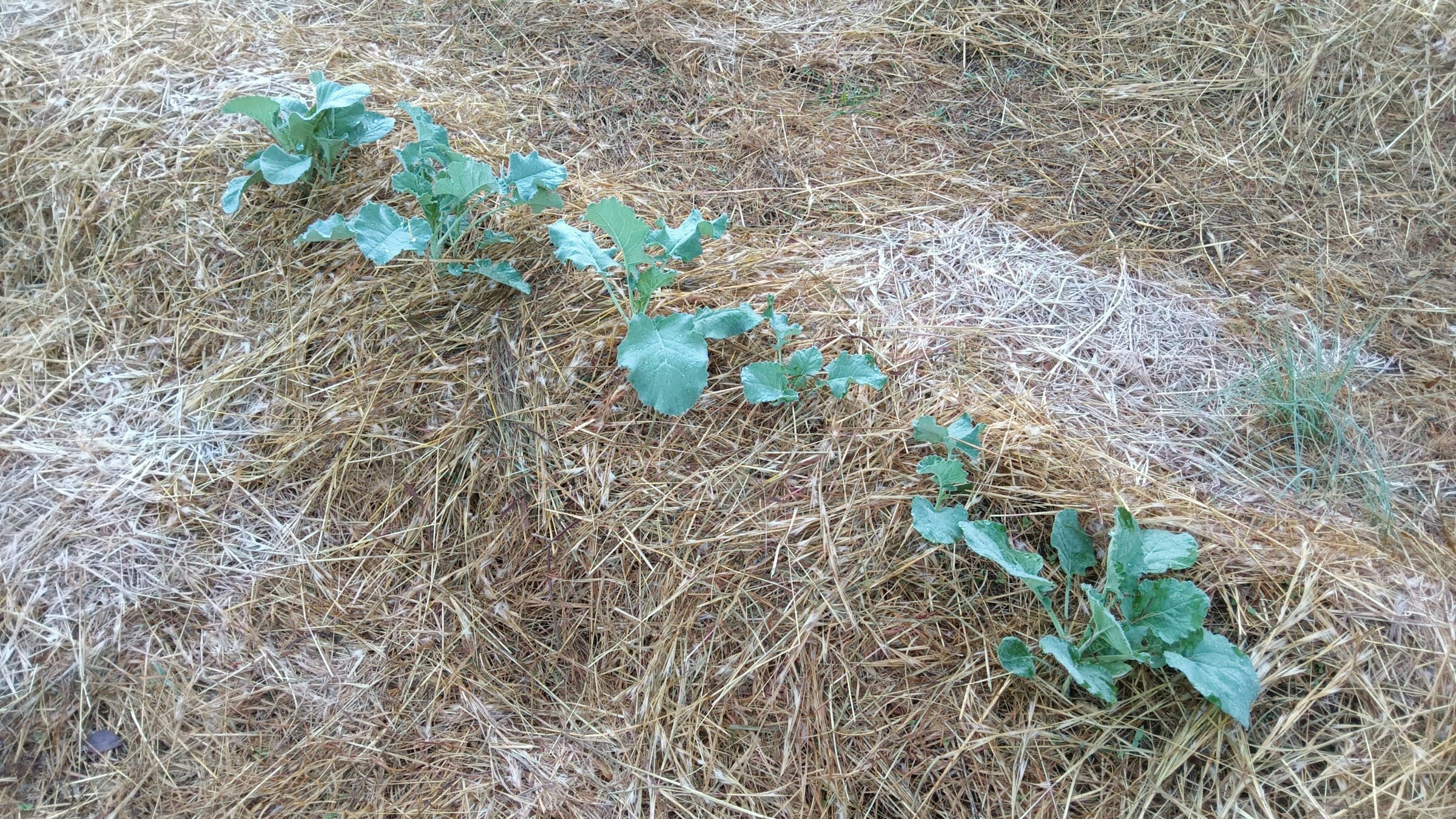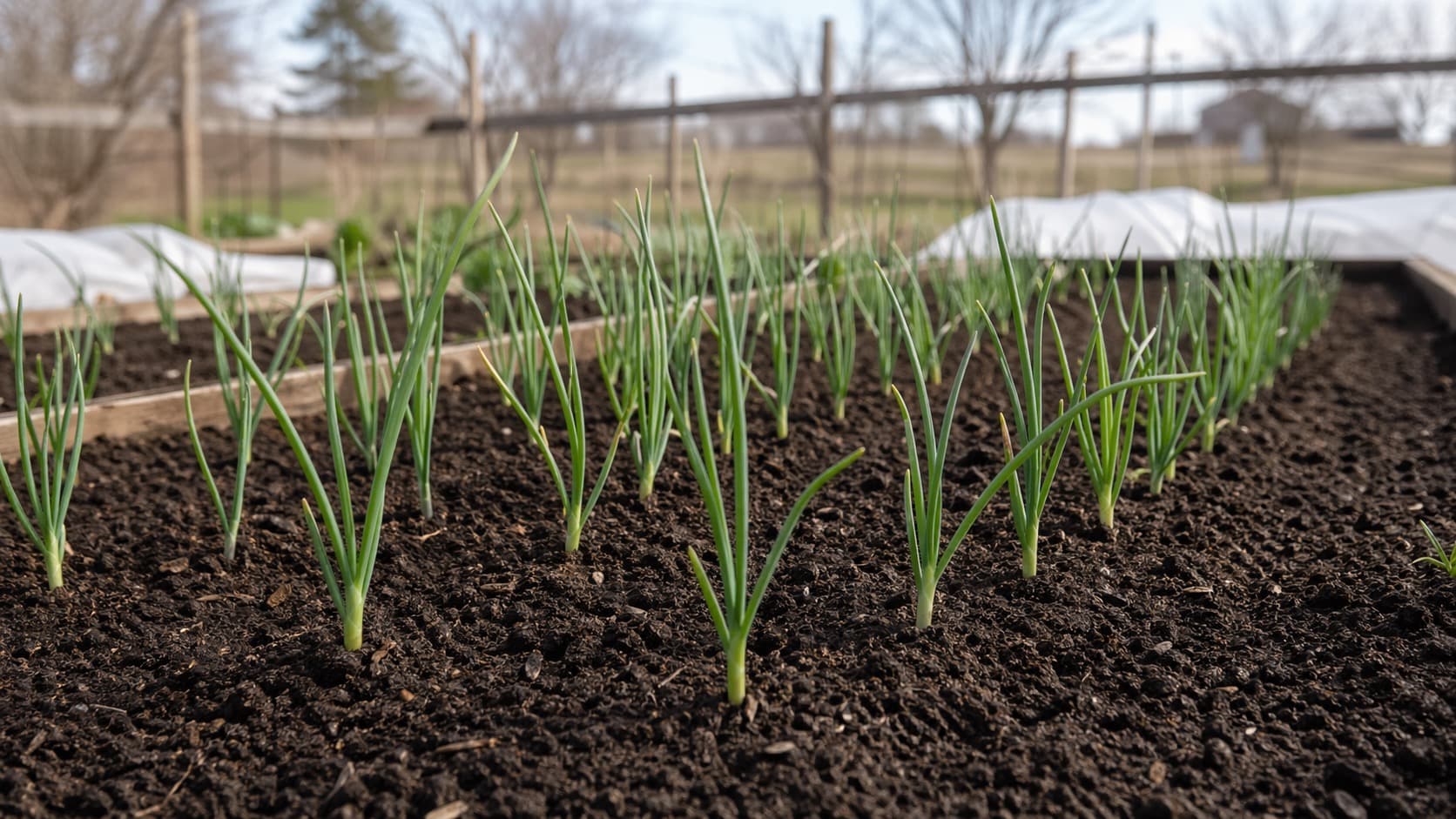
For most gardens, onion sets and transplants go out about 2 to 4 weeks before the last frost date.
Seed needs much more lead time than sets or transplants.
Use workable soil and cold swings to fine-tune the baseline, not replace it.
The short answer: plant onions very early in the season
For most home gardens, onion sets or transplants go in about 2 to 4 weeks before the average last spring frost, as soon as the soil can be worked. If you are starting from seed, give onions much more runway: many gardeners start seed indoors about 8 to 10 weeks before last frost, or direct sow very early where that method fits the climate.
That rough baseline answers the calendar question first. After that, you adjust for soil condition, cold swings, and whether you are using sets, transplants, or seed.
- Use 2 to 4 weeks before last frost as the usual target for sets and transplants.
- Give seed more lead time than sets or transplants need.
- Treat onions as an early-spring crop, not a warm-season crop.
Sets, transplants, and seed change the timing decision
Onion sets are popular because they are easy to plant and give a quick start. Transplants also shorten the path to established growth. Direct seed works too, but it usually requires more patience and a cleaner bed early on because germination and early growth are slower.
That means 'when to plant onions' is partly a planting-material question. The crop still wants an early window, but the amount of runway needed depends on whether you are starting from seed, sets, or young plants.
- Sets and transplants usually simplify early spring onion timing.
- Seed often needs the earliest and steadiest setup of the three methods.
- Use the method that fits the amount of early-season attention the bed will get.
What early is supposed to mean in real life
Early does not mean frozen, saturated, or impossible to work. It means the soil can be handled without compaction and the crop can settle into the bed during cool weather instead of waiting for heat. If the ground is still sticky and miserable, the calendar may say one thing while the bed says another.
This is where local conditions matter more than generic dates. A workable early bed is better than a technically earlier planting into bad structure and repeated cold punishment.
- Plant when the bed is workable, not when it is still a wet mess.
- Cool conditions are fine; chaotic conditions are not the goal.
- Use the site, not just the month, to decide when 'early' has arrived.
How to avoid the worst timing mistakes
The biggest onion timing mistakes are usually opposite ones: planting so late that bulbs never get their best growth window, or planting into a stretch of cold that pushes the crop toward seed-stalk behavior instead of steady bulb-building. Both come from reading the crop too simply.
A better approach is to respect the onion's early-season preference while still using common sense about the bed and the forecast. The crop likes cool spring growth, but it still deserves a reasonable landing.
- Do not delay onion planting until warm-season crops are going out.
- Do not force the crop into conditions that are cold and structurally poor at the same time.
- Aim for steady early establishment, not planting into bad conditions just to be earlier.
For most gardens, onion sets go out a few weeks before last frost
Start with the rough baseline, then adjust for soil and cold swings. Onions want cool-season growth, but they still need a workable bed and a stable start.
- Use 2 to 4 weeks before last frost as the common starting point for sets and transplants.
- Choose sets, transplants, or seed with realistic expectations about lead time.
- Use workable soil and the forecast to fine-tune the final date.
The guidance here draws on the references listed below.
Quick answers before you head back outside
These are the questions that usually come up once the guide turns into real garden work.
When should I plant onion sets?
A good general target is about 2 to 4 weeks before your average last frost, once the soil can be worked reasonably well. In many gardens that means very early spring, well before tomatoes or peppers go out.
Can onions handle frost?
They are more cold-tolerant than warm-season vegetables, but severe cold and repeated stress can still create problems. Cool conditions are expected; damaging instability is not the goal.
Is it too late to plant onions after tomatoes go out?
Often yes for best bulb development. Onions generally want to use much earlier spring growth than tomatoes and other warm-season crops do.
Should I plant onions from seed or sets?
Both can work. Sets are simpler and faster for many home gardens, while seed gives more variety but usually needs to be started about 8 to 10 weeks before last frost or sown very early into a prepared bed.
Products to consider
As an Amazon Associate I earn from qualifying purchases.
These products support the garden jobs covered above. If you buy through a link, GrowerBuddy may earn a commission at no extra cost to you.
The price tier is a rough guide to where this product usually sits in its category, not a live price. Check Amazon for the current price and availability.