GROWERBUDDY
Maine

When to Plant Garlic in Maine

Maine's window runs mid-September to the end of October from the north of the state to the south, and the date is the easy half. The other half is what your seed cloves were sitting at for the fortnight before planting, because that is what decides how many cloves the bulb ends up with.

Last updated: 2026-10-03• Sources

The short answer

How the stock was heldTemperature it sat atBulb it produces
Kept indoorsHouse temperatureNo cold before plantingMore, and smaller
Cold shed43–50°FAbout two weeks before plantingModerate, and even
Left out through frostsMany nights in the 30sMore cold than the two weeksTwo or three per bulb
What goes in the groundA clove, not seed. Set it pointed end up with the point two to four inches under the soil, six inches apart in the row and eight inches between rows.
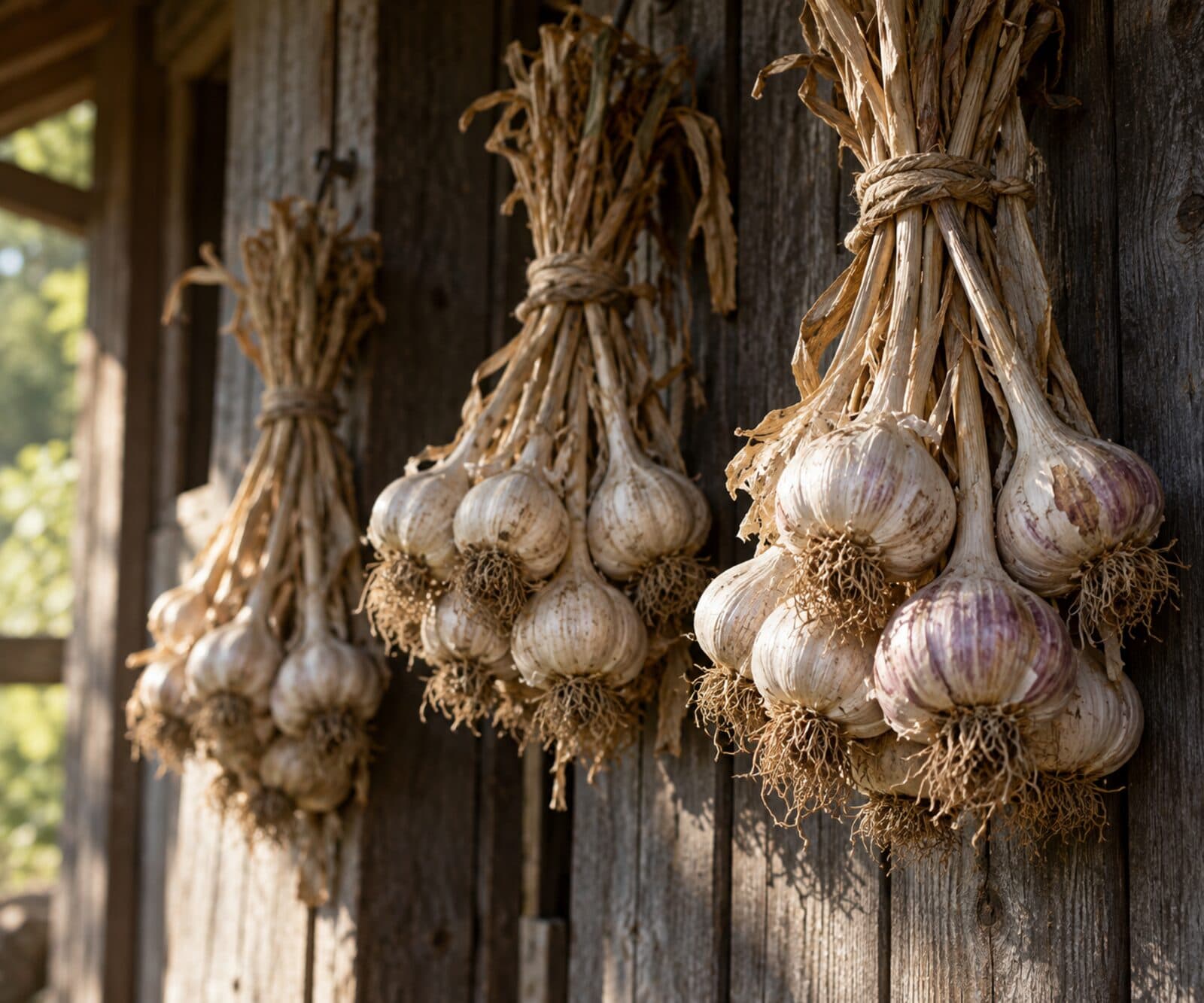
Cured garlic bulbs hanging in tied bundles against a weathered wooden wall, the seed stock a Maine grower holds back from one season to the next.
  1. 01

    Bulletin #2063 plants hardneck cloves about mid-September to the end of October, ordered north to south across the state.

  2. 02

    Seed cloves held at 43–50°F for about two weeks before planting make bulbs with more but smaller cloves; stock that got no cold makes bigger bulbs that weigh less and keep for less time.

  3. 03

    Stock left out through many frosty nights goes the other way: two or three very large cloves per bulb, denser and longer-keeping, and discouraging to anyone counting on a crop.

  4. 04

    Maine's own sources word the window three different ways, from mid-September to early November. The differences are real, and naming them beats picking one and presenting it as the rule.

The fortnight before planting

What temperature were your seed cloves kept at?

The same variety, planted on the same day, produces a different bulb depending on where the cloves were stored in the two weeks before. The growers' association worked out the three outcomes from growers comparing notes on the same cultivar.

The state window

Mid-September – end of October

The range the state's bulletin gives, with its own north-to-south ordering attached. The bulletin's stated goal is a clove that establishes a root system without pushing its top above the soil line, where winter injury finds it.

UMaine Extension Bulletin #2063, Growing Garlic in Maine, planting section.

The range the state's bulletin gives, with its own north-to-south ordering attached. The bulletin's stated goal is a clove that establishes a root system without pushing its top above the soil line, where winter injury finds it.

UMaine Extension Bulletin #2063, Growing Garlic in Maine, planting section.

Garlic is grown from cloves, which means the planting stock is a bulb you have been holding since the summer before. Where it sat during that time is a variable, and the growers' association set out what it does by comparing the same Porcelain cultivar grown from stock held three ways: indoors, in a cold shed, and left out through repeated frosts.

The results are not subtle, and they run in a direction that catches people out. Stock that never saw cold makes the biggest bulbs, and they are the worst of the three: more cloves, smaller cloves, looser skins, more doubles, and a shorter time in storage. Stock that saw a great deal of cold makes the smallest bulbs with the fewest cloves, and they are the best keeping. What most growers want is in between, which is what two weeks at 43–50°F produces.

Kept indoors

Held at
House temperatureNo cold before planting. A heated room or a kitchen shelf, which is where a bought bulb sits by default. The stock never experiences the cold that decides how the cloves form, so the bulb it produces is the one growers complain about without knowing why.
Cloves per bulb
More, and smaller
Double cloves
Common
Skin and weight
Bigger and heavier bulbs, looser skins
Keeps for
The shortest of the three
Who ends up here
Seed garlic bought in September and left on a shelf, and bulbs saved from last year's crop and never moved somewhere cool.

Maine Organic Farmers and Gardeners Association on planting stock held indoors until planting. Clove count, doubling and storage outcomes from the Maine Organic Farmers and Gardeners Association's planting-time account.

Held in a cold shed

Held at
43–50°FAbout two weeks before planting. The range the growers' association names as the one garlic performs best from. Two weeks is long enough for the cold to register and short enough that the cloves do not start sprouting before they are in the ground.
Cloves per bulb
Moderate, and even
Double cloves
Uncommon
Skin and weight
Dense and tight
Keeps for
Good, and the reason most growers aim here
Who ends up here
A woodshed, an unheated garage or a spare fridge, and any grower who moves the seed garlic somewhere cool a fortnight before planting.

Maine Organic Farmers and Gardeners Association on the two-week cold exposure garlic performs best from. Outcomes from the Maine Organic Farmers and Gardeners Association's comparison of the same cultivar held three ways.

Left out through the frosts

Held at
Many nights in the 30sMore cold than the two weeks. Usually the outcome of a late planting season and not a decision: the stock sat outside because the ground was not ready, and it collected far more cold than the two weeks that does the job.
Cloves per bulb
Two or three per bulb
Double cloves
Almost none
Skin and weight
Significantly smaller, denser and heavier
Keeps for
The longest of the three
Who ends up here
A grower who was ready to plant in September and waited for the ground, or anyone who left the seed bag in the barn through October.

Maine Organic Farmers and Gardeners Association on stock exposed to many frosty nights before planting. Clove count, density and storage outcomes from the Maine Organic Farmers and Gardeners Association's planting-time account.

Temperatures, clove counts and storage outcomes from the Maine Organic Farmers and Gardeners Association's account of the same 'Georgian Fire' cultivar grown from stock held three different ways.

North to south

The window moves down the state

Maine is long and its north is continental. The state's bulletin gives one range and then orders it: mid-September in Aroostook County down to the end of October on the southern coast.

The bulletin's range is one line with a direction attached: mid-September to the end of October, ordered from the north of the state to the south. That is about as much regional resolution as any Maine publication gives, and it is worth reading against the state's own freeze record, where the first fall frost moves by more than a month between Caribou and the southern coast.

The ordering matters less than the reason behind it. What the date is protecting is a clove that has rooted but not sprouted, and soil temperature sets that, not latitude. A bed in a sheltered valley in the north can be warmer than an exposed coastal field in the south, which is why the bulletin states the goal in the same sentence as the dates.

Aroostook County and the north

Mid-September onward

The front of the state window. Caribou's average first 32°F night is in the third week of September, which leaves a short gap between the frost and ground that closes early.

Presque Isle, Caribou, Fort Kent, Houlton

Central Maine

Late September to mid-October

The middle of the range, and where the state's own garden-news article plants. Bangor averages its first freeze in the last week of September, about a week behind Caribou.

Bangor, Augusta, Waterville, Skowhegan

The southern coast

October to the end of the month

The end of the range the bulletin gives. The coast holds its warmth longest, so this is the last part of the state where cloves can go in and still root before the ground closes.

Portland, Belfast, Brunswick, Kittery

Three publications

Three publications, three windows

Maine's extension program and its growers' association all publish a garlic window, and they do not agree. Reading why is more use than picking one and treating it as the rule.

Maine has three current publications on the same question and they do not agree. The extension bulletin gives mid-September to the end of October, north to south. The same program's garden news gives the end of September to the second week of October, described as about two weeks after the first hard freeze. The growers' association gives about four weeks before the ground freezes, which it is careful to call a crapshoot, because nobody knows when the ground will freeze in a given year.

None of them is wrong, and the differences are worth reading instead of resolving. The bulletin is answering for the whole state and needs a range wide enough to cover it. The garden news is answering for a garden in the middle of the state. The growers' association is answering for a grower who wants to know what the date is for, and its answer - root growth before the ground closes - is the only one that still works in a year when the ground freezes in November instead of December.

  • The bulletin's range is the one to start from, because it is the state's own and it carries the north-to-south ordering.
  • The garden news window is narrower and later, and it lands where most of the state's population gardens.
  • The four-weeks-before-the-ground-freezes version is the one that tells you what the date is protecting. Use it to judge a season that is running warm or cold.
  • Root growth is the thing all three are trying to schedule, and it needs soil moisture. A dry September delays it however good the date was.
Mid-Sept – end of Oct
The state bulletin's range

One range for the whole state with a direction attached, from Aroostook County in the north down to the coast. The bulletin states the goal in the same breath: roots established, top not above the soil line.

UMaine Extension Bulletin #2063, Growing Garlic in Maine.

End of Sept – mid-Oct
The garden news window

The same extension program's narrower answer, described as about two weeks after the first hard freeze and read as the end of September to the second week of October from north to south.

UMaine Extension Maine Home Garden News, garlic planting dates described as about two weeks after the first hard freeze.

About 4 weeks
Before the ground freezes

The growers' association's version, and the shortest count-back any Maine source publishes. Its author calls getting the timing right a crapshoot and says the point is fall root growth, which is what the date is for.

Maine Organic Farmers and Gardeners Association, When to Plant Garlic in Maine.

September 20
Average first freeze at Caribou

The state's coldest long-record station, and the reason the north end of the window opens in mid-September. The earliest freeze on record there is September 3 and the latest is October 25, which is the spread a single date is covering.

National Weather Service Caribou, September climate preview and freeze records.

All three come from Maine and all three are current. They differ because they are answering slightly different questions, which is worth knowing before you pick one and treat it as the rule.

Before you put cloves in the ground

  • Separate the cloves from the bulb no more than two days before planting. Cloves broken apart earlier dry out, and a dried clove roots slowly.
  • Move your seed stock somewhere at 43–50°F about two weeks ahead, if it has been sitting indoors. This is the one step before planting that changes the bulb and not just the date.
  • Plant the largest cloves and keep the medium-to-large bulbs as your seed stock. The association's finding is that seed bulb size matters more than seed clove size for the crop you eventually harvest.
  • Mulch with six to eight inches of loose straw, which packs down to about half that. Avoid whole leaves and fine lawn clippings: both mat densely enough that the shoots cannot come through.
  • Check that the soil drains. Garlic rots in ground that stays wet, and a wet spring does more damage than a cold winter in a bed with nowhere for the water to go.
FAQ

Quick answers before you head back outside

These are the questions that usually come up once the guide turns into real garden work.

When should I plant garlic in Maine?

The state's bulletin plants hardneck cloves from about mid-September to the end of October, ordered north to south: the north of the state first, the southern coast last. The goal it gives is a clove that establishes roots without pushing its top above the soil, where winter injury finds it.

Should I put my seed garlic in the fridge before planting?

Somewhere at 43–50°F for about two weeks is what garlic performs best from, which a cold shed or an unheated garage does as well as a fridge. The range matters: stock that never saw cold makes bulbs with more, smaller cloves and looser skins, and stock that spent a long time in the 30s makes two or three enormous cloves per bulb.

Why do Maine sources give different planting dates?

Because they are answering different questions. The extension bulletin needs one range wide enough for the whole state and gives mid-September to the end of October. Its garden news gives the narrower end of September to mid-October for a garden in the middle of the state. The growers' association gives about four weeks before the ground freezes, which is the version that tells you what the date is for.

Can I plant garlic in Maine in November?

On the southern coast, sometimes. The bulletin's range ends at the end of October and the growers' association frames the whole thing around the ground freezing and not a date, so a bed that is still workable later than that is still a bed worth planting. What ends the season is frozen ground, not the calendar.

How deep and how far apart do Maine growers plant garlic?

The state's bulletin sets the point of the clove two to four inches under the soil surface, six inches apart within the row and eight inches between rows. Deeper planting is what protects against the freezing and thawing that lifts cloves out of the ground over winter.

Hardneck or softneck garlic in Maine?

Hardneck. The state's bulletin is written around hardneck cloves, the university's own trial work evaluates hardneck ecotypes, and the growers' association's example cultivar is a Porcelain. Hardnecks are the more cold-hardy class and Maine's winter is what selects for them.

How much mulch does garlic need in Maine?

Six to eight inches of loose straw at planting, which settles to about half that depth under rain and snow. It moderates the temperature swings that heave cloves out of the ground, conserves the soil moisture that triggers root growth, and suppresses weeds. The association warns against whole leaves and fine grass clippings, which mat too densely for the shoots to push through.

What happens if I plant garlic too early in Maine?

The cloves sprout above the soil line and the leaves are then exposed to winter. The bulletin's goal is roots without a top for exactly that reason. A little sprouting under the mulch is tolerable; sprouts standing clear of it are not.