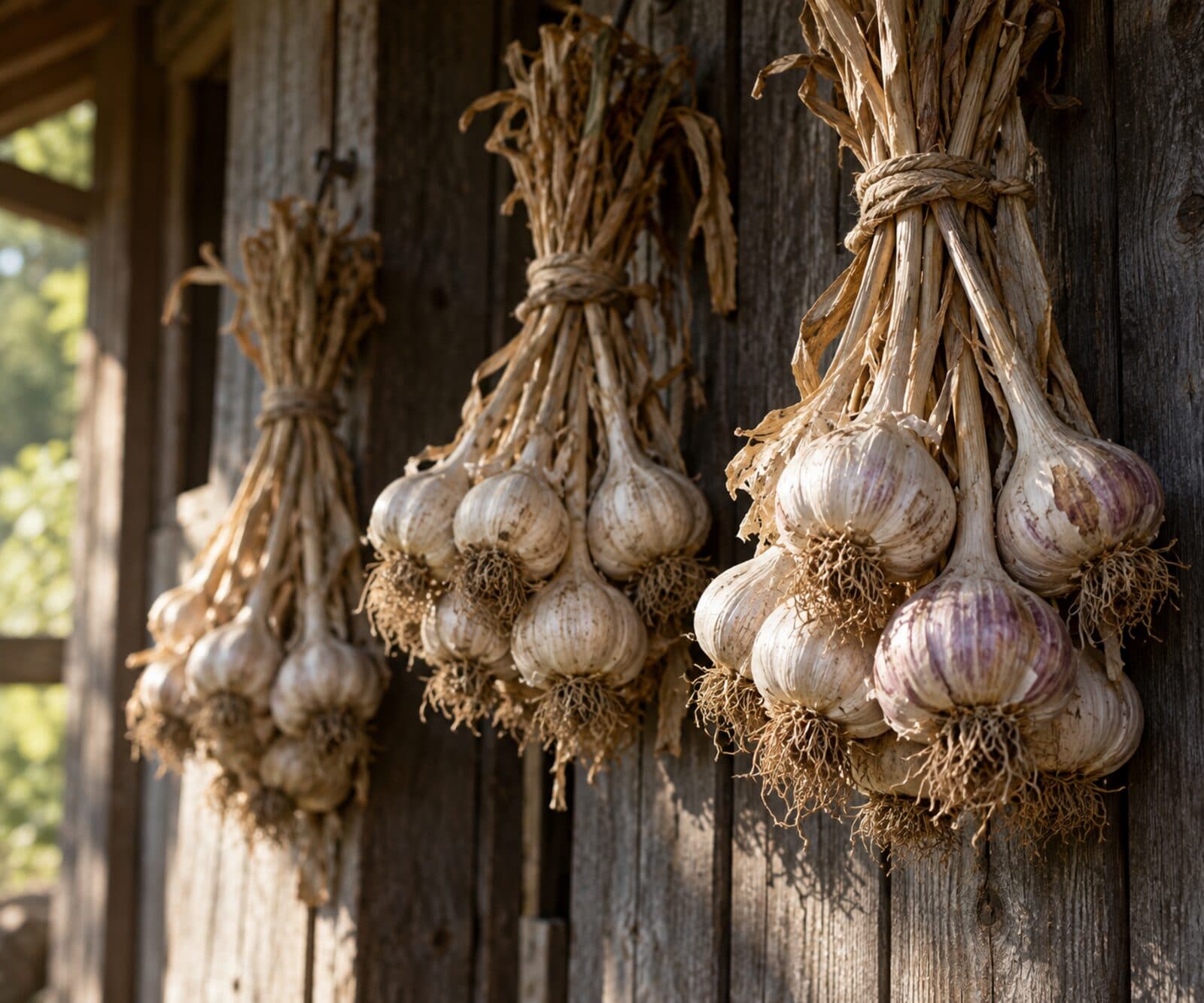
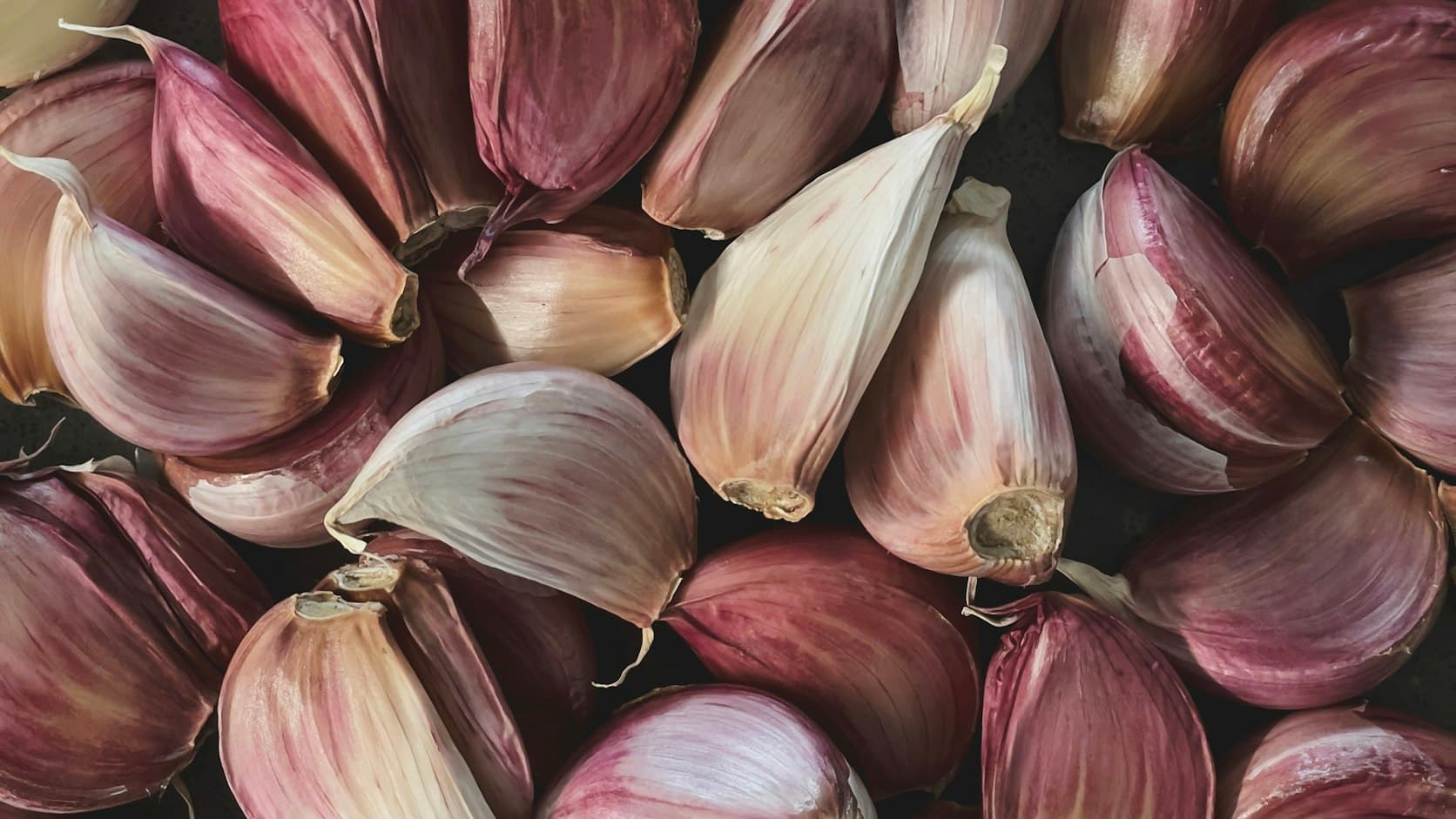
Garlic is grown from cloves, which means the planting stock is a bulb you have been holding since the summer before. Where it sat during that time is a variable, and the growers' association set out what it does by comparing the same Porcelain cultivar grown from stock held three ways: indoors, in a cold shed, and left out through repeated frosts.
The results are not subtle, and they run in a direction that catches people out. Stock that never saw cold makes the biggest bulbs, and they are the worst of the three: more cloves, smaller cloves, looser skins, more doubles, and a shorter time in storage. Stock that saw a great deal of cold makes the smallest bulbs with the fewest cloves, and they are the best keeping. What most growers want is in between, which is what two weeks at 43–50°F produces.
Kept indoors
- Held at
- House temperatureNo cold before planting. A heated room or a kitchen shelf, which is where a bought bulb sits by default. The stock never experiences the cold that decides how the cloves form, so the bulb it produces is the one growers complain about without knowing why.
- Cloves per bulb
- More, and smaller
- Double cloves
- Common
- Skin and weight
- Bigger and heavier bulbs, looser skins
- Keeps for
- The shortest of the three
- Who ends up here
- Seed garlic bought in September and left on a shelf, and bulbs saved from last year's crop and never moved somewhere cool.
Maine Organic Farmers and Gardeners Association on planting stock held indoors until planting. Clove count, doubling and storage outcomes from the Maine Organic Farmers and Gardeners Association's planting-time account.
Held in a cold shed
- Held at
- 43–50°FAbout two weeks before planting. The range the growers' association names as the one garlic performs best from. Two weeks is long enough for the cold to register and short enough that the cloves do not start sprouting before they are in the ground.
- Cloves per bulb
- Moderate, and even
- Double cloves
- Uncommon
- Skin and weight
- Dense and tight
- Keeps for
- Good, and the reason most growers aim here
- Who ends up here
- A woodshed, an unheated garage or a spare fridge, and any grower who moves the seed garlic somewhere cool a fortnight before planting.
Maine Organic Farmers and Gardeners Association on the two-week cold exposure garlic performs best from. Outcomes from the Maine Organic Farmers and Gardeners Association's comparison of the same cultivar held three ways.
Left out through the frosts
- Held at
- Many nights in the 30sMore cold than the two weeks. Usually the outcome of a late planting season and not a decision: the stock sat outside because the ground was not ready, and it collected far more cold than the two weeks that does the job.
- Cloves per bulb
- Two or three per bulb
- Double cloves
- Almost none
- Skin and weight
- Significantly smaller, denser and heavier
- Keeps for
- The longest of the three
- Who ends up here
- A grower who was ready to plant in September and waited for the ground, or anyone who left the seed bag in the barn through October.
Maine Organic Farmers and Gardeners Association on stock exposed to many frosty nights before planting. Clove count, density and storage outcomes from the Maine Organic Farmers and Gardeners Association's planting-time account.
Temperatures, clove counts and storage outcomes from the Maine Organic Farmers and Gardeners Association's account of the same 'Georgian Fire' cultivar grown from stock held three different ways.