GROWERBUDDY
Georgia

When to Plant Garlic in Georgia

Georgia's extension service gives one planting window for the whole state and then applies a two-week offset either side of the middle Georgia belt. The date is the easy half. The harder half is that a garlic bulb needs six to eight weeks below 40°F to divide into cloves, and the coastal plain does not always deliver that.

Last updated: 2026-09-30• Sources

The short answer

BeltWinter coldCloves go in
MountainsMid-OctoberAverage first freezeMid-September – early October
Middle beltEarly to mid-NovemberAverage first freezeLate September – early November
Coastal plainLate November onwardFirst freeze arrives lastNovember – early December
What goes in the groundA clove, not seed. Set it pointed end up, one to three inches deep and six inches apart, with rows twelve to fourteen inches apart.
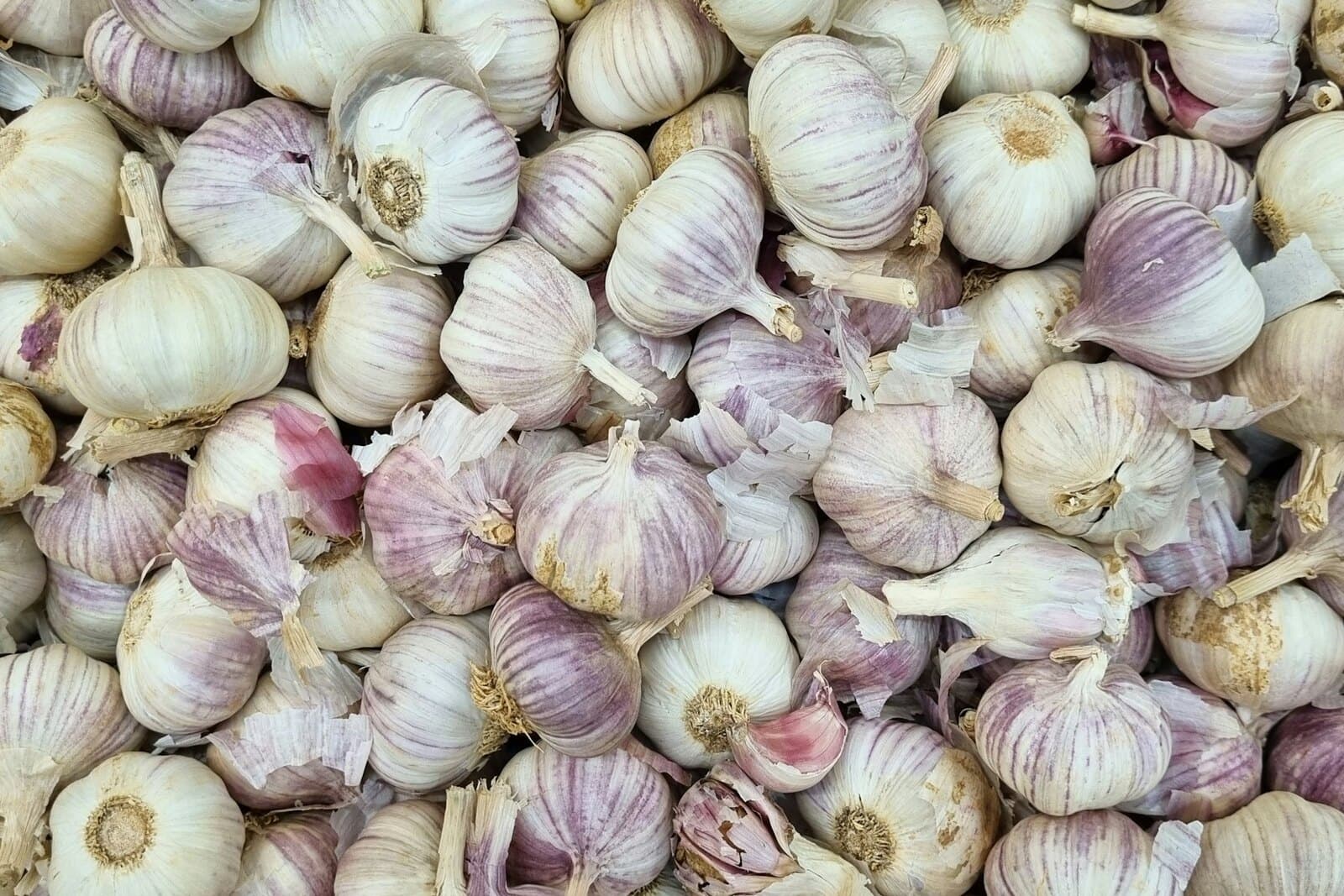
A dense pile of cured garlic bulbs with purple-striped skins, showing the clove wrappers a grower separates on planting day.
  1. 01

    Georgia's extension service plants garlic from late September through November statewide, and writes that window for the belt from Columbus through Macon to Augusta.

  2. 02

    The mountain counties plant about two weeks earlier than that belt and the coastal plain about two weeks later, which is the only regional offset UGA publishes.

  3. 03

    A clove needs six to eight weeks below 40°F before it will divide into cloves, so the coastal plain is the belt where a hardneck is most likely to disappoint.

  4. 04

    Planting in spring is the one date that reliably fails here: the crop matures too late for bulb formation to happen at all.

Three belts

Find your belt and read its window

Georgia runs from mountain counties that freeze in early October to a coastal plain that often waits for December. The state window is the middle belt; the two outer belts shift from it.

The state window

Late September – November

The one window Georgia's extension service publishes for the state. Its own garden calendar then notes that the monthly dates are written for the middle Georgia belt, and that the mountain counties move about two weeks earlier in the fall while the coastal plain moves about two weeks later.

Window from UGA Extension's garlic production guide (C-854); the two-week offset from its vegetable garden calendar (C-943).

Mountain counties

The ridge and valley country in the north of the state, where the elevation buys the coldest winters Georgia has.

Winter cold
Mid-OctoberAverage first freeze. The average first freeze where the minimum reaches 32°F or below is mid-October across northeast Georgia, the earliest in the state and the reason this belt plants first.
Cloves go in
Mid-September – early October
Class that fits
Hardneck. The only belt in the state whose winter runs long enough for the classes that need real cold, and the belt where Georgia's own guide expects them to size up properly.
Counties and towns
Blairsville, Dahlonega, Blue Ridge, Rome, Gainesville
What moves the date here
Elevation does the work here, not latitude. The mountain counties sit colder than the farmland south of them, so they take the front of the state window.

National Weather Service Peachtree City first-freeze table and map for north and central Georgia. Offset from UGA Extension's vegetable garden calendar (C-943); freeze date from the National Weather Service's north and central Georgia table.

The middle belt

The belt the state calendar is actually written for, running Columbus through Macon to Augusta, plus the Piedmont either side of it.

Winter cold
Early to mid-NovemberAverage first freeze. Macon averages its first freeze on November 11 and Columbus on November 17, so this belt usually has six clear weeks between planting and the cold that follows.
Cloves go in
Late September – early November
Class that fits
Softneck, with hardneck worth a trial. The winter is cold enough to vernalize a clove and not cold enough to be reliable for the classes that want a hard freeze, so the softneck types Georgia names belong here first.
Counties and towns
Atlanta, Macon, Columbus, Augusta, Athens
What moves the date here
Nothing local moves this belt off the state pattern, because this belt is the pattern. The mountain counties and the coastal plain are described as so many weeks either side of these dates.

National Weather Service Peachtree City first-freeze table, threaded climate records for Macon and Columbus. Window from UGA Extension's garlic production guide (C-854); the belt's boundaries and its first-freeze dates from its vegetable garden calendar (C-943) and the National Weather Service.

The coastal plain

Everything south of the fall line, from the pecan country down to the coast and across to the Okefenokee.

Winter cold
Late November onwardFirst freeze arrives last. This is the belt where the freeze is latest and least certain, so the six to eight weeks below 40°F that a clove needs is the figure to watch rather than the calendar.
Cloves go in
November – early December
Class that fits
Softneck. Georgia's guide is direct about where the softneck types belong, and the coastal plain is the far end of it: a warm winter leaves the cold-demanding classes short of what they need.
Counties and towns
Albany, Valdosta, Savannah, Brunswick, Waycross
What moves the date here
Two weeks later than the middle belt, and the two weeks matter more here than anywhere else in the state, because a bulb that never gets its cold does not divide properly.

Freeze progression from the National Weather Service Peachtree City frost and freeze program; the cold requirement from UGA Extension's garlic production guide (C-854). Offset from UGA Extension's vegetable garden calendar (C-943); the southern context from its garlic and leek production guide (C-852).

The requirement behind the date

A clove has to be cold before it can divide

A garlic clove goes into the ground dormant and comes out of it only after it has been cold for long enough. Georgia's extension service puts that requirement at six to eight weeks below 40°F, and calls the process vernalization. Until it is satisfied, the clove will grow leaves without ever dividing them into the cloves a bulb is made of.

That is why the planting window sits where it does. A clove in the ground through December and January collects its cold in the ordinary course of winter, and the leaf growth it puts up before the cold is what the plant carries into spring. A clove planted in March has to find the same cold somewhere it does not exist.

  • Watch the soil at planting depth rather than the air, and give heavy ground longer to drain.
  • Water at planting. Georgia's planting season falls in one of the driest stretches of its year.
  • Keep mulch a couple of inches clear of the stem, and pull it back in spring to let the ground warm.
6–8 weeks
Below 40°F, before a bulb will divide

The cold a planted clove needs, in the state guide's own terms. It is the number that decides whether a Georgia winter is enough for the garlic someone is holding.

UGA Extension garlic production guide (C-854), plant development section.

About two weeks either side
The offset the state calendar applies

The calendar's monthly dates are written for the middle belt. Mountain counties move about two weeks earlier in the fall and the coastal plain about two weeks later, which is the whole of the regional adjustment Georgia publishes.

UGA Extension vegetable garden calendar (C-943), opening note on how to use it.

No satisfactory yield
What a spring planting gives you

Georgia's guide is blunt about spring: the growing period is too short, and bulbing and maturity do not take place once temperatures are high. A spring clove is a leaf crop.

UGA Extension garlic production guide (C-854), culture section.

Which garlic to plant

Hardneck, softneck, and the leek that borrowed the name

The two classes differ in how much winter they want, and that is the one thing worth knowing before buying. Hardnecks want the cold winters and long, cool springs of a more northern climate. Softnecks handle the South's erratic winter without bolting when a warm spell arrives in the middle of it.

Georgia's guide names the softneck types it grows in the state and points out that hardnecks will grow here but generally prefer somewhere colder. Elephant garlic is not a garlic at all, but a leek that forms a few very large cloves and grows under the same conditions.

Hardneck, softneck, and the leek that borrowed the name
ClassWinter it needsWhere it fits in Georgia
HardneckA long, genuinely cold winterThe mountain counties, and a trial elsewhere in a cold year
Softneck: ArtichokeA mild winter it can sit through without breaking dormancyThe middle belt and the coastal plain
Softneck: SilverskinA mild winter, and it keeps longest of anything hereAnywhere in the state, including the coast
Elephant garlicThe same conditions as ordinary garlicAnywhere in the state, on the same dates

Georgia's extension service names the softneck types it grows and warns that hardnecks want a colder winter than most of the state provides.

Before you put cloves in the ground

  • Push a finger into the bed at planting depth. Cold and wet is the combination that rots a clove instead of rooting it.
  • Set cloves pointed end up, one to three inches down and six inches apart, and go deeper in the mountain counties where the ground works harder in winter.
  • Leave the bulb whole until the day you plant it. Cloves separated early give up yield before they go in.
FAQ

Quick answers before you head back outside

These are the questions that usually come up once the guide turns into real garden work.

What is the best month to plant garlic in Georgia?

October, for most of the state. Georgia's extension service gives late September through November as the window, and its calendar writes those monthly dates for the belt running from Columbus through Macon to Augusta. Mountain counties shift about two weeks earlier and the coastal plain about two weeks later.

Can I plant garlic in Georgia in the spring?

It will grow, and it will not make a bulb worth harvesting. Georgia's guide says the growing period is too short and that bulbing and maturity will not take place once temperatures are high. If a bag of cloves is still on the shelf in March, plant it as early as the ground can be worked and put a full crop in that October.

Does garlic really need cold weather to form bulbs?

It does. A planted clove needs six to eight weeks below 40°F before it will divide into the cloves a bulb is made of, which Georgia's extension service calls vernalization. A clove that never gets that cold still grows, but the bulb does not form properly.

Will hardneck garlic grow in south Georgia?

It may grow and it is unlikely to size up. Georgia's guide describes hardnecks as preferring the cold winters and long, cool springs of a more northern climate, and softnecks as the types adapted to the South's erratic winter. The coastal plain is where that difference shows most.

How deep and how far apart do cloves go in Georgia?

One to three inches deep and six inches apart, with rows twelve to fourteen inches apart. Georgia's guide notes that colder areas of the state can plant slightly deeper for winter protection, which in practice means the mountain counties.

When does Georgia garlic come out of the ground?

Late May to mid-July, depending on where in the state you are. Lift the bulbs when roughly a third to a half of the leaves have dried and bent over, and stop watering before that so the bulbs do not discolour in the ground.

Can I plant garlic from the grocery store in Georgia?

The cloves will sprout, but supermarket garlic is usually a softneck chosen for storage rather than for a Georgia garden, and it carries no guarantee about disease. Georgia's guide asks for seed bulbs that are large, smooth, fresh, and free from disease, and says the larger outer cloves give the larger bulbs at harvest.