GROWERBUDDY
Timing

When to Plant Peas

Peas change as they grow. A seedling takes a frost that kills the flowers, so the plant that goes into cold spring ground is the same one that has to fill its pods before the heat, and the autumn sowing is a sum of days rather than a date.

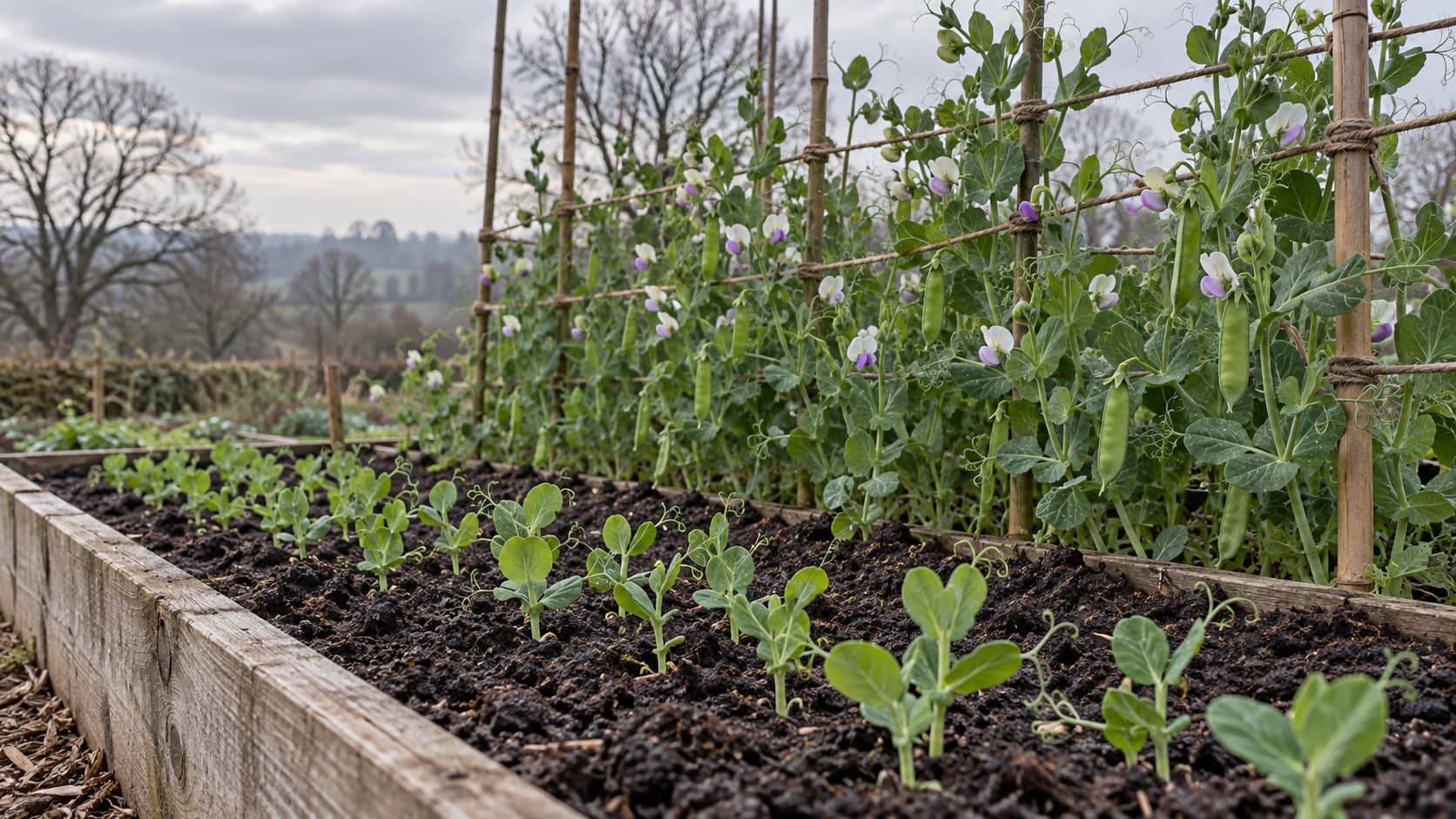
Pea seedlings just up in a dark spring bed, with purple and white flowers and young pods on the bamboo trellis behind them.
Soil trigger
Sow on ground you can work, once the soil at sowing depth holds about 40°F. Expect five weeks of waiting at that reading and nine days at 59°F.
Frost rule
Seedlings take 28°F and are damaged below 21°F, and the flowers take none of it. A frost after sowing costs growth; the same frost on a flowering row costs the pods.
Heat ceiling
Growth and pod set stop once daytime air runs above about 85°F, which is what ends a spring sowing that went in late.
Fall count
Days to maturity plus the days the seed spends emerging, counted back from your first 28°F night. Six to eight weeks is a short variety counted without emergence.
Reviewed & verified by GrowerBuddy Editorial TeamLast updated: 2026-10-16• Sources
The year's two sowings

Spring at one end, autumn at the other

Both sowings meet the same two limits in the opposite order: the ground gates the start, and the flowers meet the end. Read the two cards down the same rows - what opens each one, what closes it, what it produces, and where you actually stand today.

The spring sowing

What you get Pods from early summer into the cooler weeks after it, provided the sowing went in early enough for the flowers to do their work before the heat.

What opens it

The seed in the ground40°F floor, 85°F ceiling

Ground you can work, with the soil at sowing depth above the floor this crop germinates at.

Sown too early, the seed sits in cold wet ground and takes five weeks to come up instead of one and a half. The plants still arrive, they arrive at the end of the season they were meant to start.

What closes it

The flowers and podsNo frost, nothing above 85°F

The first pods have to be filling before the first run of hot days.

A late spring sowing flowers into the hottest fortnight of the year. The vines keep growing and keep flowering, the flowers drop without setting, and the row looks healthy while it produces nothing.

Where it lands

Spring is the dependable sowing in most of the country and the one worth pushing early, because the limit at that end is the ground rather than the frost. Where summers start hot, it is also the sowing with the least slack: the first workable week is the window, and every week after it comes off the pods.

Your next move

Sow as soon as the bed can be worked, then sow a second row a week or two later. Minnesota Extension's succession is plantings a week apart, which insures the first row against a stray freeze and spreads the harvest over a longer stretch.
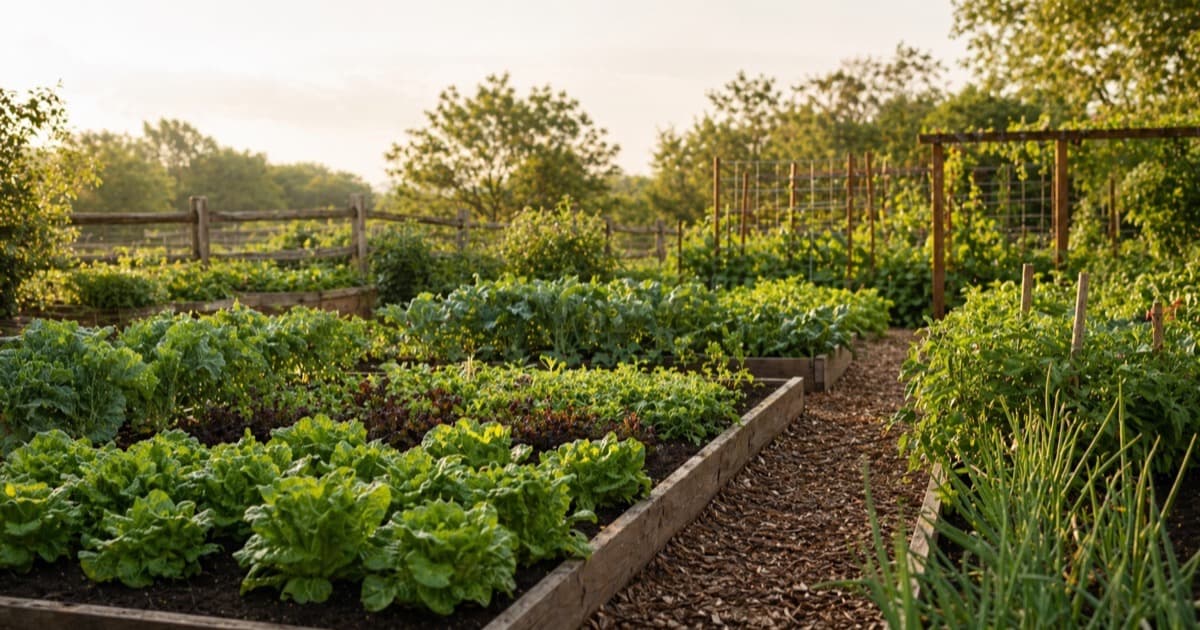
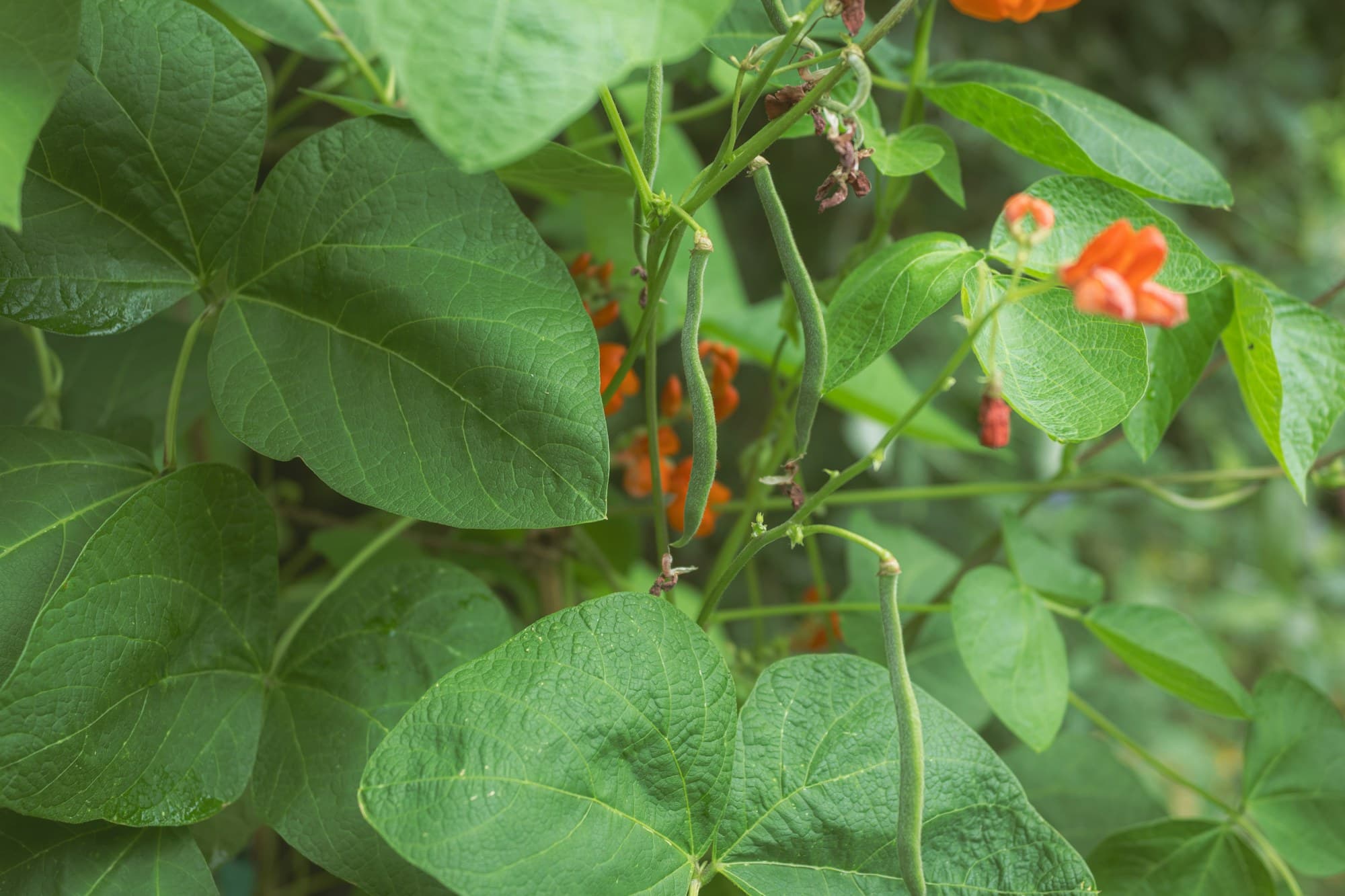
The autumn sowing

What you get A second picking in the same year where the count fits, and in a mild climate a row that stands through the winter and flowers in spring.

What opens it

The seed in the ground40°F floor, 85°F ceiling

Ground that has come back down out of summer heat.

This is the end that catches gardeners out. Pea seed germinates poorly above 85°F, which is where a cleared bed still sits in August across much of the country, and the days the seed spends waiting come straight off the season the crop has left.

What closes it

The flowers and podsNo frost, nothing above 85°F

The flowers have to finish before the first 28°F night.

The seedlings survive that night and the flowers do not, so a late sowing ends as a healthy row of vines that never filled a pod. In the Pacific Northwest the winter types are grown for exactly this risk, and Washington State's guide still records significant damage where snow cover fails.

Where it lands

The autumn window is real, and it is the narrowest of the two. Clemson's guide for garden peas prints fall dates for both of its regions and says fall plantings are not recommended in the same factsheet, and the two statements are about different things: when seed can go in, and whether the crop is a good bet in a summer that runs hot into September. Where the count does not fit, the answer is no rather than a smaller version of yes.

Your next move

Choose the earliest variety you can find, and keep the bed watered through the last hot weeks. Where the sum does not fit the season, keep the ground for a spring sowing instead.

Start with these moves

  1. 1. Take the soil reading before you sow: a thermometer at sowing depth in the morning decides whether you are buying five weeks or six days.
  2. 2. Sow early and cover late. The row cover belongs on the flowers, which is the stage a frost ends, and not on the seedlings.
  3. 3. Run the sum before a fall sowing, and keep the ground for spring if maturity plus emergence runs past your first 28°F night.
What a frost costs

Hardiness belongs to the stage, not to the plant

One plant, a different reading at every stage. A seed in the ground, a seedling that takes a frost, and the flowers and pods that a single freezing night ends - and each figure names the publication behind it, because the hardiness figure a crop is usually given describes only one of these stages.

  1. The seed in the ground

    A dry pea sitting in the dark. Nothing shows above the surface for a week to five weeks, depending on how warm the soil is.

    What it survives

    40°F floor, 85°F ceiling

    Oregon State's germination table gives pea a minimum of 40°F, an optimum range of 40°F to 75°F and a maximum of 85°F. That table times emergence from a half-inch sowing at 36 days at 41°F, 13 days at 50°F and nine days at 59°F, which is where the published soil floors of 40°F, 45°F and 50°F come from.

    What the limit does

    Cold ground does not stop germination, it stretches it. A seed that sits five weeks in wet spring soil is a seed a soil fungus can reach before the shoot does, which is why the row comes up patchy rather than late.

    What you do

    Take the bed's temperature at sowing depth in the morning and work the ground only when it breaks up instead of smearing. A fast-draining bed can be sown earlier than a heavy one holding the same reading.

  2. The seedling

    Two low leaves, a pair of tendrils and a growing tip, four to eight inches tall, with the vine still short of the top of its support.

    What it survives

    28°F, damaged below 21°F

    Washington State University's pea guide puts a seedling's tolerance at 28°F, with top growth damaged below 21°F, and notes that peas tolerate hot weather once they are growing. Cornell Cooperative Extension puts the band at 28°F to 32°F.

    What the limit does

    This is the stage that earns peas their reputation. A frost that would blacken a bean seedling leaves this one standing, and a night in the low twenties costs tips rather than the plant.

    What you do

    Sow earlier than the last frost date where the ground is workable, and do not spend a row cover here. What the cover is for arrives a month later, on the flowers.

  3. The flowers and pods

    White or purple flowers along the vine, then flat pods, then pods with the peas showing inside them.

    What it survives

    No frost, nothing above 85°F

    Clemson's factsheet states that garden peas withstand frosts and light freezes, although the blossoms cannot. Minnesota Extension reports that the plants stop growing and produce no flowers or pods once temperatures get above 85°F, which is the other end of that window.

    What the limit does

    The plant's cold tolerance does not carry into its flowers. A flower that freezes unpollinated drops, and the pod that would have followed it never forms, so the vine stays healthy and green while the row stops producing.

    What you do

    Watch the forecast from the day the first flowers open and cover the row for a late frost. The pods are what a freeze costs at this stage, and they are also what a heat wave costs.

The count

Count the days, not the weeks

The published intervals before a frost disagree because they are sums of different terms: days in the ground, days to a pod, and the date the count runs back from. Supply your own numbers and the sum is yours to run.

  1. Days in the ground

    6 to 36 days

    What moves it This is the term a date table usually leaves out, and it is why six weeks before a frost is generous in May and tight in August. Warm soil appears in six days, cold soil takes five of the six weeks.

    Where the figure comes from Oregon State's germination table, which times emergence at 36 days at 41°F, 13 days at 50°F, nine at 59°F and six at 77°F, from seed sown half an inch deep.

  2. Days from sowing to the first pick

    55 to 70 days

    What moves it The published intervals do not agree on where the count starts. Seed packets count from sowing, and Cornell's fall method adds the days the seed needs to emerge on top of the maturity figure. Use the second reading when the deadline is a frost rather than a date on a packet.

    Where the figure comes from Clemson's factsheet times early varieties at 55 to 64 days and mid-season ones at 65 to 70, and Minnesota Extension puts most varieties at about 60 days of growth before harvest. Both counts start on the day the seed goes into the ground.

  3. The date the count is against

    The first 28°F night

    What moves it Not the first frost of autumn and not the frost advisory in the forecast. A light frost is a warning and 28°F is the temperature that ends the flowers, and the two can sit a fortnight apart.

    Where the figure comes from Cornell Cooperative Extension's Warren County office builds its fall schedule from the first killing frost, which it places at 28°F for its own region, and counts maturity plus germination back from that date. Its table lists peas at the ten- and nine-week marks.

The ground decides the sowing, and workable is a test you can run

Peas do not need warm soil, they need ground they can come up in. The published floors disagree: Oregon State's germination table and Washington State's growing guide give 40°F, Illinois Extension plants into soil at 45°F or higher, and Seed Savers Exchange and the University of Connecticut both say 50°F. The disagreement is about the bet rather than the plant. Oregon State's own table times emergence at 36 days at 41°F, 13 days at 50°F and nine days at 59°F, so one sowing is a five-week wait in one garden and a week and a half in another, and a pea sitting in cold wet ground for five weeks is a pea a soil fungus can reach first.

That is why the check worth running is workability rather than a number. Illinois Extension's test is ground dry enough to till and not sticking to garden tools, and Washington State pairs that same condition with its 40°F figure. Take the reading at sowing depth in the morning, after the bed has had all night to shed the day's heat. A raised bed against a south wall reading 45°F at dawn is an honest reading of ground that will warm quickly; the same bed at noon is reading the sun, and it says nothing about the week the seed spends in it.

  • Sow on ground that breaks up instead of smearing, with the soil at sowing depth holding about 40°F at dawn.
  • Below the floor the seed is not lost, it is slow: about five weeks to emerge at 41°F against nine days at 59°F.
  • The bed to hold back is the wet, heavy one, not the cold bed that drains fast.

The frost a seedling takes, and the frost a flower does not

Peas are called frost hardy, and the label is right about the wrong stage. Washington State's guide gives a seedling's tolerance as 28°F and puts damage to the top growth below 21°F. Clemson's factsheet supplies the other half of the sentence: garden peas withstand frosts and light freezes, although the blossoms cannot. Cornell Cooperative Extension's fall guide turns that split into numbers, with peas surviving frosts at 28°F to 32°F.

As a schedule, that means a freeze after sowing costs growth, and the same freeze a month later costs the crop. Minnesota Extension's instruction for the flowering stage is to watch for a late spring frost and cover the plants with sheets or row covers, which is protection worth fitting to a flowering row and not to seedlings. By the time the cover is doing something, the pods are what it is protecting.

  • Seedling: 28°F is survivable, and below 21°F the top growth is damaged rather than killed outright.
  • Flowers and pods: no frost tolerance at all, and a frozen flower never becomes a pod.
  • Fit the cover before the first flowers open, because the protection is for the stage that has none.

Why the fall window is narrower than the date tables

Clemson's garden-peas factsheet is the clearest example of how the fall question gets answered at cross purposes. It prints planting dates for both of the state's regions and gives the Piedmont a fall window running from mid-August to the end of October. A few lines above, it says that fall plantings are not recommended. Both statements are about one crop in one state, and neither is a mistake: the table answers when seed can go into the ground, and the sentence answers whether the crop is a good bet in a summer that stays hot and humid into September.

Cornell Cooperative Extension publishes the method that settles that question for any garden. Count the days to maturity, add the days the seed needs to emerge, and count the total back from the first killing frost, which its own region places at 28°F. Run that sum over the published pea intervals and they stop contradicting one another. Six to eight weeks before a fall frost is the interval The Old Farmer's Almanac publishes, and it is a short-season variety counted without the days it spends emerging. Eight to ten weeks is that figure with the seed's own days in it, which is why Connecticut's factsheet gives that interval. Cornell's own table puts peas at nine and ten weeks before its killing frost, which is that arithmetic run from the other direction.

The other end of a fall sowing is the ground it goes into. Oregon State's table gives pea a maximum germination temperature of 85°F, and a bed cleared in August sits above that in much of the country, so the seed waits out the rest of the summer before it starts. Washington State's rule for the fall crop is the whole budget in a line: temperatures should stay above freezing for two or more months after planting. Where the ground cools late and the first hard frost lands less than three months after it, the arithmetic does not work, and keeping the bed for a spring sowing is the better answer.

  • Count back from the first 28°F night: the variety's days to maturity, plus the days the seed spends emerging.
  • Six to eight weeks before frost is a short variety's figure without emergence; eight to ten weeks allows for the seed.
  • Where August ground is still above 85°F, the sowing starts in the seed's worst range and takes those weeks off its own season.

Shelling, snap and snow peas keep the same calendar

The three edible kinds are one crop at three harvest stages, and every soil reading and frost rule here applies to all of them. Clemson's grouping is the clearest: English or garden peas are shelled and only the seed is eaten, snap peas are eaten whole with full-sized peas inside a thick pod, and snow or sugar peas are eaten whole while the pod is still flat and the seeds are barely formed. Wrinkled-seeded varieties are sweeter than smooth-seeded ones and are the ones usually chosen for a home garden.

What changes between them is days rather than dates, and the spread is wider than most gardeners expect. Illinois Extension's variety list runs from 52 days to 72 days from sowing to harvest, with its edible-podded selections in the middle at about 58 to 61 days. For a late sowing the shortest-season type matters more than the window, because the weeks in front of it are already tight. Connecticut's factsheet adds one more fall consideration: powdery mildew resistant varieties are the ones to sow when the crop will finish in damp weather.

  • Shelling peas: pick when the pods are plump and round, before the peas inside are individually visible.
  • Snap peas: pick when the pods have filled out and still snap when bent.
  • Snow peas: pick them flat with the seeds still small, usually within about a week of flowering.

Two other plants called peas run on different seasons

Southern peas, cowpeas, black-eyed peas and crowder peas are not garden peas, and Illinois Extension files them with the beans: a warm-season vegetable grown the way beans are grown. Clemson's southern-pea factsheet puts a number on the difference, with germination and emergence at their best only once the soil reaches 60°F, against the 40°F a garden pea will start in. Advice for garden peas read onto them inverts the season, and the sowing that suits one is a month early or a month late for the other.

Ornamental sweet peas are the more serious confusion. They are Lathyrus odoratus rather than Pisum sativum, and Washington State's pea guide is direct about them: the flowering varieties and the rest of the genus are not safe to eat, and no part of them should be harvested as food or fed to animals. A trellis of sweet peas along the same fence is a fine thing to grow, and the pods on it are not a crop.

  • Cowpeas and southern peas: warm-season, 60°F of soil before they germinate well, grown like beans.
  • Ornamental sweet peas: a different genus, and not edible at any stage.
  • Garden, snap and snow peas: all Pisum sativum, all on the cool-season calendar.
Pea rule

Read the ground, then count to the frost

Two readings decide a pea sowing, and neither of them is a date on a chart: the state of the ground the seed goes into, and the number of frost-free days standing in front of the flowers.

Sowing at the floor and calling it early: five weeks in cold wet ground is where a patchy row comes from, not bad seed.

Covering the seedlings and not the flowers, when the stage that takes a frost is not the stage a frost costs.

Reading six weeks before a frost as a rule, when it is a short variety counted without the days the seed spends emerging.

Open the calendar

The planting calendar reads your local soil temperature and forecast, which are the two readings a pea sowing turns on. Open it when you are ready to turn a sowing date into a decision.

FAQ

Quick answers before you head back outside

These are the questions that usually come up once the guide turns into real garden work.

Can I plant peas before the last frost date?

Yes, and in most gardens you should. Washington State's guide puts a seedling's tolerance at 28°F, and Cornell Cooperative Extension's fall table agrees within a couple of degrees at 28°F to 32°F, so a frost after the seedlings are up costs growth and not the row. What cannot take a frost is the flowers, which are the reason Minnesota Extension's advice is to cover a flowering row and not a seedling one.

What soil temperature do peas need to germinate?

Forty degrees Fahrenheit is the floor Oregon State's germination table gives, and it will germinate at that reading. The catch is time: that table times emergence at 36 days at 41°F, 13 at 50°F and nine at 59°F, so a sowing at the floor spends five weeks in ground where a fungus can reach the seed. That is why Illinois Extension names 45°F and two other guides name 50°F as the point to sow from.

Is it too late to plant peas?

It depends which limit you are closer to. A spring sowing that is late runs into heat at flowering, and Minnesota Extension reports that the plants stop producing once temperatures get above 85°F, so a sowing with less than about two months of cool weather in front of it is a poor bet. A late-season sowing is better made in autumn, and the check is the count: days to maturity plus emergence against your first 28°F night.

Can you plant peas in the fall?

Yes, in a season that lasts. Cornell Cooperative Extension's fall method is to count maturity plus germination back from the first killing frost, which it places at 28°F, and Washington State asks for two or more months above freezing after planting. Clemson's factsheet shows how narrow the window can be: it prints fall planting dates and says fall plantings are not recommended in the one document, because the dates answer when a bed is workable and the warning answers whether a hot, humid September leaves the crop time to fill a pod.

Do shelling, snap and snow peas plant at the same time?

They do. All three are Pisum sativum, so every soil reading and frost rule here applies to all of them. What differs is days to maturity: Illinois Extension's list runs from 52 to 72 days across the group, and for a fall sowing the shortest-season variety is the one that fits. Connecticut's factsheet recommends mildew resistant varieties for a fall crop, which finishes in damper weather than a spring one.