How do I know the soil is warm enough for beans?
Measure at planting depth on several consecutive mornings and wait for 60°F. Below that, germination is slow and uneven; below about 50°F, Purdue's home-garden guide says poor germination and rot are likely. One reading on a warm afternoon tells you very little about the week ahead.
Can I plant beans before the last frost?
No. Beans are direct-sown warm-season crops and they have no tolerance for cold, wet soil, so the last frost date is the start of the window rather than a target to beat. If you want an early crop, choose a faster bush variety rather than an earlier sowing date.
Why are my bean plants flowering but not producing pods?
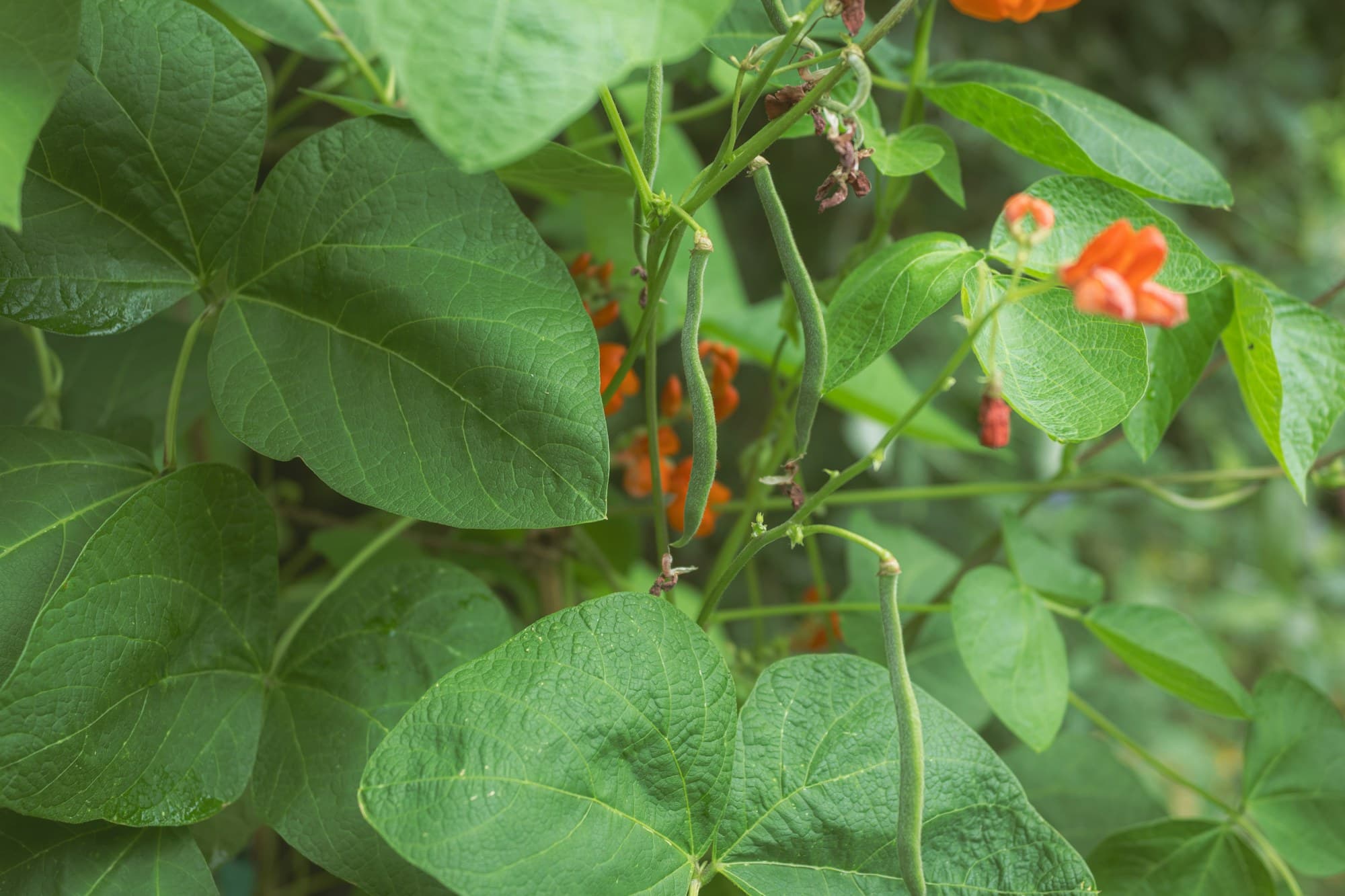
Heat at flowering is the usual cause, and it is common enough to have its own name: blossom drop. Maryland Extension puts the threshold at 85°F, Iowa State at 90°F, and Minnesota Extension at 95°F, and the differences reflect how long the heat lasts as much as how hot it gets. The plants usually recover and set pods again once temperatures fall back.
Should I plant bush beans or pole beans?
It depends on your summer. Bush beans produce one concentrated crop over roughly two weeks and take 50 to 60 days, so a heat wave during that window costs you the season. Pole beans take 60 to 110 days but keep flowering, and Minnesota Extension notes they pause in extreme heat rather than stopping. Hot summers favor pole types; short seasons favor bush types.
How late in the summer can I sow beans?
Maryland Extension gives mid-to-late July as the end of the succession window for snap beans, and the real limit is whether the remaining season can carry a plant from flower to filled pod before the nights cool. A sowing made into genuine midsummer heat tends to stall rather than produce.