GROWERBUDDY

New York fall garlic planting

When to plant garlic in New York

Cornell publishes three planting windows for New York, and they are weeks apart. The differences are real, and the choice comes down to how much leaf is above the soil when winter arrives.

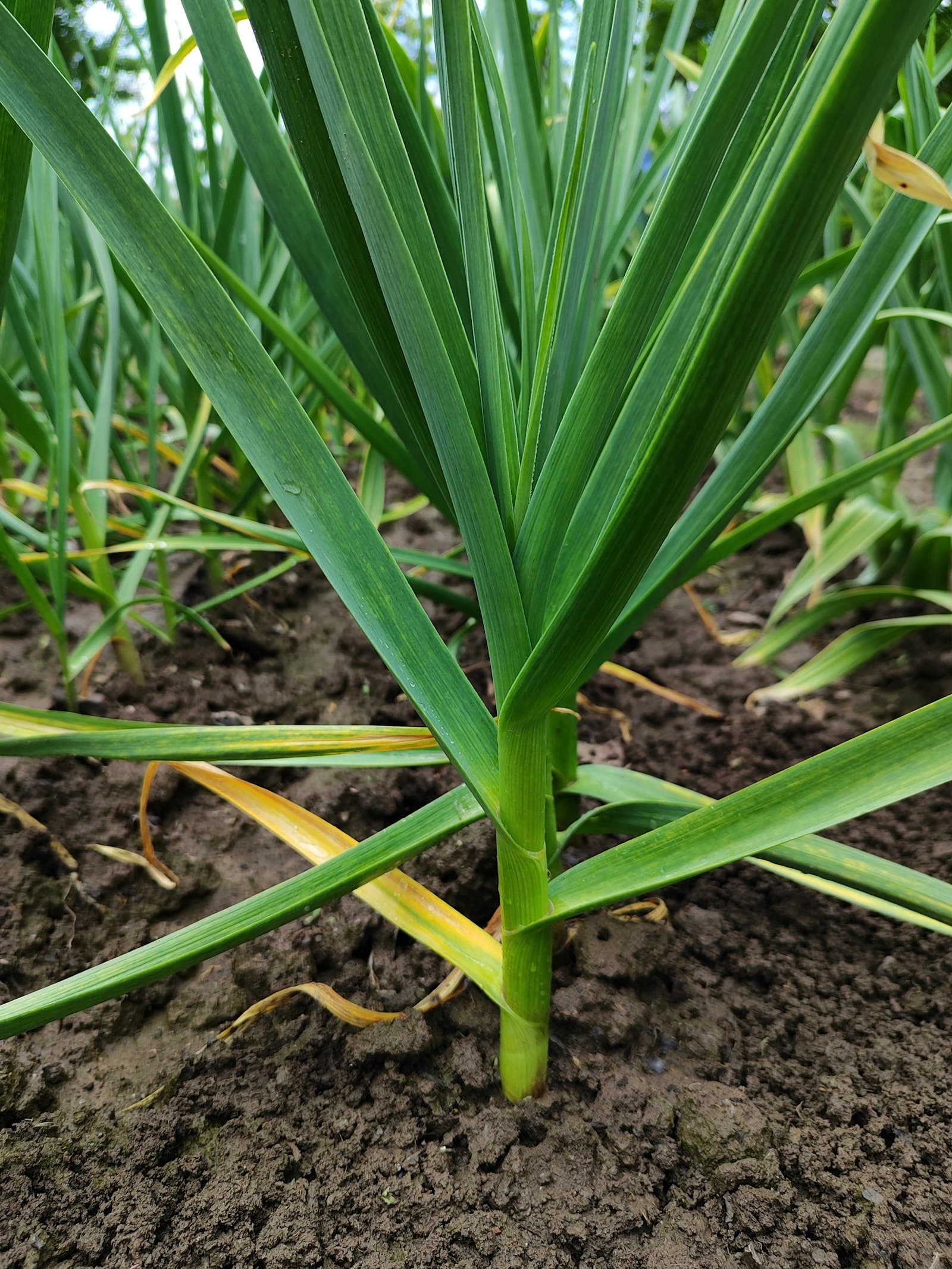
A young garlic plant standing in wet, dark soil, with the leaves of the row behind it.

Cornell's own publications put New York garlic planting anywhere between the second half of August and Thanksgiving. The choice inside that span is how much leaf you want above ground when winter arrives. Roots need six to eight weeks in cooling soil, and a shoot that comes up too early can drain the clove before spring.

Compare Cornell's three windows

Last updated 2026-10-26

Three Cornell answers

September, early October, or Thanksgiving

The same university publishes all three, and none of them is wrong. The National Weather Service's Binghamton office dates the first fall freeze in central New York to October, with its frost headlines running to October 11 in most of its counties and October 21 in the Finger Lakes counties. Six to eight weeks before an early-October freeze lands in the second half of August.

Cornell Vegetables planting table

Mid-September, in the first half of the month

What it aims at
The middle of the three, and the one written for upstate field plantings. It gives the clove a long root run before the ground closes and keeps the planting inside the frost-free part of autumn.
What it risks
September is still warm enough in a mild year for shoots to come up and keep growing, which is the growth the Small Farms guidance warns about.

Cornell Vegetables, Vegetable Planting Dates for Upstate New York, compiled by Steve Reiners.
Cornell Cooperative Extension county guide

Six to eight weeks before the first fall frost

What it aims at
Roots develop while the soil is still warm, with the aim of keeping top growth small before freezing weather arrives.
What it risks
The count depends on the frost date you use. Counted from an early-October freeze, six to eight weeks back lands in the second half of August, which is earlier than most gardeners plant.

Cornell Cooperative Extension Schoharie and Otsego Counties, Guide for Growing Garlic.

Cornell Small Farms

Halloween to Thanksgiving

What it aims at
The latest of the three, chosen so the clove roots without pushing a shoot up before winter. Written by a Finger Lakes grower with decades in the crop.
What it risks
In a cold garden the soil may close before the roots have six weeks. The same piece calls a late planting safer than an early one, not free.

Cornell Small Farms, Six Mistakes to Avoid When Planting Garlic and Shallots.

What the timing is protecting

The leaves are the part winter kills

20°F

The county guide puts the limit on a young shoot at 20°F. Below that the leaf is the part that dies, which is why northern gardeners are told to mulch heavily with straw and keep shoots under cover.

The Small Farms piece describes the slower failure. A clove planted too early pushes a shoot several inches, and that shoot works like a straw through winter, pulling water out of the clove until it is desiccated or dead. Roots do not do that. This is why the latest of the three windows is the safe one in an exposed garden.

20°F shoot limit from the Cornell Cooperative Extension county guide; the desiccation mechanism from Cornell Small Farms.

The bed

Drainage first, date second

Garlic wants well-drained soil with organic matter and a bed that does not hold water through a New York winter. The county guide calls for a sandy clay loam and, in heavier soil, raised beds two to three feet wide and at least 10 to 12 inches tall.

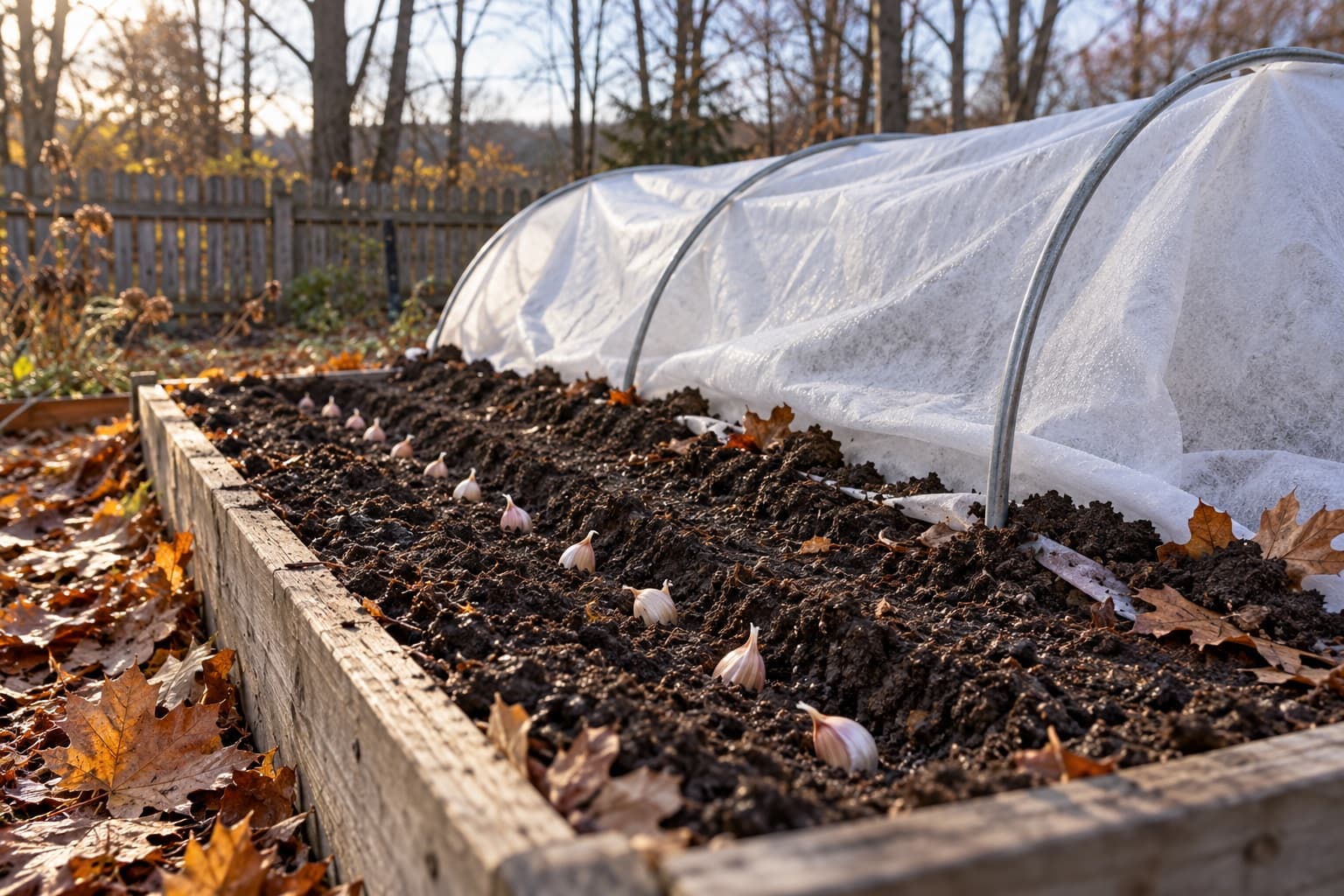
  • Plant two inches deep and six to eight inches apart, in rows 10 to 14 inches apart, with the flat root end down.
  • Lime the bed if it has not been limed recently, and work a complete fertilizer or bone meal below where the clove will sit.
  • Mulch heavily with straw in the north, then pull it back after the threat of frost has passed in spring.
  • Check drainage before choosing between the three windows. A wet bed fails on any of them.

Ending the season

Late July into August

Late July into August

The county guide harvests fall plantings in late July or August, when the tops yellow and start to go over. Lift a bulb to check. A ripe head is divided into plump cloves under a thick, dry wrapper.

Dig rather than pull. A stem pulled off a ripe bulb takes the wrapper with it, and that wrapper is what keeps the garlic through storage.

Break the scapes off hardneck garlic in spring. The county guide counts them as a loss of bulb size, and they are edible while they are still tight.

Check New York soil temperature
FAQ

Questions about garlic in New York

The three windows, the shoot limit, heavy soil and the summer harvest.

When should I plant garlic in New York?

Anywhere from late August to Thanksgiving, depending on which Cornell publication you follow. The planting table uses mid-September, the county guide counts six to eight weeks back from the first fall frost, and the Small Farms guidance uses Halloween to Thanksgiving.

Is October too late to plant garlic in New York?

No. October is inside all three windows, and the Small Farms guidance plants as late as Thanksgiving. What ends the window is the ground. A clove needs roughly six weeks of unfrozen soil to root before winter.

Why do Cornell's dates differ so much?

They are optimising different things. An early planting buys root growth and risks leaf growth; a late one avoids leaf growth and risks a short root run. The county guide's 20°F shoot limit and the desiccation a too-early shoot causes are the two facts behind the spread.

Do I need a raised bed for garlic in New York?

In heavy soil, the county guide says yes: two to three feet wide and at least 10 to 12 inches tall. Garlic in a bed that holds water through winter is more likely to rot, and no planting date fixes that.

When is garlic ready to harvest in New York?

Late July into August for a fall planting. Wait for the tops to yellow and start to fall, then lift a bulb to check for plump cloves under a thick wrapper. Dig rather than pull so the wrapper stays intact.

Should I mulch garlic over winter in New York?

In the north, yes. The county guide mulches heavily with straw for overwintering and removes it after the threat of frost passes in spring, so the shoots are not held under a cold, wet mat.