The four main types of tomato leaf curl
Not all leaf curl is the same. Determining the exact shape and direction of the curl is the fastest way to diagnose what your tomato plant is experiencing. The vast majority of cases in backyard gardens fall into physiological stress rather than infectious diseases.
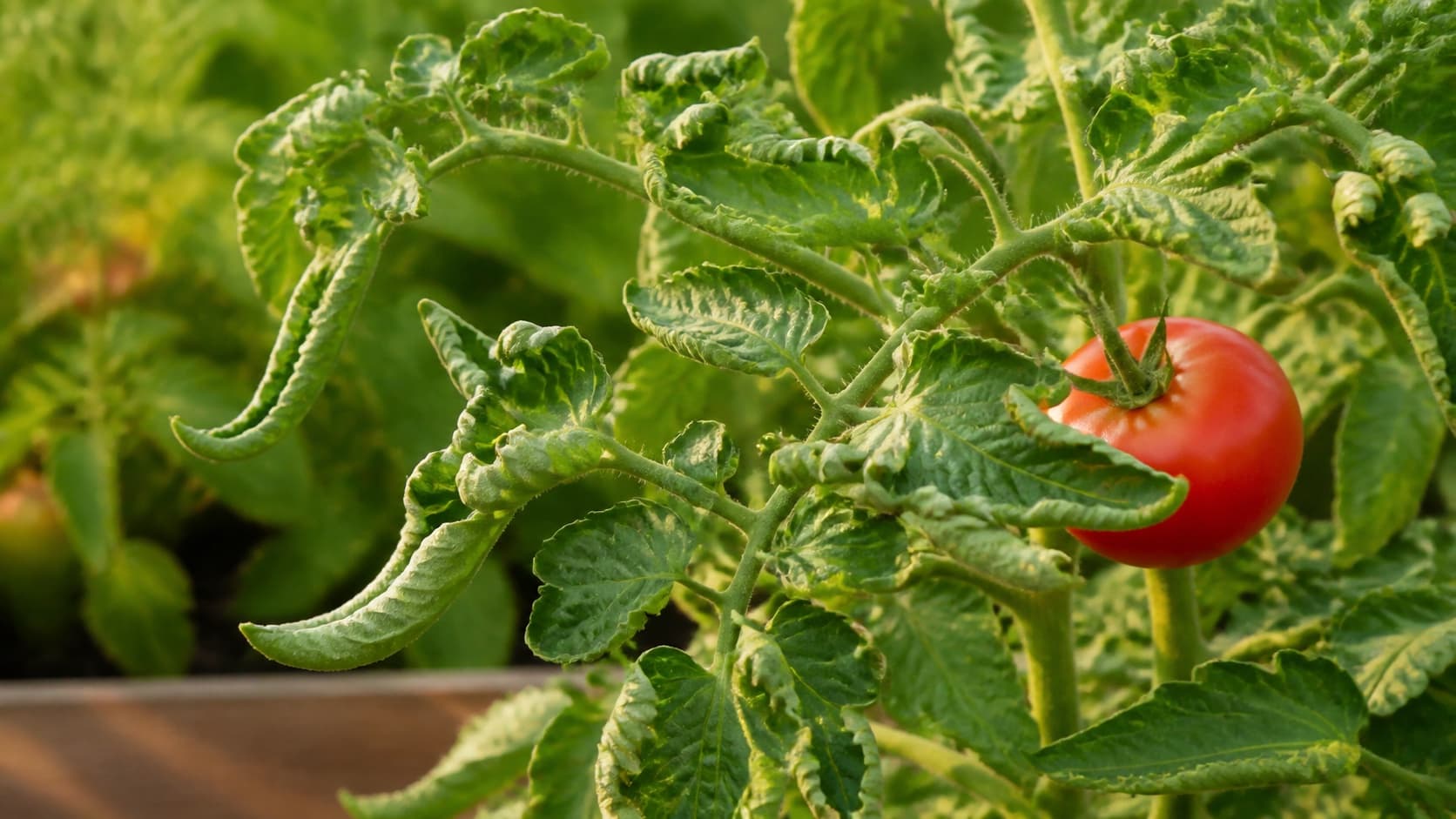
Upward rolling on lower, older leaves that feel thick and leathery is physiological leaf roll. Downward curling (cupping like an eagle's claw) accompanied by twisted stems points to herbicide injury. Distorted, mottled, or dwarfed new shoot growth suggests sap-sucking pests or viral infection.
- Upward roll on lower leaves + leathery texture = Physiological leaf roll (benign).
- Downward clawing + twisted stems = Herbicide drift or severe nitrogen excess.
- Curled new growth + webbing or sticky honeydew = Aphids, thrips, or broad mites.
- Yellowing leaf margins + stunted top clusters = Tomato Yellow Leaf Curl Virus (TYLCV).
Understanding harmless physiological leaf roll
Physiological leaf roll is a protective response. When tomatoes face high temperatures (above 85–90°F / 29–32°C), intense sun, high winds, or dry soil, they curl their leaves inward and upward. This reduces exposed surface area and slows water loss through the leaves.
Tall, long-growing varieties and heavy-bearing plants are especially prone to physiological roll, particularly after heavy rain followed by sudden heat or hard pruning. University extension research shows that it does not reduce fruit production, size, or overall yield.
- The plant curls its leaves to conserve moisture and protect vascular tissue.
- Commonly triggered by hot dry winds, heavy rain swings, or sudden pruning.
- Fruit production and harvest quality remain completely normal.
Distinguishing chemical damage and herbicide drift
Tomatoes are very sensitive to lawn weed killers such as 2,4-D, dicamba, and triclopyr. Spray drift or contaminated compost can cause severe symptoms, even when the source is not obvious.
Unlike physiological roll, herbicide damage can cause dramatic downward curling, distorted fan-like foliage, twisted stems, and parallel leaf veins. If exposure was mild, plants often grow out of it after several weeks; if severe, stunted plants rarely produce edible fruit.
- Herbicide injury causes downward curling, twisting stems, and narrow strap-like leaves.
- Never apply lawn weedkiller on breezy days anywhere near vegetable gardens.
- Avoid compost or manure from animals that grazed on pasture treated with persistent lawn herbicides.
Checking for sap-sucking pests and mites
Broad mites, spider mites, aphids, and whiteflies can make new foliage cup, twist, and deform as they feed.
Mite damage typically targets the tender newest growth at the top of the plant, causing young leaves to curl downward, turn bronze, and become brittle. Aphids cluster on leaf undersides, leaving behind shiny, sticky honeydew residue and black sooty mold.
- Inspect the undersides of curled leaves with a 10x hand magnifier.
- Wash off aphid colonies with a firm jet of water from the garden hose.
- Use organic insecticidal soap or neem oil spray in the evening if pest pressure is severe.
Best growing practices to prevent and manage leaf curl
For physiological leaf roll, the best remedy is keeping growing conditions steady. Apply a 2 to 3-inch layer of organic mulch (clean straw, shredded leaves, or wood shavings) over the root zone to even out soil temperature and moisture.
Water deeply 2 to 3 times per week at the base of the plant rather than giving shallow daily sprinkles. During prolonged heat waves above 90°F (32°C), installing 30% white or aluminet shade cloth over your tomato trellises can dramatically reduce heat stress and leaf curling.
- Mulch root zones 2–3 inches deep to maintain cool, evenly moist soil.
- Water deeply at soil level in the morning to help the plant handle daytime heat.
- Put up temporary 30% shade cloth during midsummer peak heat waves.