First separate temporary afternoon wilt from all-day collapse
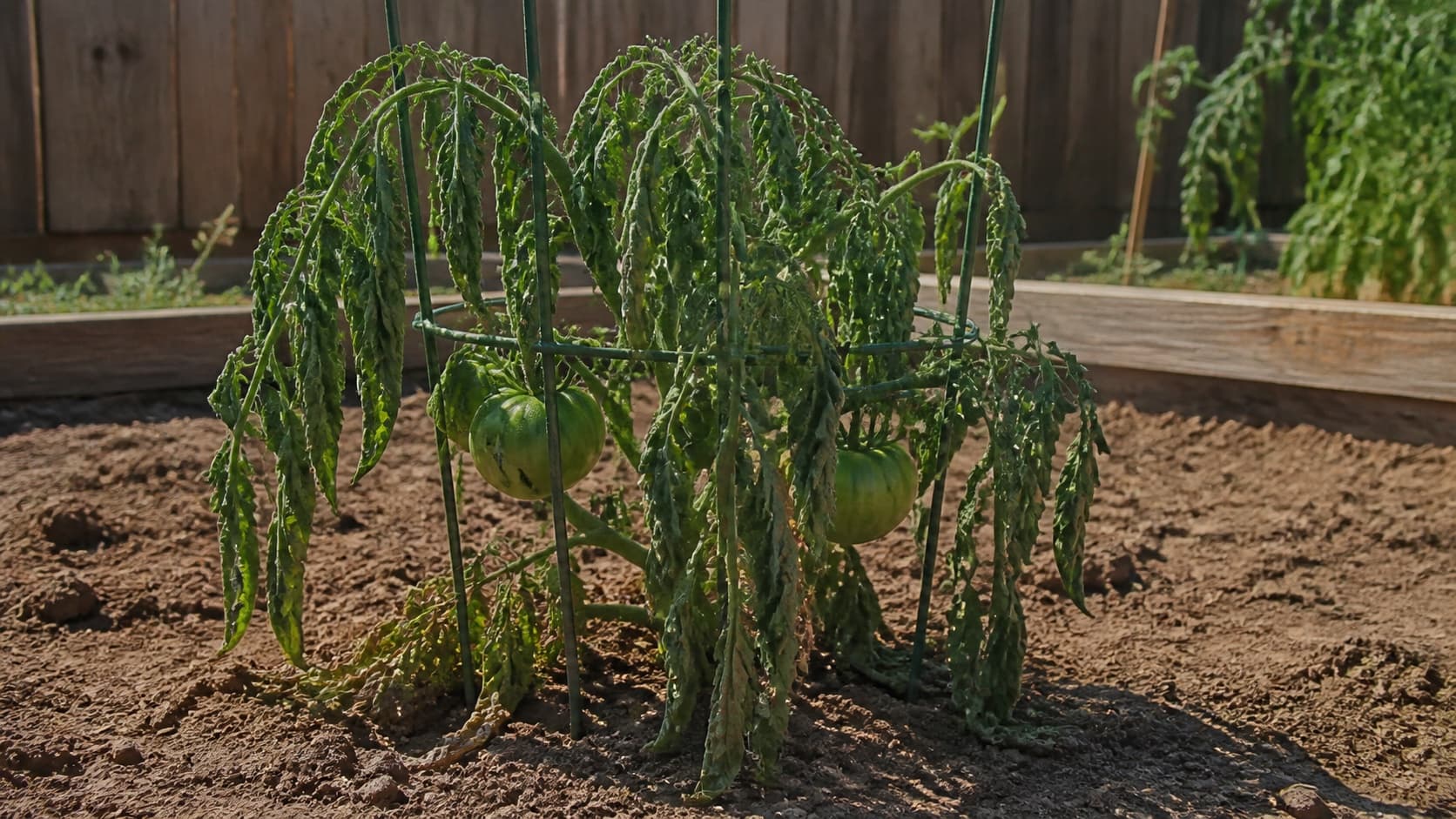
Tomatoes can wilt in hot afternoons even when the roots are basically fine. When heat, sun, and wind pull moisture from the leaves faster than the plant can replace it, the foliage can soften and droop for part of the day. If the plant recovers by evening or early morning, that is a different problem from a tomato that stays limp around the clock.
This distinction matters because many gardeners treat all wilt as thirst. They water immediately without checking the root zone, then accidentally worsen a plant that was already sitting in wet soil. The fastest way to diagnose wilt is to compare the timing of the symptom with the timing of the weather.
- Afternoon wilt that recovers later is usually less alarming than wilt that stays constant.
- Do not assume every drooping tomato needs more water right away.
- Heat, wind, and reflected sun can temporarily overwhelm even otherwise healthy plants.
Check whether the roots are too dry or too wet
Tomatoes wilt when the root system cannot keep water moving. That can happen because the soil is too dry, but it can also happen because the soil is so wet that roots are starved for oxygen. Both conditions can make leaves look limp, which is why surface appearances alone are unreliable.
Push a finger down, use a moisture tool if you have one, and pay attention to how the container or bed behaves a day after watering. Dry soil several inches down points one way. Heavy, cool, sticky soil points another. The right fix depends on which condition the roots are actually living in.
- Dry roots and airless wet roots can both produce a wilted plant.
- Judge moisture below the surface instead of reading only the top crust.
- If the root zone is soaked, more water is not a rescue plan.
Wilting after transplanting often starts with weather and root disturbance
A newly planted tomato has a smaller margin for error than an established one. If the transplant went into cool soil, faced hard wind, or had its roots disturbed too much during planting, wilting can show up quickly even when the plant looked strong in the pot.
This is one reason early tomato planting so often leads to confused troubleshooting. Gardeners see wilt and start feeding or spraying when the more honest explanation is that the plant never landed in a stable growing window. Sometimes the fix is patience, protection, and steadier conditions rather than more inputs.
- Recent transplanting makes tomatoes more vulnerable to both heat and cold setbacks.
- Rough handling or cold soil can slow the roots enough to trigger wilt.
- A plant that was set out a little too early often looks worse before warm weather settles it down.
Persistent wilt can point to stem injury, root trouble, or disease
When a tomato stays wilted through the night, collapses branch by branch, or shows one-sided wilt that does not match the weather, the problem may be more serious than routine thirst. Stem damage near the base, root injury, chewing pests, or disease can interrupt water movement in ways that simple watering cannot fix.
That does not mean every persistent wilt is automatically a disease diagnosis. It means you should slow down and inspect the plant more carefully. Look at the stem base, recent cultivation, possible cracking, and whether one branch is failing before the rest. Persistent wilt deserves observation before another round of fertilizer or irrigation.
- Wilt that does not recover overnight is a different category from heat droop.
- One-sided wilt often deserves a closer look at physical damage or deeper vascular trouble.
- If the problem keeps intensifying, stop treating it like a simple watering issue.
What not to do when tomatoes start wilting
The most common mistake is stacking fixes too fast. Gardeners often water heavily, fertilize, prune, and spray within the same couple of days. That makes the original cause harder to read and can push a stressed plant even harder.
A better approach is to solve the highest-probability problem first. Check root-zone moisture, account for the recent weather, reduce avoidable stress, and then watch how the plant responds. Clear diagnosis usually comes from slowing down, not escalating.
- Do not reflex-water a tomato without checking whether the root zone is already wet.
- Do not feed a wilted plant just because the leaves look weak.
- Do not strip large amounts of foliage from a plant that is already struggling to recover.