Separa primero la marchitez temporal de la tarde del desplome de todo el día
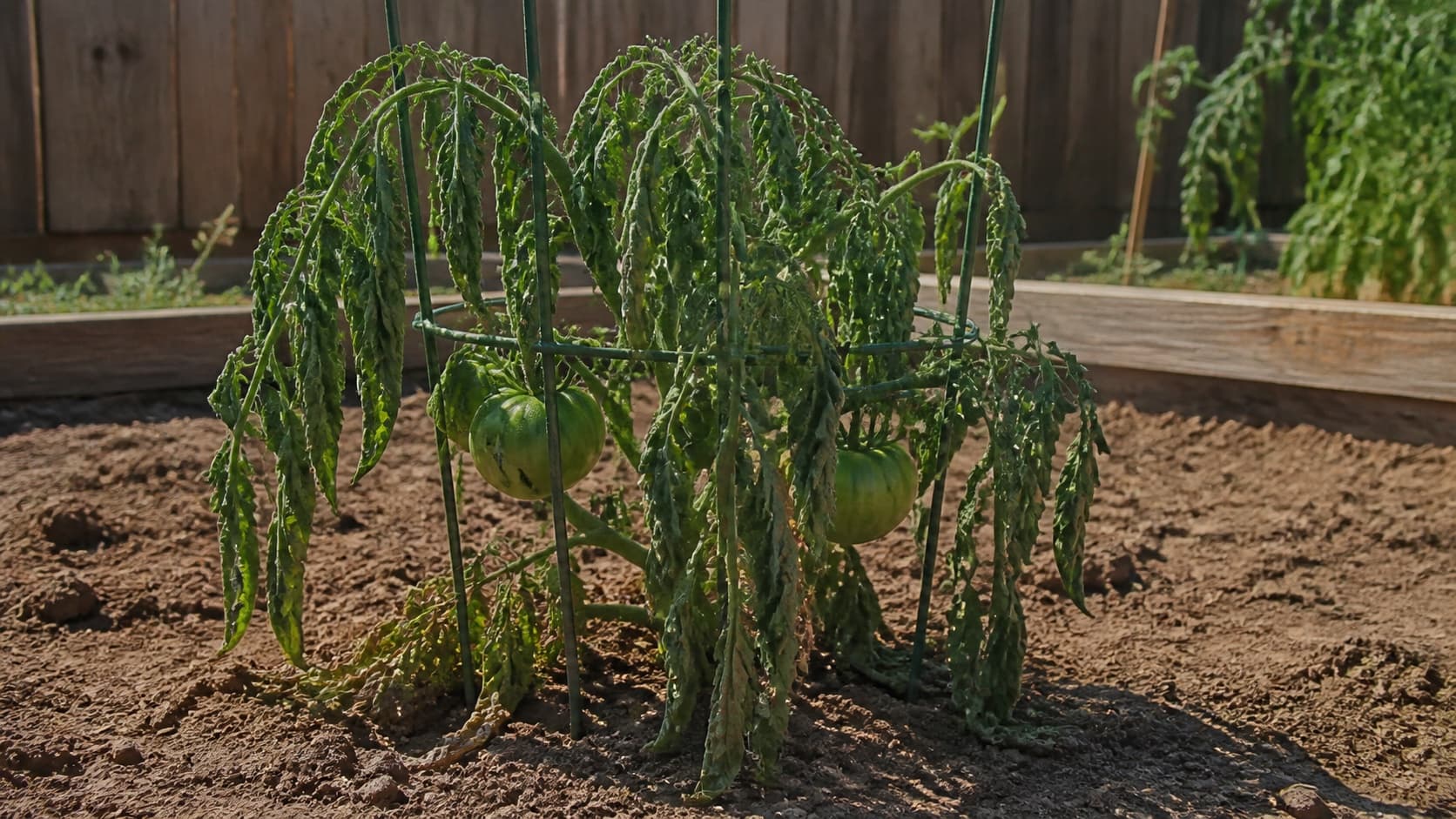
Los tomates pueden marchitarse en tardes calurosas aunque las raíces estén básicamente bien. Cuando el calor, el sol y el viento extraen humedad de las hojas más rápido de lo que la planta puede reponerla, el follaje se ablanda y se desploma durante parte del día. Si la planta se recupera al atardecer o a primera hora de la mañana, es un problema distinto al de un tomate que sigue flácido a todas horas.
Esta distinción importa porque mucha gente trata toda marchitez como si fuera sed. Riega de inmediato sin mirar la zona de raíces y así empeora una planta que ya estaba en tierra mojada. La forma más rápida de diagnosticar la marchitez es comparar cuándo aparece el síntoma con cómo se comportó el clima.
- Una marchitez de la tarde que se recupera después suele ser menos preocupante que una que se mantiene constante.
- No des por hecho que todo tomate caído necesita más agua de inmediato.
- El calor, el viento y el sol reflejado pueden superar temporalmente incluso a plantas sanas.
Comprueba si las raíces están demasiado secas o demasiado mojadas
Los tomates se marchitan cuando el sistema de raíces no consigue mantener el agua en movimiento. Eso puede pasar porque la tierra esté demasiado seca, pero también porque esté tan mojada que las raíces se queden sin oxígeno. Las dos situaciones dejan las hojas flácidas, y por eso el aspecto superficial por sí solo no es fiable.
Mete un dedo, usa un medidor de humedad si lo tienes y fíjate en cómo se comporta la maceta o la cama un día después de regar. Tierra seca a varios centímetros apunta hacia un lado; tierra pesada, fría y pegajosa apunta al otro. El arreglo correcto depende de en qué condición viven realmente las raíces.
- Raíces secas y raíces encharcadas sin aire pueden producir la misma planta marchita.
- Juzga la humedad bajo la superficie en lugar de leer solo la costra de arriba.
- Si la zona de raíces está empapada, más agua no es un plan de rescate.
La marchitez tras el trasplante suele empezar por el clima y las raíces alteradas
Un tomate recién plantado tiene menos margen de error que uno ya establecido. Si el trasplante cayó en tierra fría, se enfrentó a viento fuerte o sus raíces se alteraron demasiado al plantarlo, la marchitez puede aparecer rápido aunque la planta se viera fuerte en la maceta.
Por eso el trasplante temprano lleva tantas veces a un diagnóstico confuso. La gente ve marchitez y empieza a abonar o a aplicar productos, cuando la explicación más honesta es que la planta nunca llegó a una ventana de cultivo estable. A veces el arreglo es paciencia, protección y condiciones más regulares, no más insumos.
- Un trasplante reciente hace al tomate más vulnerable tanto al calor como al frío.
- Un manejo brusco o la tierra fría pueden frenar las raíces lo suficiente para provocar marchitez.
- Una planta puesta un poco demasiado pronto suele verse peor antes de que el calor la asiente.
La marchitez persistente puede indicar daño en el tallo, problema de raíz o enfermedad
Cuando un tomate sigue marchito durante la noche, se desploma rama por rama o muestra una marchitez de un solo lado que no encaja con el clima, el problema puede ser más serio que la sed habitual. Un daño en el tallo cerca de la base, una raíz dañada, plagas que mastican o una enfermedad pueden interrumpir el paso del agua de formas que el riego no arregla.
Eso no significa que toda marchitez persistente sea automáticamente una enfermedad. Significa que conviene parar y revisar la planta con más cuidado. Mira la base del tallo, el laboreo reciente, posibles grietas y si una rama falla antes que el resto. La marchitez persistente merece observación antes de otra ronda de fertilizante o de riego.
- Una marchitez que no se recupera de noche es de otra categoría que un desplome por calor.
- La marchitez de un solo lado suele merecer una revisión del daño físico o de un problema vascular más profundo.
- Si el problema sigue intensificándose, deja de tratarlo como un simple asunto de riego.
Qué no hacer cuando los tomates empiezan a marchitarse
El error más común es acumular arreglos demasiado rápido. Es habitual regar a lo grande, abonar, podar y aplicar algo en el mismo par de días. Así la causa original se vuelve ilegible y la planta estresada recibe aún más presión.
Mejor ve resolviendo primero el problema más probable. Comprueba la humedad de la zona de raíces, ten en cuenta el clima reciente, reduce el estrés evitable y observa cómo responde la planta. Un diagnóstico claro suele venir de ir más despacio, no de escalar.
- No riegues por reflejo sin comprobar antes si la zona de raíces ya está mojada.
- No abones una planta marchita solo porque las hojas se vean débiles.
- No arranques grandes cantidades de follaje a una planta que ya le cuesta recuperarse.