What blossom-end rot really is
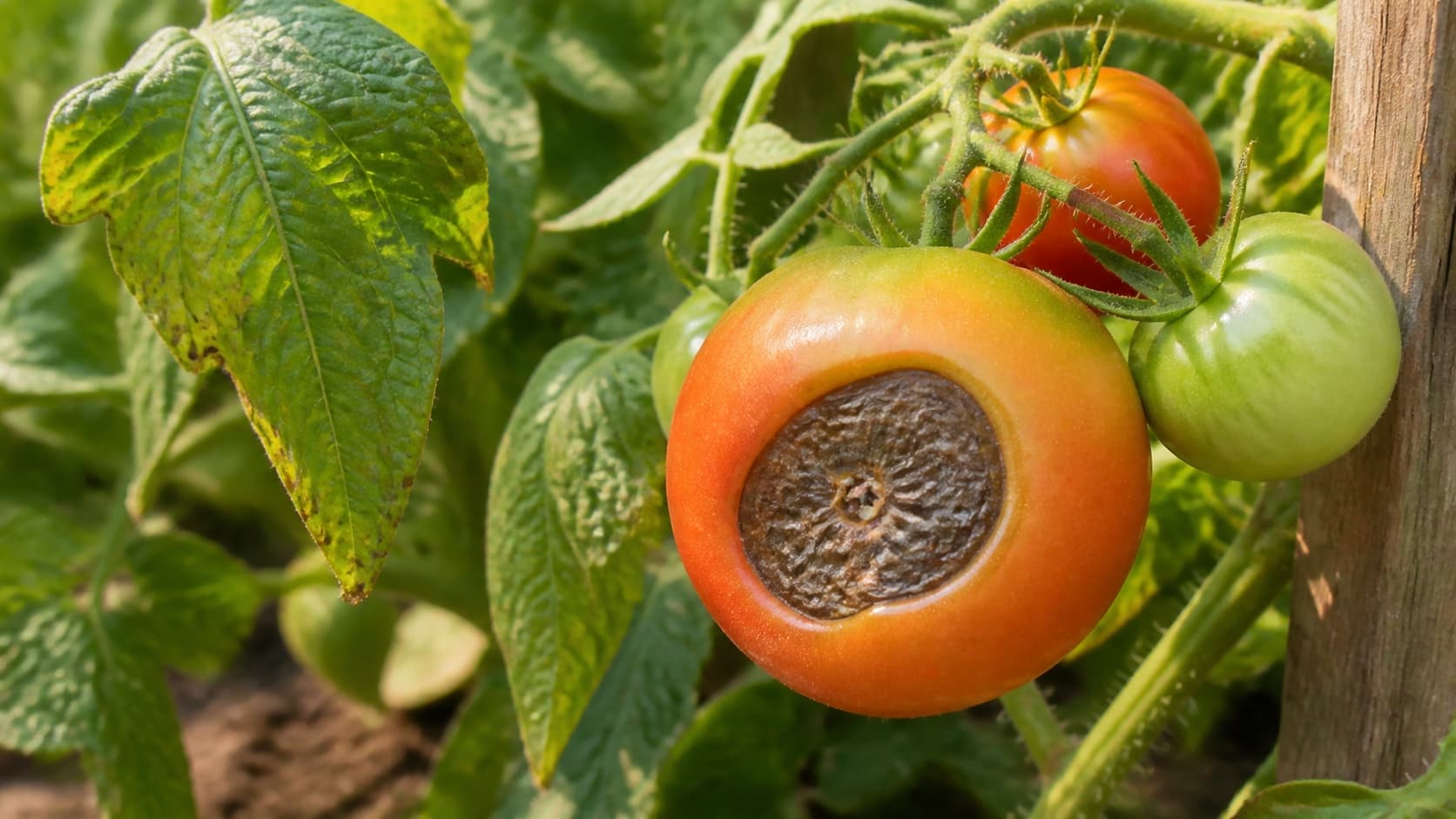
Blossom-end rot shows up as a dark, leathery, sunken area on the blossom end of developing fruit. It is strongly associated with calcium movement problems inside the plant, but that does not automatically mean the soil is missing calcium or that the right answer is to buy a correction spray.
The more common issue is inconsistent water movement. If the roots swing between stress and recovery, the plant cannot move resources into fruit consistently, and the earliest fruit often show the damage first.
- The visible symptom is on the fruit, but the driving problem usually starts in the root zone.
- Calcium transport fails most often when water movement through the plant is unstable.
- That is why watering and root health matter more than a reflex purchase.
Why the first fruit often show the damage
Early fruit production develops while the plant is still adjusting to summer heat, greater water loss, and sometimes still-establishing roots. If a weather swing, transplant stress, or uneven watering hits during that stage, those first tomatoes are often the most vulnerable.
This is one reason blossom-end rot can look dramatic and then settle down later once the plant and watering pattern stabilize.
- The earliest fruit are often the least forgiving of root-zone stress.
- A few damaged fruit do not always mean the whole season is lost.
- Later fruit often improve if the underlying stress is corrected.
The fixes that matter most
Consistent moisture is the primary fix. That does not mean keeping the bed soggy. It means watering deeply enough and often enough that the root zone does not cycle through sharp extremes. Mulch helps by smoothing evaporation and reducing sudden surface heat.
Container growers need extra vigilance because pots dry faster and heat up harder. A container tomato with limited root room can move from fine to stressed very quickly.
- Aim for even moisture rather than feast-or-famine watering.
- Mulch once the bed is warm to reduce evaporation swings.
- Upsize or manage containers more carefully if the root zone dries too fast.
When fertilizer and calcium matter and when they do not
If a soil test or repeated history points to a true nutrient imbalance, that deserves attention. But in many home gardens, especially those already receiving compost or balanced fertilizers, blossom-end rot is more about uptake disruption than absence.
This is why adding more fertilizer blindly can backfire. Extra salts and growth pressure do not help a root system that is already stressed by water swings.
- Use testing and history to guide nutrient corrections, not panic.
- Do not assume every case is solved by adding calcium products.
- Fix root stress first because that is often the main bottleneck.
What to do with damaged fruit and what to expect next
Remove fruit that are already badly affected because they will not recover into quality harvest. Then watch the next sets after you correct watering and reduce stress. Many plants begin producing sound fruit once conditions stabilize.
The key is consistency. One good watering followed by another dry swing rarely fixes the pattern.
- Remove the worst fruit and judge improvement on the next flush.
- Keep the correction steady for at least several watering cycles.
- Use later fruit quality as the real measure of whether the fix worked.