Ohio State's guide plants garlic in late fall and aims for the first leaves to be up before freezing weather. Guides in the states next door ask for the opposite. Both are about how much leaf meets the cold, and Ohio's guide says which side it is choosing.
Plant garlic in late fall, and aim for the first leaves to be above ground before freezing weather. That is Ohio State University Extension's instruction, and it runs against the advice from states that tell growers to keep shoots below ground. Ohio's guide also asks for a bed prepared ahead of planting, because garlic competes poorly with weeds and dislikes soil that stays wet.
Two instructions
Leaves up before the freeze, or no leaves at all
Ohio State University Extension
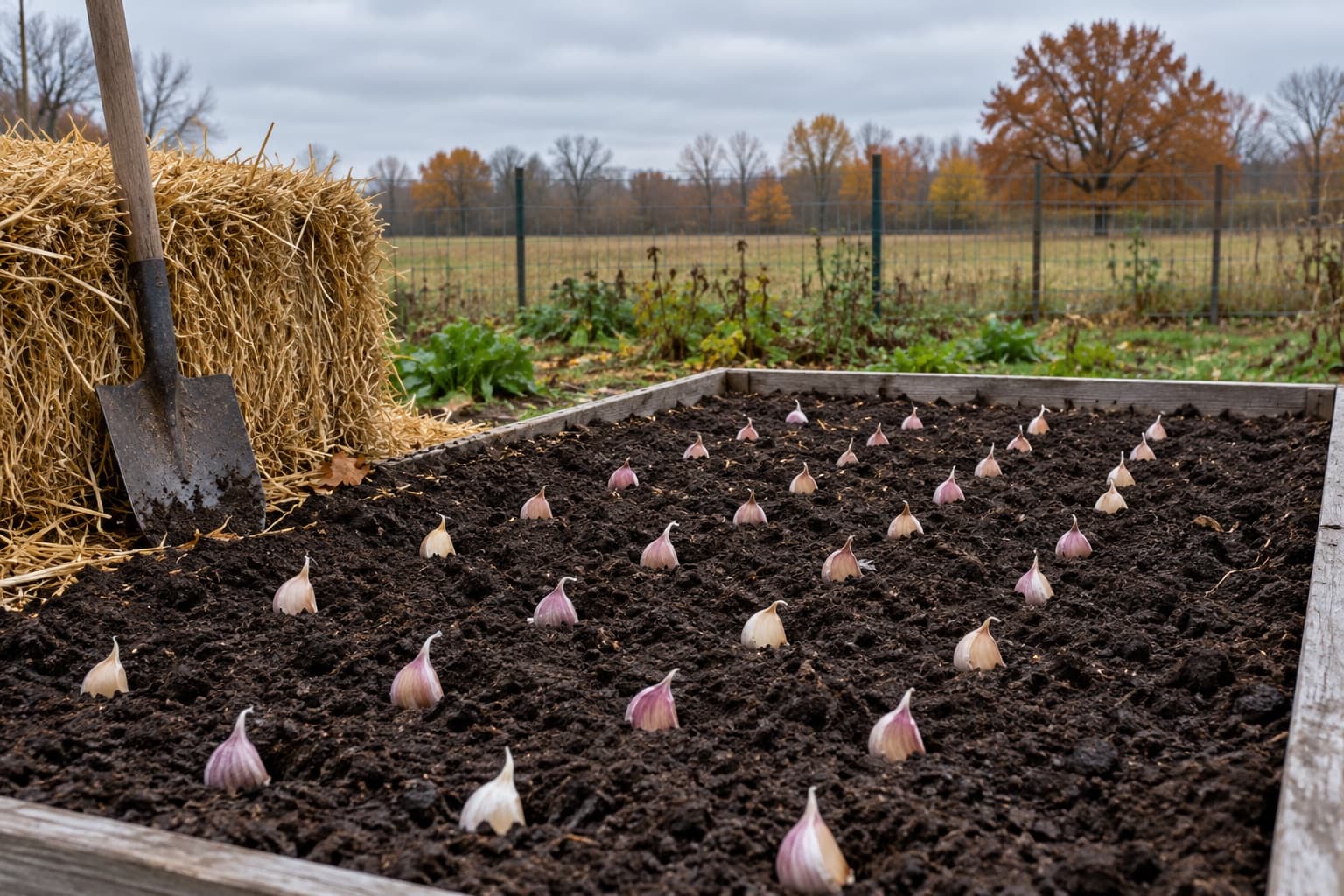
Late fall, with the first leaves up before freezing weather
The first garlic leaves should be out of the soil before temperatures fall to freezing. Planting too early is the mistake it warns about, because more above-ground growth is more tissue for winter to damage.
What it protects
Roots that have had warm soil to grow in, and a plant already growing when spring starts.
What it risks
A warm October pushes leaf growth that a hard December can injure.
Ohio State University Extension, Growing Garlic in the Garden, HYG-1627.
Guides in Wisconsin and Pennsylvania
Late enough that the shoots stay below the soil
Those states plant after a killing frost, or late enough that the clove roots without pushing leaves up, and they add mulch for the winter.
What it protects
No exposed leaf through the coldest weeks.
What it risks
A short rooting period when the ground freezes soon after planting.
Wisconsin Horticulture and Penn State Extension publish this timing for their own states.
October 14 to October 28
The normal first freeze of 32°F runs from the middle of October in northern Ohio to the end of the month in the south, and the normal first frost arrives one to two weeks earlier. That is the cold Ohio State's instruction is counted against, which is why the leaves have time to come up.
National Weather Service Cleveland and Wilmington, 1991-2020 first fall freeze normals.
Both instructions answer the same question, which is how much leaf sits above the soil when the cold arrives. Ohio's autumn is long enough that the first leaves can come up and harden before the freeze, and the state's guide is written for that autumn.
The bed
Prepare it a season ahead, not a week before
Ohio State plans the garlic bed before the garlic. The state's guide puts preparation in the season before planting and names the crops that leave the ground in time.
Follow a crop that finishes early
Garlic fits after summer squash, green beans or garden peas, because those are harvested before the cloves go in. The bed then has weeks to be cleared and amended rather than a single afternoon.
Clear the weeds first
Garlic competes poorly with weeds and gains from an aggressive weed programme. Remove perennial weeds and any winter annuals that have already germinated before planting, not after the cloves are in.
Check what the soil does with water
Soil that stays wet in a wet year brings more disease and misshapen bulbs. Ohio State's pH range is wide, 6.0 to 8.0 with 6.0 to 6.5 ideal, but no pH correction fixes a bed that holds water.
Set the cloves the right way up
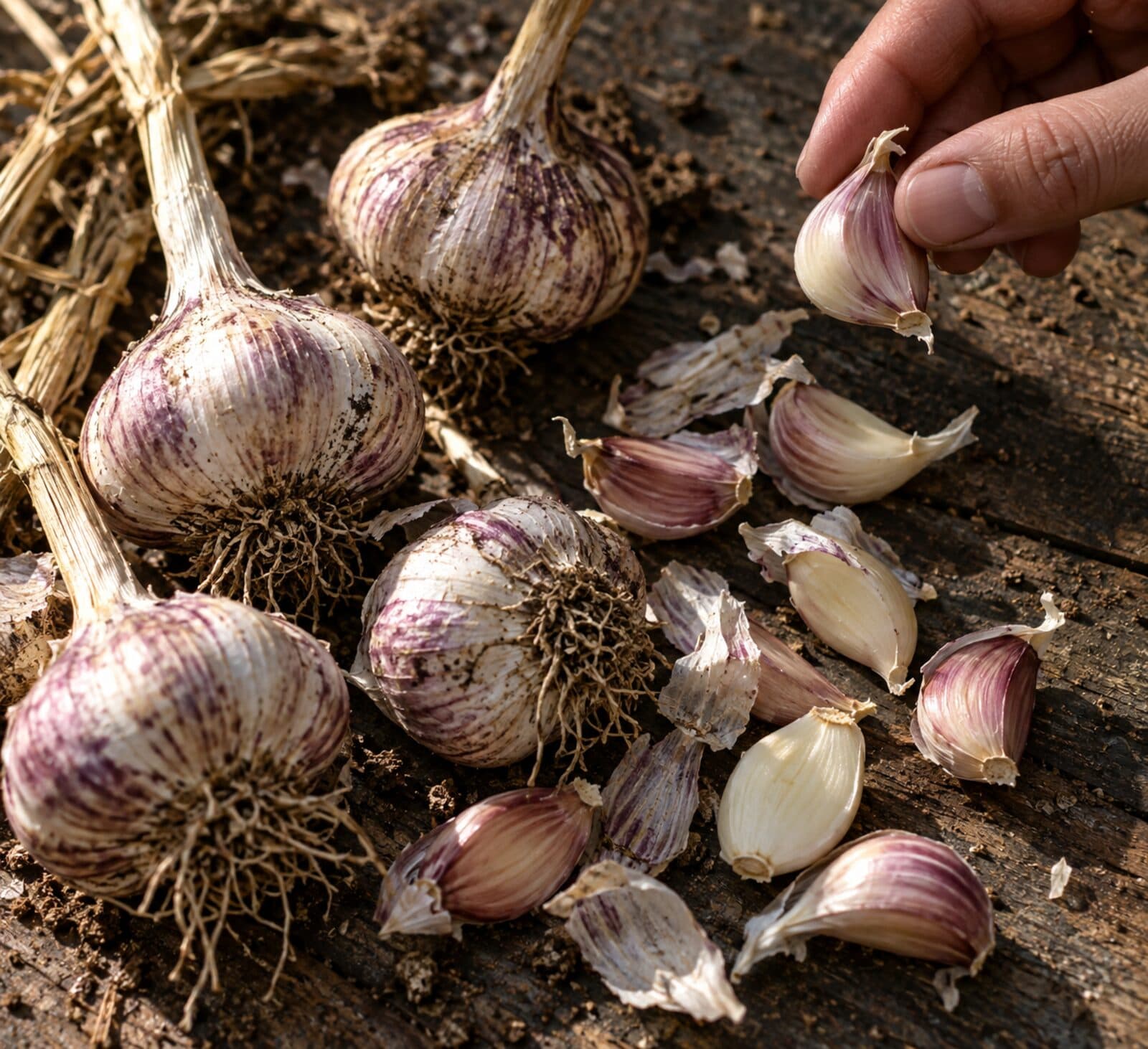
Two inches deep, four to five inches apart, in rows 18 to 24 inches apart, with the flat basal plate down. The Midwest Vegetable Production Guide that Ohio State co-writes plants three to four inches deep for commercial crops, so the home-garden figure is the shallower of the two. A clove planted upside down or on its side gives a small or misshapen bulb.
Bed timing, weed control, drainage, pH and spacing from Ohio State University Extension, HYG-1627; the commercial depth from the Midwest Vegetable Production Guide.
Varieties for Ohio
Rocambole in the north, softneck in the south
Hardneck
A real winter, and the north of the state gives more of one than the south
Northern Ohio. Rocambole types struggle in southern Ohio, while Music, Georgian Fire and Georgian Crystal do better.
Softneck
Less cold, and it stores longer than hardneck
Southern Ohio, and any garden that wants bulbs for braiding. Broadleaf Czech, Italian Late and Red Toch are the state's list.
Elephant
No true garlic cold requirement, because the plant is a leek
Gardeners who want very large, mild cloves and will pay for seed stock.
Ohio State lists named cultivars for the state and recommends trying several before planting a whole bed with one.
Do not plant garlic from the grocery aisle. It may have been treated to stop it sprouting, which is good for shelf life and bad for a garden.
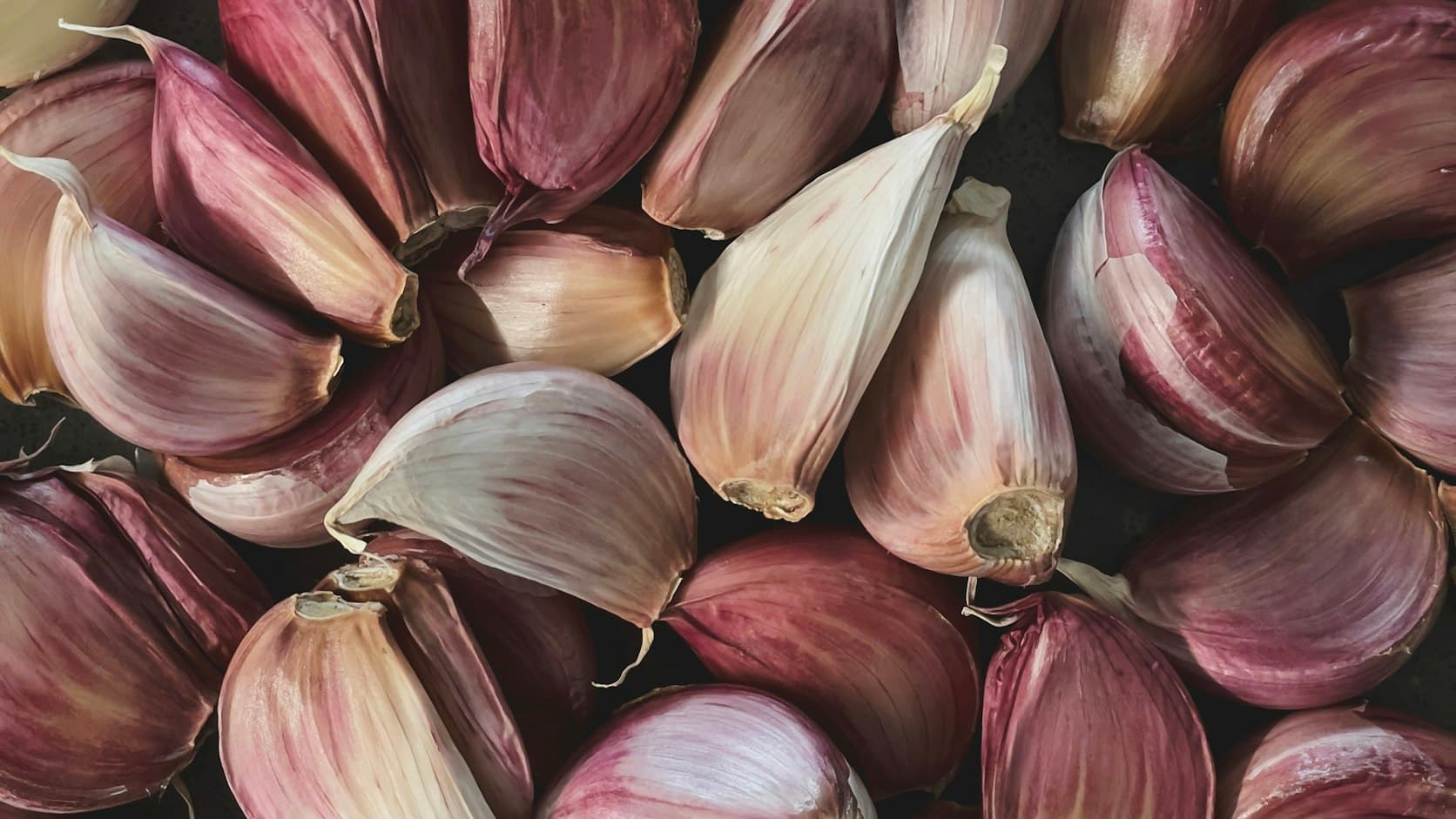
Choose large, undamaged cloves and keep the basal plate intact. The size of the clove you plant sets the size of the bulb you lift.
Cultivar lists from Ohio State University Extension. Try several before planting a whole bed with one.
Winter cover and spring
Four inches of straw, raked back when growth starts
After planting
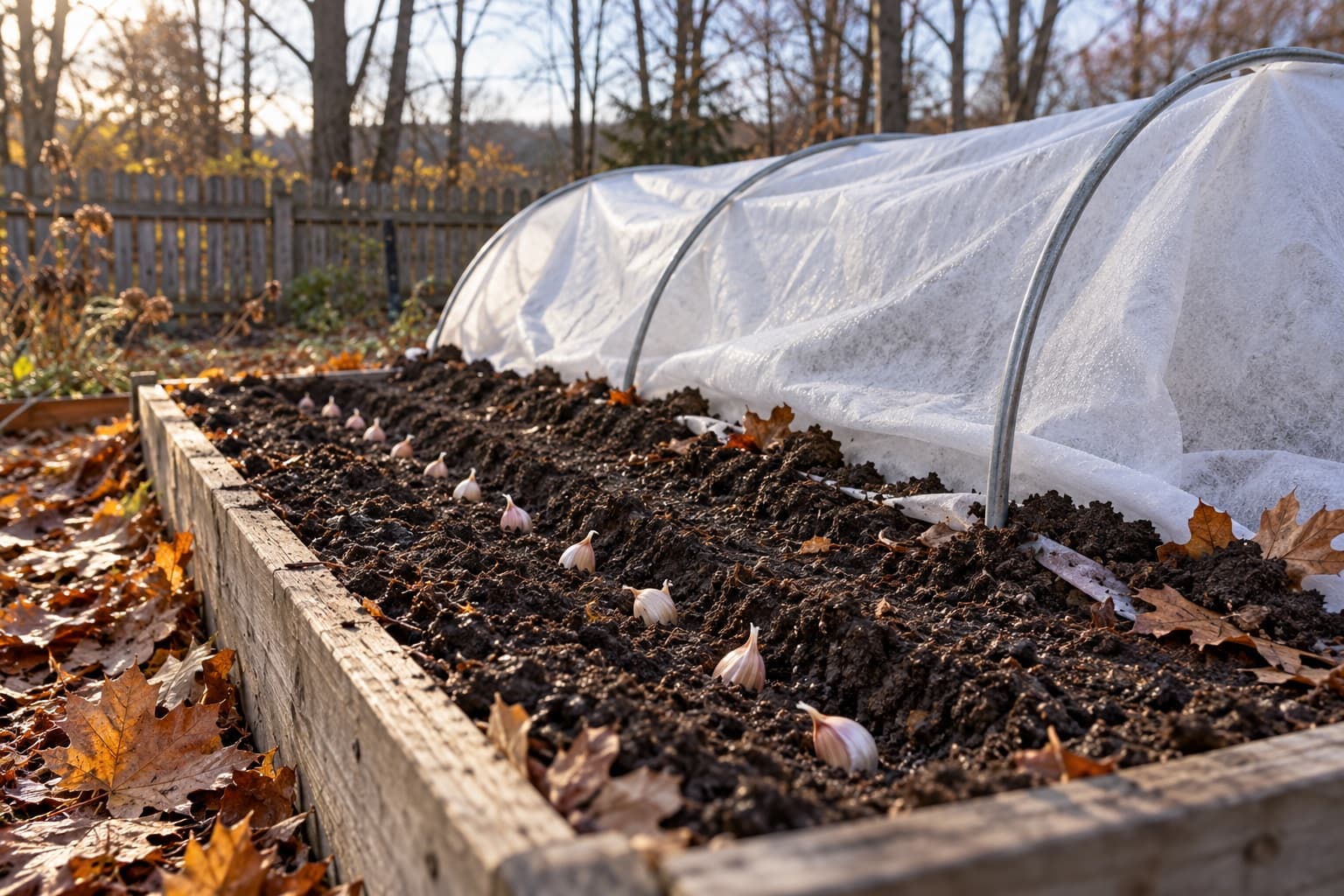
Four inches of clean straw
Ohio State recommends four inches of straw, and warns against hay, which brings weed seed with it. The mulch holds moisture and keeps winter annual weeds down.
When growth resumes
Rake it off the shoots
Rake the mulch off the emerging garlic in spring and leave it between the rows. There it still suppresses spring and summer weeds without shading the new leaves.
Late spring
Break off the scapes
Hardneck garlic sends up a curled scape. Removing it puts the plant's energy into the bulb, and the scape is edible while it is still tight.
Mulch depth, the hay warning, spring raking and scape removal from Ohio State University Extension, HYG-1627.
The leaf-and-freeze trade, bed preparation, mulch depth and variety choice.
When do you plant garlic in Ohio?
Late in the fall. Ohio State's guide gives a condition rather than a date. The first leaves should be above ground before freezing weather, and the planting should not be so early that the plants make a lot of growth before winter.
Should garlic be above ground before winter in Ohio?
Ohio State aims for it. Its guide says the first leaves should emerge before freezing temperatures and warns that planting too early produces more above-ground growth that winter can damage. Guides in Wisconsin and Pennsylvania ask for the opposite, keeping shoots below the soil.
Can I plant garlic where tomatoes or beans grew?
Yes, if the crop is out in time. Ohio State suggests following summer squash, green beans or garden peas, and preparing the bed before planting rather than the same week. Clear weeds first, because garlic competes poorly with them.
Which garlic grows best in Ohio?
Hardneck types do well in northern Ohio, and rocambole types struggle in the south. Softneck types, including Broadleaf Czech, Italian Late and Red Toch, suit southern gardens and store longer. Ohio State recommends trying several cultivars before committing a bed.
How much mulch does garlic need in Ohio?
Four inches of clean straw after planting. Ohio State warns against hay because of the weed seed it carries, and recommends raking the mulch off the emerging garlic in spring and leaving it between the rows.
What happens if garlic sprouts in November?
That is what Ohio State's timing is aiming for, as long as the plants do not make a lot of growth. Leaves above the soil before the freeze are expected; a tall, soft plant going into a hard December is the risk the guide warns about. Mulch protects the bed.
Ohio garlic references
Ohio State University Extension's garlic guide, which supplies the timing and the bed rules.