Slugs in the Garden: How to Stop Them Eating Seedlings
Slugs work one shift a night and are back under cover before the surface dries, so the damage looks like it came out of nowhere. The morning is when you can tell whether it was them, and the soil is where the next round is already waiting.
Holes with smooth edges, a shiny trail, and a row of seedlings cut off at the ground: that is one night's work, not a week's. What is left on the plant says which animal did it, and most of what a search returns as a cure has already been tested against a real planting.
Next Move
Use the calendar when the real problem is timing or weather.
Slug damage tracks wet, mild weather, and the stretch that follows the first autumn rains is when the next generation gets laid. The planting calendar carries your own weather alongside the planting windows, so you can time the next sowing around the wet nights instead of guessing at them.
The damage happens in one shift, and it is over by breakfast
Slugs come out of the soil when the air is wet enough, feed, and are back under cover before the surface dries. That is the whole window you have to interrupt.
- Dusk
38 °F
3 °C
the temperature below which slugs stop moving — Pacific Northwest Pest Management Handbooks
The night they choose is a wet one
Slugs stay put when the air is dry, cold or moving. Put the humidity near saturation, a mild night above about 38 °F and still air together and they come up to feed. Rain does it, and so does an evening watering, which is one reason the worst damage often follows the night after you watered.
- Night
2 hours after sunset
the hour OSU Extension gives for finding them on the plants
The feeding happens up on the plants
Two hours after dark the ones that are feeding are up on leaves and stems, where a torch finds them. Early morning works too, before they have gone back down. What a daytime search misses is not a cleverly hidden slug: it is a population that spends the day in soil cracks and under anything flat and damp, and very little of it is above ground at any moment.
- First light
One night
the window a seedling has — Clemson Extension and the Royal Horticultural Society
By morning only the evidence is left
Feeding stops before the surface dries, and the trail hardens into a silvery mark that shows up in daylight. A single night is enough to consume young seedlings down to the ground and to leave the holes you are looking at now. Waiting a few more nights to see what happens is the expensive choice.
What the damage tells you, and what it rules out
Slugs share their calling card with cutworms and earwigs. Check these four signs in the morning before you buy anything.
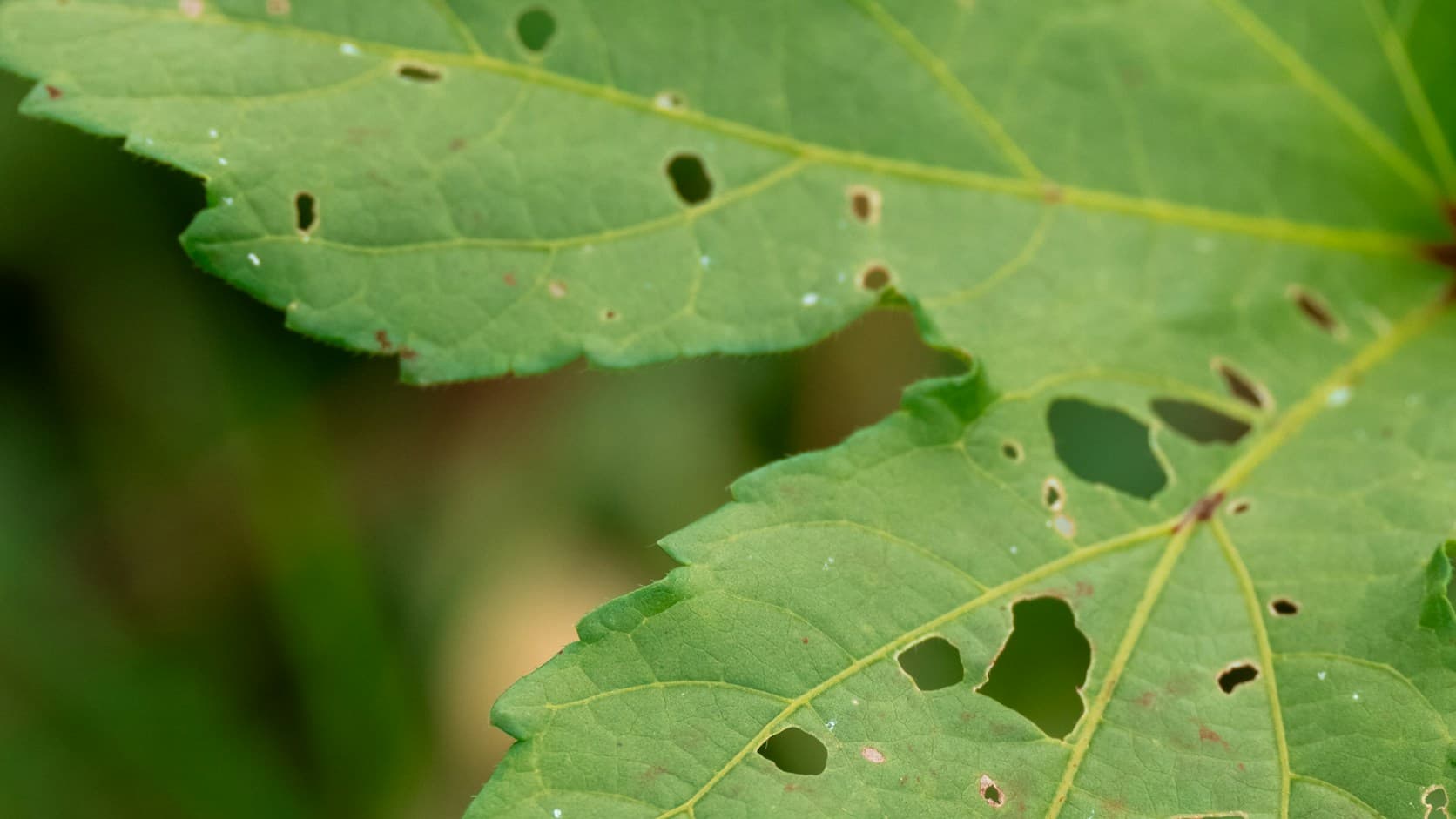
Ragged holes with smooth edges, and the tissue between the veins gone
Means
A mouth built for scraping. The leaf surface is scraped away and the tougher ribs are left standing, which is the shape a slug or a snail leaves behind.
Not
Chewing insects, which tear the leaf and leave jagged edges. Caterpillars, earwigs and beetles all leave torn tissue where a slug leaves a smooth-walled hole.
A shiny trail, plus small sausage-shaped droppings on or around the plant
Means
The pair of marks that settles it. Mucus dries to a silvery film on leaves, soil and hard surfaces, and the droppings are short, grain-like and unmissable once you know the shape.
Not
Cutworms, armyworms and the other chewing pests. Extension advice separates their damage from a slug's on exactly these two marks, so a severed stem carrying neither one points somewhere else.
A seedling gone at soil level, with the growing point destroyed
Means
The whole plant, if the growing point at the centre has been eaten. A seedling cannot replace that tip, so nothing grows back from what is left of the stem.
Not
Cutworm is the other candidate for a seedling cut down at the base. No trail and no droppings is the case for looking for a cutworm before you treat for slugs.
Pits in potatoes and other roots, or in fruit lying on the soil
Means
Feeding that happened below the surface, by the keeled slugs that stay underground. The pits are 0.1 to 0.5 inch deep, less than half an inch across, and smooth-walled, not torn.
Not
Leaf damage as the test. A bed can be losing tubers underground while every leaf above it stays whole, so the harvest is where this one shows up.
Three things keep this bed supplied
A garden does not hold one slug; it holds a population with somewhere to live and a next generation already in the soil.
Most of the slugs and snails in a garden are not eating it. They break down fallen leaves and dung, and they are food for birds, toads, beetles and hedgehogs; only a small group of species feeds on live plants. The ones that are eating your bed live somewhere, and they have already laid the next generation into it.
what a slug lays in one batch, under leaves and in soil cracks — UC IPM
The top few inches of soil
Slug eggs are clear, round and laid in clusters near the surface, and they hatch in two weeks to a month. Eggs laid late in the season can sit through the cold and hatch when the soil warms, which is how a bed that was cleared in autumn starts the next season with a full population anyway.
the share of a garden's slugs that is above ground at any one time — OSU Extension and the Oregon Master Gardener Association
The cover the bed is holding
By day they rest in cracks in the soil and under boards, pots, stones, mulch and low leaves, and a bed with plenty of cover holds far more of them than the same bed stripped back. The Oregon handout puts their working depth at up to six feet of soil, so a torch never finds the whole population and the soil work below does more than the nightly count.
the autumn window OSU Extension names for long-term control
The first rains and the weeks after
Egg-laying peaks after the first autumn rains and again in spring, and adults are far easier to reduce before they lay than after. In the Pacific Northwest that window opens in September and October; in a wetter or warmer climate, read it as the first sustained wet spell of the season, not a date.
What the remedy lists get wrong
These are the fixes a search turns up first, and most of them have been tested against a real planting.
108 lettuces, 6 weeks
Five barriers, tested around lettuce in patio pots and raised beds by the Royal Horticultural Society. None of them reduced the damage.
Crushed eggshells
No difference in six weeksA complete ring of crushed eggshells around each lettuce came out of the trial with the same damage as a lettuce with no barrier at all. The edges are meant to cut a slug that crawls over them; the trial is what that claim has to survive, and it did not.
Copper tape
Tested, and the services disagreeThe same trial found no protection from copper tape, while laboratory studies have found copper repels slugs. The American services still list a copper band, 3 to 6 inches wide and buried an inch into the soil, and add that most of the tape sold for the job is too narrow to stop a slug reaching over it. A tarnished band also stops working until it is cleaned. If you try it, the width and the upkeep are the whole method.
Sharp grit, pine bark and wool pellets
No difference in six weeksThe other three barriers in the same trial. Pine bark and wool pellets earn their place as a mulch over a bed that needs one, but neither of them kept slugs off the lettuce inside the ring.
Coffee grounds
Not shown to deterUC IPM lists crushed eggshells and coffee grounds among the deterrents that have not been shown to work. Coffee grounds are worth keeping for the compost heap; as a barrier they change nothing that matters to a slug.
Table salt
Keep it out of the bedIt kills the slug and it damages the soil around it: salt raises the salinity of the bed, and UC IPM's advice is not to use it in the garden at all. A bucket of soapy water does the same job for anything you pick off a plant.
Vinegar
Not a slug killerExtension guidance gives vinegar one job in a slug problem, and it is not pest control: white vinegar and warm water will lift slug slime off your hands. Household vinegar is not listed as a control anywhere in the references below, and the stronger acetic acid sold for the garden is a weed killer, not a treatment for molluscs.
Wood ash, lime and diatomaceous earth
Slows them, and only while dryDry diatomaceous earth is abrasive enough to stop a slug crossing it, and it stops working the moment it gets wet — which is the weather that brings the slugs out. Ash and lime share that problem, and the Oregon guidance is explicit that these three slow slugs down and none of them controls the population.
Tonight, then the bed
Work down the list and stop when the damage stops. The cheapest steps come first, and they are the ones that work.
Tonight
- 1
Water at first light, not at dusk
one habitA bed that goes into the night damp is cover worth using. Run the sprinkler in the morning so the surface dries before the humidity comes up, and put drip irrigation or a soaker hose on the list for the same reason: it waters the roots without wetting the surface they travel on.
- 2
Walk the bed two hours after dark
10 minutes a nightTake a torch and a bucket of soapy water, and look at the plants, not the ground. Wear gloves or use tweezers and wash your hands afterwards: slugs carry parasites that can make people sick. This is the most direct control on the list, and it costs an evening's attention, not money.
- 3
Leave boards out overnight
one check each morningA 12 by 15 inch board propped on 1 inch runners, or a damp roll of newspaper, gives them somewhere dark to finish the night. Check it before the surface warms, scrape what is underneath into soapy water, and set it back out. A bed that gets this check every morning for two weeks holds far fewer slugs than one that does not.
- 4
Put a trap in the wettest corner
a few feet of reachBury a container up to its rim and fill it with beer or with sugar water and yeast, which is the part that attracts them. Give it deep sides and a lid with holes so the catch cannot climb out and rain cannot dilute it, keep the rim above the soil so a pet cannot drink from it, and empty it daily. A trap pulls from a few feet around it, so use it where the seedlings are, not across the whole garden.
Before the next planting
- 5
Take the cover out of the seedling rows
an hourSlugs need somewhere damp to spend the day, so rake the leaf litter and spent plants out of the beds, keep mulch back from the base of young plants, open the spacing so air moves, and put away the pots and boards you are not using. Shade under a deck or a water butt is the best accommodation a garden offers; keep it clear of litter.
- 6
Turn the bed over in autumn or early spring
an afternoonWorking the top four to six inches brings the shelters and the eggs up where the surface dries them and birds find them. Raking a bed over in winter does the same to the eggs the adults left under the leaves, and turning over the mulch in spring exposes what overwintered under it.
- 7
Raise the next round in pots
a change of routineA seedling's first weeks are the whole problem: soft tissue, a growing point just above the soil, and no reserves to grow back from. Lettuce, cabbage, basil and strawberry plants are the ones they take first. Start those in a pot or a module tray and set out a sturdy transplant instead of a young seedling, and give the first weeks in the ground a cloche or a cold frame.
- 8
Bait, if the population is still ahead
a safety trade-offBaits work, and the two on a shelf do not carry the same risk to the animals that share the garden. This is the last step because it is the only one that asks you to trade something for the result, and the comparison below is written for that decision.
If you bait, this is the choice
Both baits on a shelf kill slugs. They differ in how long they take, where the dead end up, and what they do to everything else that eats them.
Iron phosphate
The lower-risk bait- How long it takes
- Slugs stop feeding soon after eating it and die over roughly 5 to 7 days, so the result is slow enough to be mistaken for failure.
- Where they die
- Underground, or under cover. You will not find bodies on the surface, so the bed looks unchanged for a week after a good application.
- In wet weather
- Keeps working through wet weather, and it can be reapplied after 10 to 14 days if the damage is still going.
- Around pets and children
- Much safer around dogs, cats, children, birds and other wildlife, and some formulations are approved for organic growing. It is still a pesticide: use the label rate, keep it off the leaves, and keep the container out of reach.
Metaldehyde
The one to keep away from pets- How long it takes
- Most slugs are dead within a day of eating it, which is exactly why people reach for it. Stronger formulations act faster than weak ones.
- Where they die
- Above ground, where you will see them. Dead slugs on the surface are easier to believe than a week of waiting.
- In wet weather
- Breaks down in two or three days of sun or rain, and a slug that takes in less than a lethal dose can recover, especially in wet conditions. Rain soon after baiting can waste the whole application.
- Around pets and children
- Particularly poisonous to dogs and cats, and a leading cause of accidental dog poisoning and death in the Pacific Northwest. It should not go anywhere a pet or a child can reach, and it is not for use on vegetables.
How to place either one
- Water the bed first and bait in the evening. A moist surface brings slugs up, and the evening is when they are moving and finding the pellets.
- Scatter the pellets over the soil instead of piling them. A heap is one poisoned lump; a scatter is what a slug meets on its way to the plant.
- Keep bait off the leaves and away from anywhere a pet or a child can reach, and never put it where a crop is about to be picked.
- If a pet shares the garden, bury a container on its side with a two inch entry hole near the top and put a handful of pellets inside. It is the placement OSU Extension recommends for exactly that garden.
The extension services do not agree on this step, and both positions are worth knowing before you open a box. The Royal Horticultural Society's advice is not to use pellets at all, organic ones included, because it judges the cost to garden wildlife too high, and it points to nematode control and cultural work instead. The American services allow iron phosphate in a food garden with a real slug problem, and every one of them treats metaldehyde as the risky product. A garden with a dog, a cat or a pond is a garden where that difference decides the choice.
What the plant does next
The damage is already done, so the useful question is which of it the plant can outgrow.
A seedling with the growing point eaten
It is finished. A seedling cannot replace the tip that was destroyed, so no amount of watering or feeding brings the stem back.
What to doResow, and protect the next one differently: raise it in a pot, set out a larger plant, or keep a cloche over it until it is sturdy.
A lettuce, cabbage or basil plant with the outer leaves eaten
The crown is the part that decides, and while it is intact the plant keeps pushing new leaves from the middle. Damage to the outside costs growth, not the plant itself.
What to doLeave it in place and keep the animals off it while the centre comes back. A plant whose middle has been hollowed out is done; a plant nibbled at the edges is not.
An established tomato, pepper or bean stripped of lower leaves
Older plants usually carry this. They have the root system and the reserves to replace some foliage, and they can be climbed, so damage appearing high on a mature plant does not rule slugs out.
What to doClear away what has been shredded, keep the soil at the base open, and check the plant after dark for a few nights instead of treating the whole bed.
Potatoes and root crops with pits in them
The feeding happened under the soil, where the keeled slugs live, and it shows up at lifting, not before. Pitted tubers are still edible, but the wounds are where rot starts in store.
What to doLift maincrop potatoes as soon as they have matured, cull the worst-tunnelled tubers instead of storing them, and work the top few inches of that bed before the next root crop goes in.
Why slugs behave this way
The mechanics behind the checks, for readers who want to know what the animal is doing.
Why one wet week changes the size of the problem
A slug is mostly water, and it loses that water through its skin whenever the air is dry. One fact runs the whole calendar: rain and irrigation decide how long it can stay out feeding, a dry spell shuts the population down, and the first sustained rains of the wet season are the moment it is both active and laying.
That is why autumn work buys more than spring work. Eggs go into sheltered cavities near the surface after the first rains, and adults are far easier to reduce before they lay than after. Eggs laid late in the year can overwinter and hatch when the soil warms, so the season can start with a full population before anything has been planted.
- Wet, mild nights produce the damage; dry soil cuts activity sharply.
- Egg-laying peaks after the first autumn rains and again in spring.
- The most useful control window is the wet spell before the eggs are laid, with a second pass in early spring.
Slugs and snails are not the same problem
A snail carries a shell it can retreat into, so it can shelter above ground as well as in it. A slug has no shell and holds its water less well, which puts soil cracks and flat, damp objects at the centre of its day. Both leave the same slime and the same smooth-edged holes; what differs is where they spend the hours you are not looking.
The difference changes one part of the work. A barrier around a raised bed with no soil contact can shut out a snail that has to climb in, while a slug can come up through the bed from below. The keeled slugs go further still and stay under the surface, feeding on roots and tubers, so a crop can be losing its roots while every leaf above stays whole.
- Snails close themselves into a shell; slugs have only soil and cover to hide in.
- A barrier with no soil contact stops snails that have to climb; slugs can come up from underneath.
- Keeled slugs feed below ground, so leaf damage is not the whole picture.
Why seedlings and lettuce pay first
A slug feeds with a rasping mouth and has to stay wet to stay active, and both of those decide what it eats: tender, soft-leaved plants whose tissue scrapes away easily, at the stage when the whole plant is small enough to lose. A seedling is a growing point a few millimetres above the soil: one night can end it.
Once a plant is established the same feeding is damage, not loss. A tomato or a bean can give up lower leaves and keep growing, and a lettuce that keeps its crown regrows from the middle. The crops worth watching hardest are the ones harvested as leaves, and the ones whose fruit rests on wet soil as it ripens.
- Lettuce, basil, cabbage and strawberries are the crops extension services name most often as favourites.
- A seedling's growing point is what a single night can destroy; an older plant has reserves to draw on.
- Fruit lying on the soil, such as strawberries and low tomatoes, is fed on as it ripens.
The diagnostic guidance draws on the references listed below.
- Pacific Northwest Pest Management Handbooks: Slug Control
- UC Statewide IPM Program: Snails and Slugs
- Oregon State University Extension Service: How to Control Slugs in Your Garden (EM 9155)
- Oregon State University Extension Service: Using Home Remedies to Control Garden Pests (EC 1586)
- Oregon State University Extension Service and Oregon Master Gardener Association: Managing Slugs and Snails
- Clemson Cooperative Extension Home & Garden Information Center: Snails & Slugs in the Home Garden
- University of New Hampshire Extension: What Can I Do to Control the Slugs in My Garden?
- Royal Horticultural Society: Slugs and Snails
- Royal Horticultural Society: How to Stop Slugs and Snails — What Works?
Quick answers before you treat the plant
The questions that come up between the morning check and the next planting.
Do slugs come out during the day?
Usually not, and that is the trap: a daytime search of a damaged bed finds nothing and reads as no problem. They will feed in light rain, in fog, and in the hours after watering, and they move whenever the air around them is wet enough. The reliable times to look are after dark and at first light.
Will beer traps catch enough to matter?
They catch what comes within a few feet, so they earn their place around a seedbed, not across a whole garden. The fermented smell is the attractant, and a sugar and yeast mix works as well as beer. Beer loses its pull after about three days, so empty and refill the trap instead of leaving it out.
Does salt work against slugs?
It kills the slug and damages the bed. Salt raises the salinity of the soil, and the advice from UC IPM is to keep it out of the garden entirely. Use a bucket of soapy water for anything you pick off a plant.
Are organic slug pellets safe around pets?
Iron phosphate is much safer around dogs, cats and children than metaldehyde, and it is the bait the American services allow in a food garden. Safer is not harmless: it is still a pesticide, so use the label rate, keep it off the plants, and store it out of reach. The British advice is simpler again, and is not to bait at all.
Should I move the slugs I pick up instead of killing them?
The RHS suggests it: put them somewhere with less vulnerable plants, or leave them out for the birds. Be aware that some species have a homing instinct and will work their way back to the patch they came from.
How long does a slug problem last?
A garden that suits slugs will always have some, so the aim is to hold the line around the plants that cannot take the loss. The work is heaviest while the plants are young and the weather is wet; as the crop grows and the surface dries between rains, the same damage costs far less.
Keep troubleshooting from the right starting point
If this was not the exact symptom you meant, jump back to the hub or compare it with the other common problem guides.
All Garden Problems
Return to the main troubleshooting hub to compare the quick triage and all four featured problem guides.
Back to the hub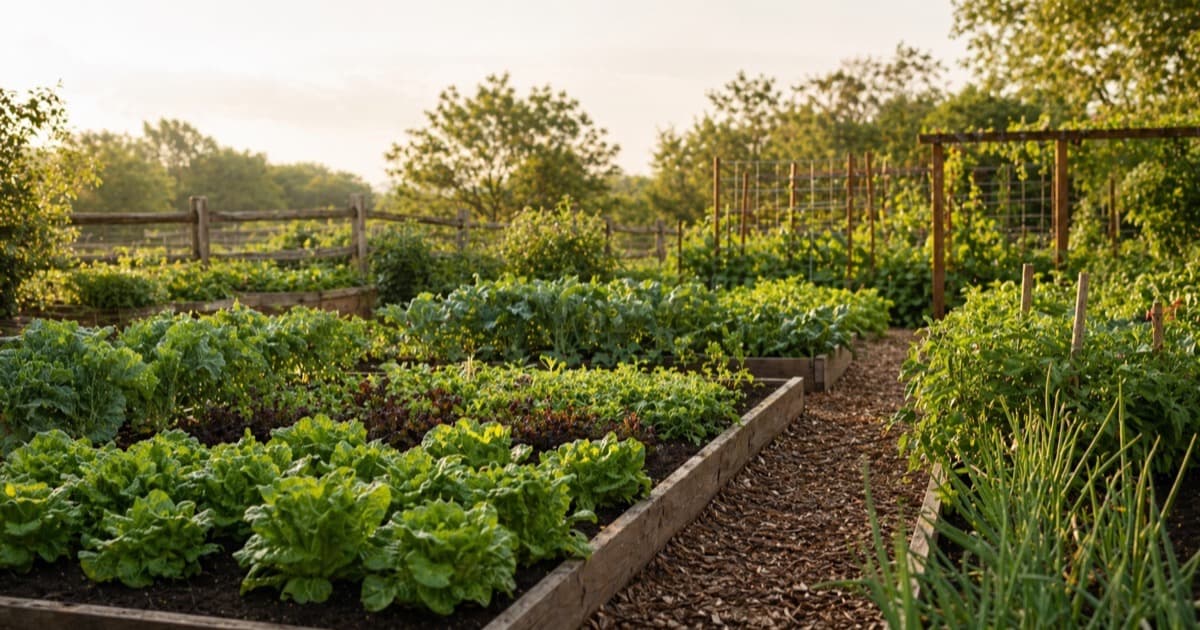
Topic
Vegetable Garden Basics
Beginner-friendly setup, layout, and planting-timing guides for growers building a practical home vegetable garden.
Guide
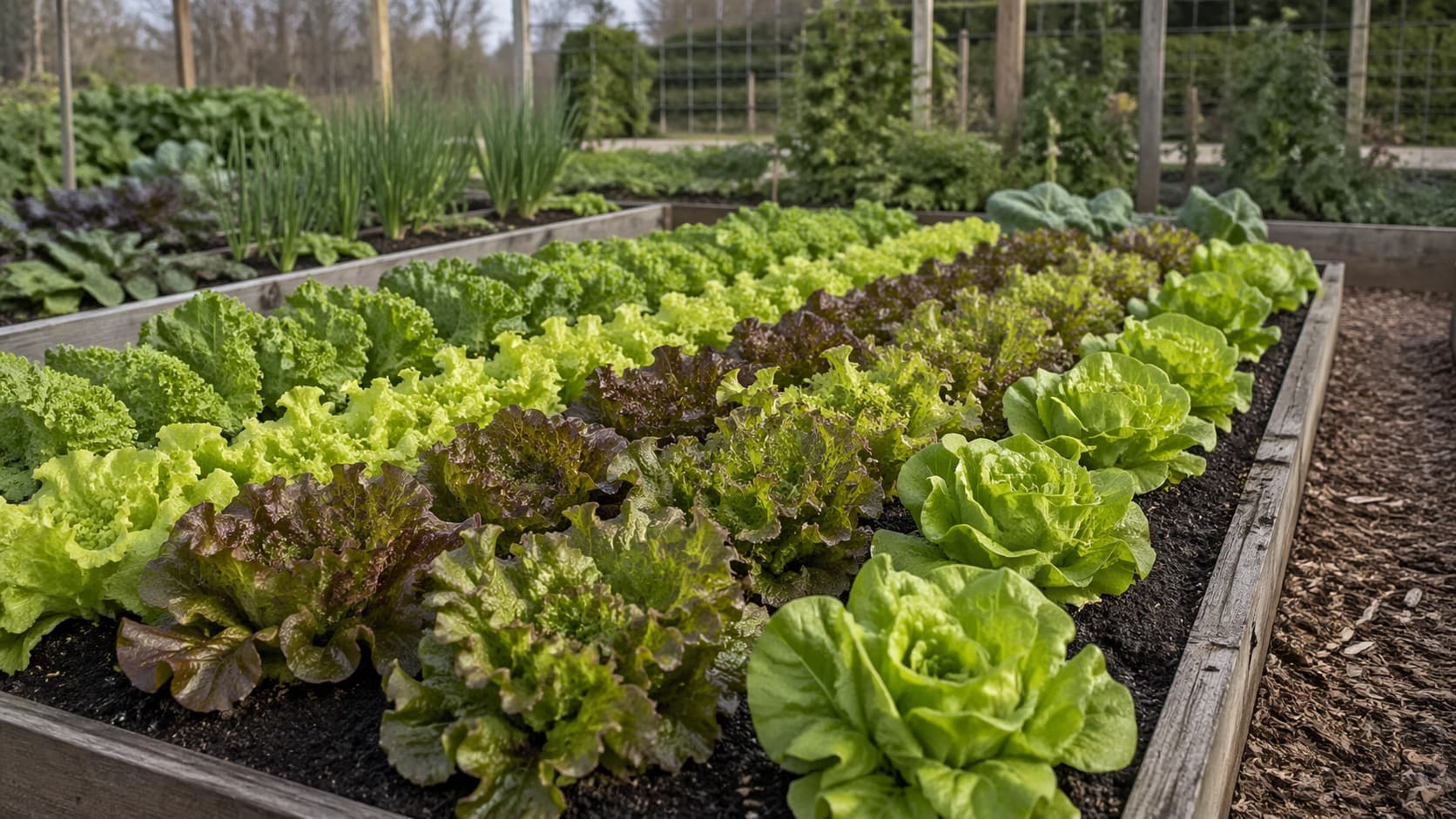
When to Plant Lettuce
Plant lettuce in cool-season windows that favor fast growth, good texture, and less bitterness before summer heat pushes it to bolt.
Guide
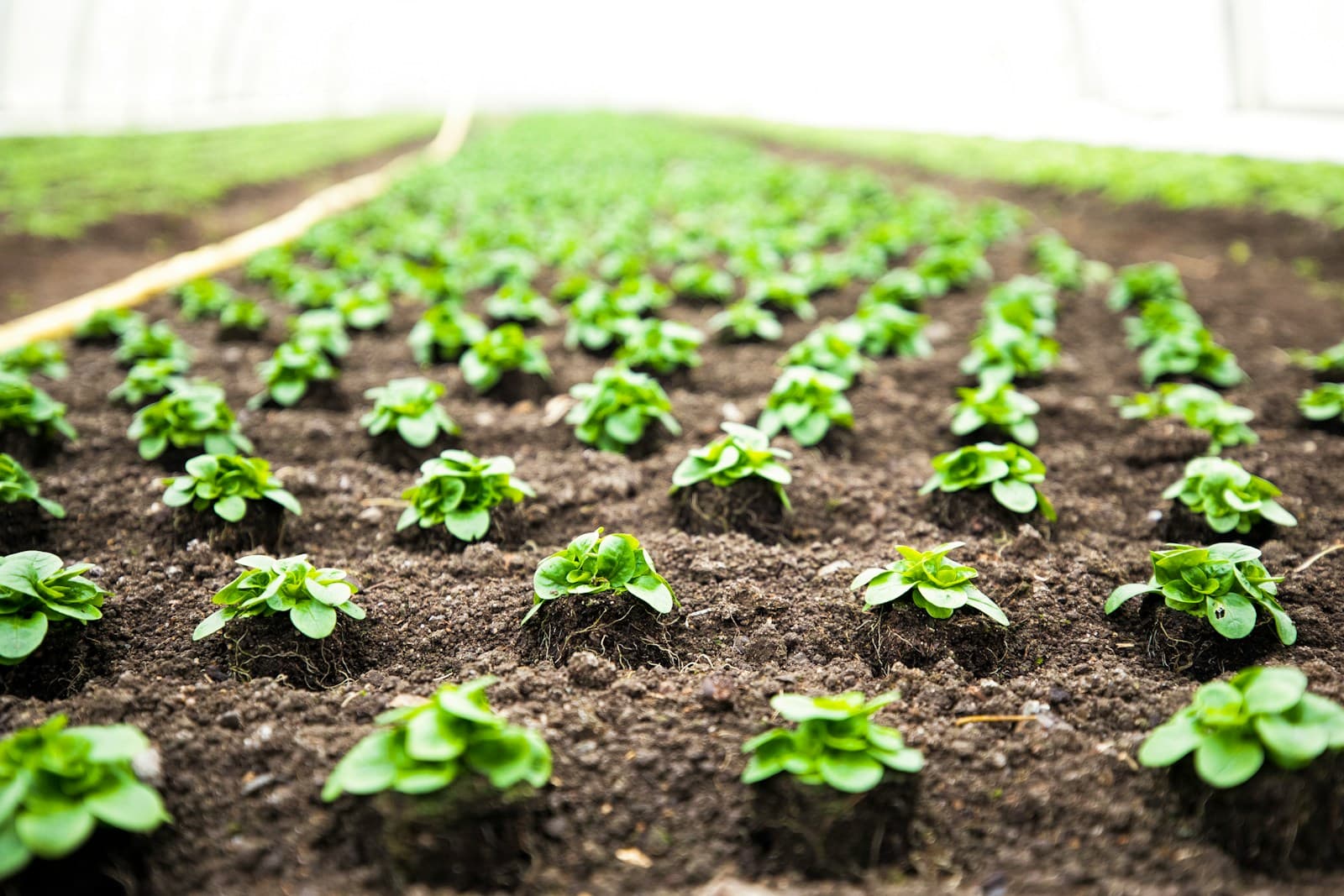
How to Harden Off Seedlings
A practical hardening-off routine for vegetable seedlings before they move from indoor comfort to outdoor wind, sun, and cooler nights.
Guide
How to Start Seeds Indoors
A beginner setup for lights, trays, warmth, and the first week after germination.