Western Washington
Late October into November
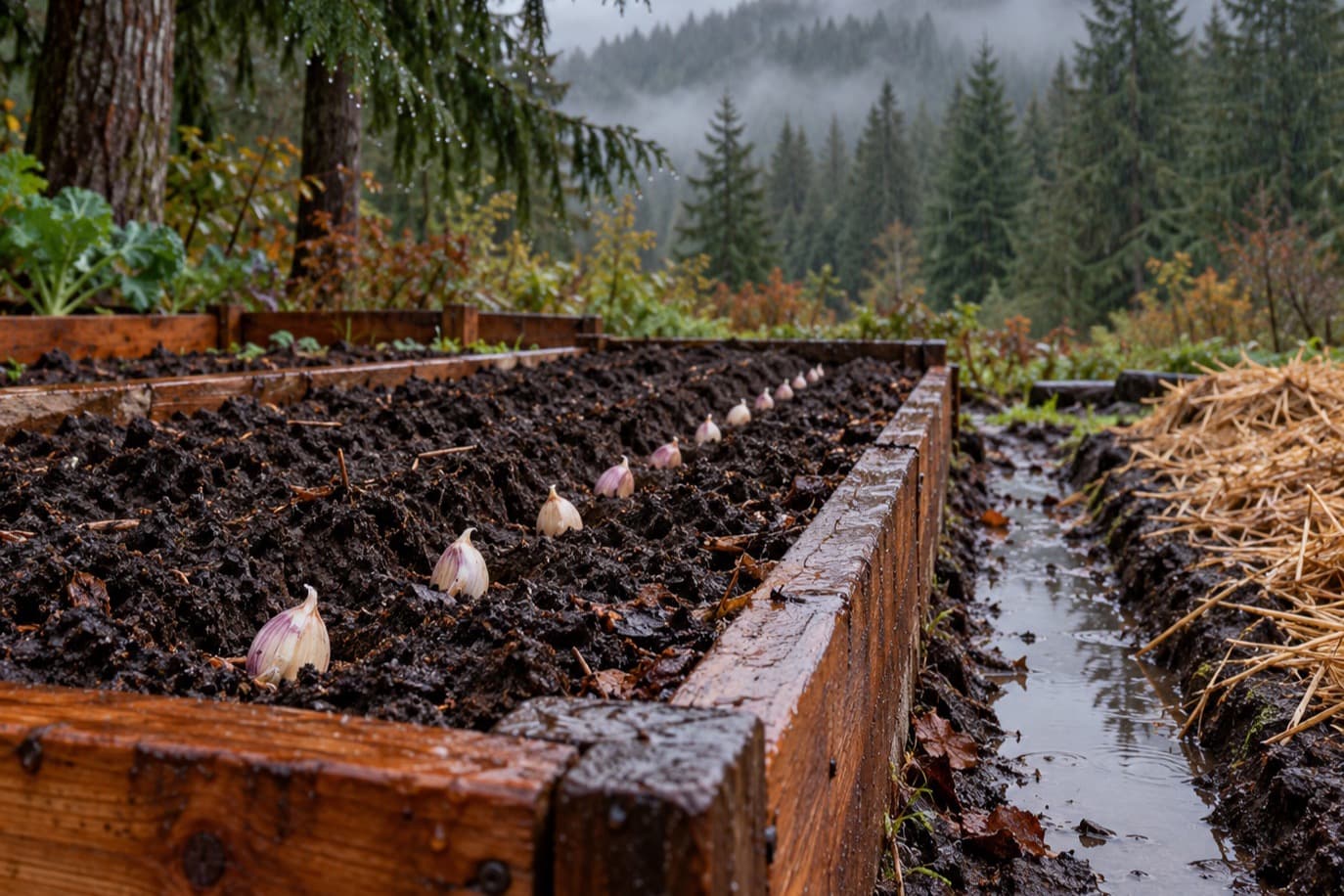
WSU's percolation test calls 1 to 3 inches of water an hour acceptable for garden plants, about 2 inches an hour ideal, and anything under 1 inch an hour too slow. Skagit County states the same limit from the crop's side: too much moisture and the seed will rot. Cold is not the west side's problem.
WSU Extension Spokane County, Easy Do-It-Yourself (DIY) Soil Tests (C221); Skagit County WSU Extension Master Gardeners, Growing Garlic, September 2025.
- Who this covers
- The lowland gardens from the coast through Puget Sound, which is the ground the fact sheet's western season and both county programs describe. The fact sheet does not name a dividing line between the two, so the useful one is the mountains rather than a county border.
- What goes over the cloves
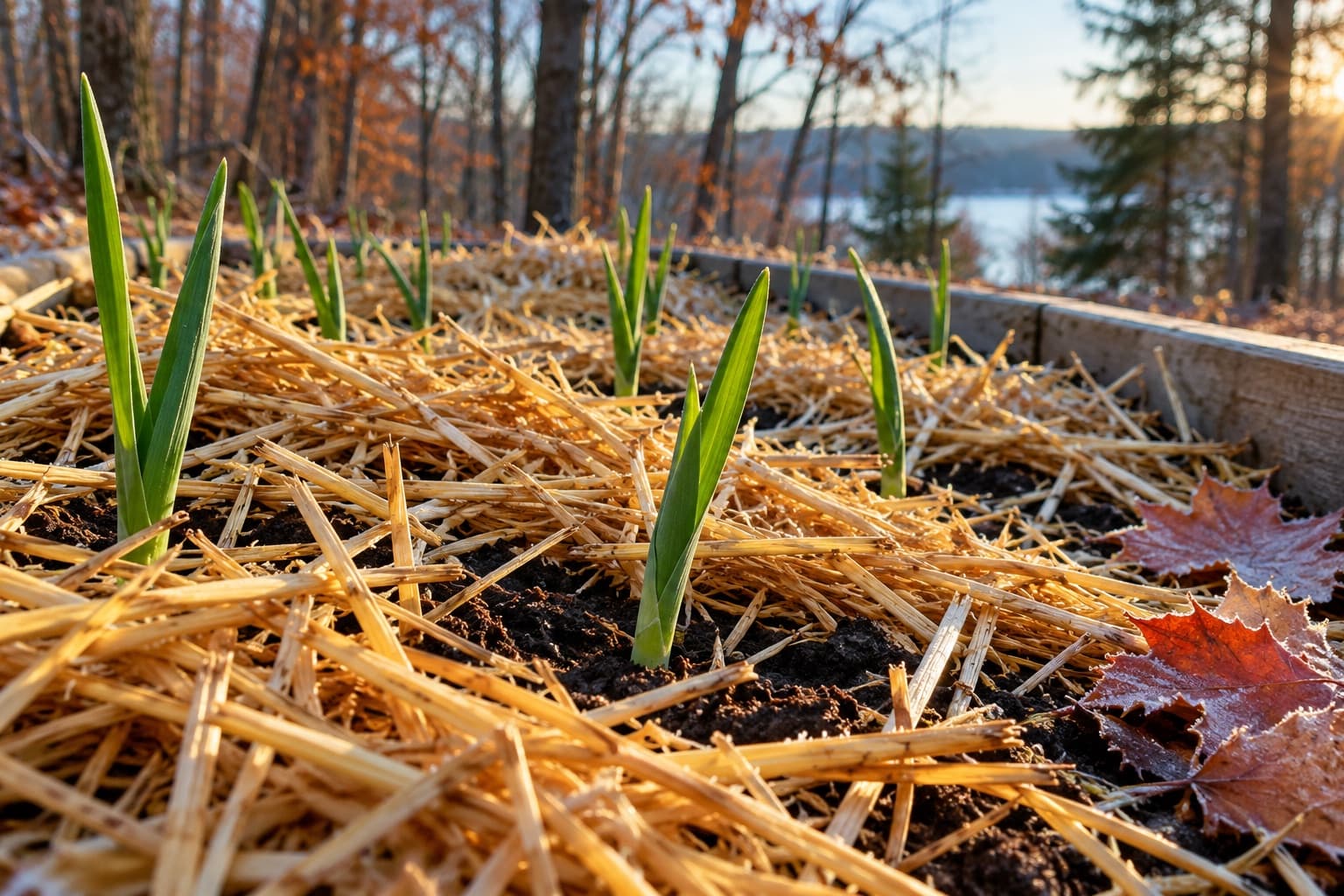
- 3 to 4 inches of weed-seed-free straw, or chopped straw and shredded leaves, put on over the finished bed. It is there for rain and erosion rather than deep cold, and it comes back off in spring.
Three west-side publications give three dates. The fact sheet says November. Skagit County says late October, with earlier and later both workable and spring as the last resort. King County says October, a few weeks before the ground freezes. The state's commercial crop profile agrees with the fact sheet and adds a very early spring window in March. The bed underneath is what they agree on: full sun, ground that drains, and compost worked into the top six inches.
WSU Extension, Vegetables: Growing Garlic in Home Gardens (FS162E); Skagit County WSU Extension Master Gardeners, September 2025; King County Master Gardener Foundation, October 2024; USDA and WSU, Crop Profile for Garlic in Washington, 2001.