Dane County Extension recommends the second or third week of October for northern Wisconsin and October through the beginning of November for the south. Use a sunny, well-drained bed. Leave cloves in place if they sprout in fall. Wisconsin Horticulture gives different advice, planting a week or two after the first killing frost.
Dane County recommends October planting and accepts fall shoots. Wisconsin Horticulture recommends waiting until after a killing frost. Choose a planting approach and follow its winter mulch instructions.
Fall planting dates in northern and southern Wisconsin
Northern Wisconsin
Second or third week of October
Use this guidance in northern Wisconsin. Dane County does not give a dividing line or dates for individual towns. Check with your county extension office if you are unsure which timing applies.
4 to 6 inches of clean straw or marsh hay
Dane County recommends this planting period and mulch depth for northern Wisconsin. Choose hardneck stock that survives local winters.
Dane County Extension gives these northern planting dates and mulch depths in November 2023.
Southern Wisconsin
October through the beginning of November
Dane County and Madison are in southern Wisconsin. Check your bed and forecast before planting, especially in an exposed garden or wet soil.
3 to 4 inches of clean straw or marsh hay
Dane County allows planting into early November in the south and recommends this initial mulch depth. If cloves sprout, add more mulch after the first hard frost.
Dane County Extension gives these southern planting dates and mulch depths in November 2023.
Compare earlier planting with waiting for frost
Wisconsin Extension gives two approaches. Dane County accepts fall shoots. Wisconsin Horticulture recommends later planting to keep shoots below ground. Each gives its own mulch instructions.
The regional October window
Plant earlier to give roots more time
Plant in prepared soil while roots can still grow. If shoots appear, protect them with mulch.
Dane County reports better establishment with earlier planting and says fall growth does not reduce next year's yield. Results can still vary with variety, soil and winter conditions.
Allow roots to grow before winter, with shoots below the soil by the first hard freeze.
Wisconsin Horticulture recommends this frost-based timing. If the soil freezes soon afterward, roots have less time to grow. Check the planting soil itself. Frost in the air does not mean the ground is frozen.
Dane County refers to research but does not identify the trial behind its fall-shoot advice. The trial has not been independently verified. Treat the recommendation as extension advice for northern and southern Wisconsin, not a yield guarantee.
Prepare a sunny, well-drained bed
Dane County and Wisconsin Horticulture both recommend full sun, organic matter and well-drained soil. Avoid planting in heavy clay that stays wet. Adjusting the planting date will not fix poor drainage.
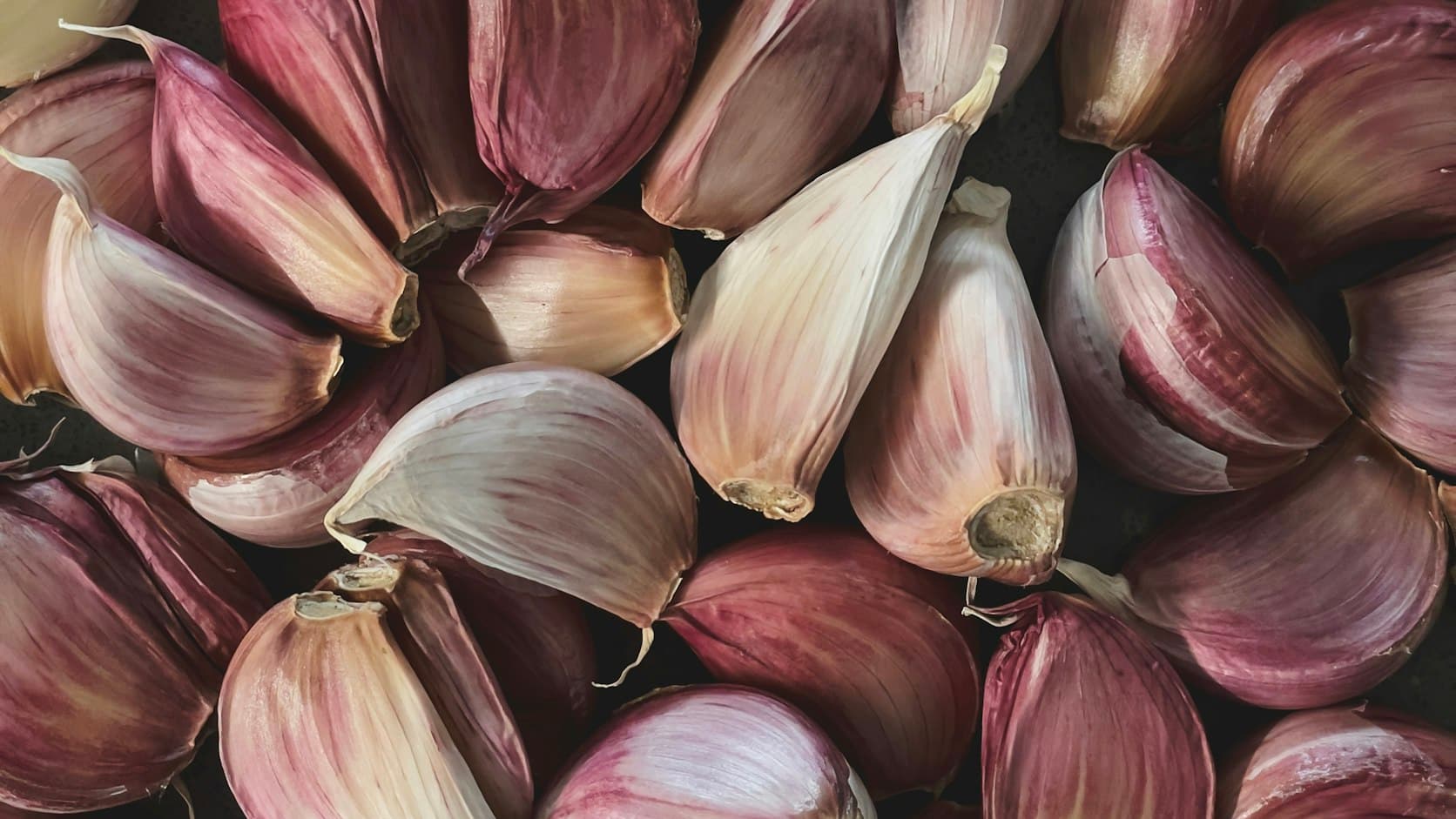
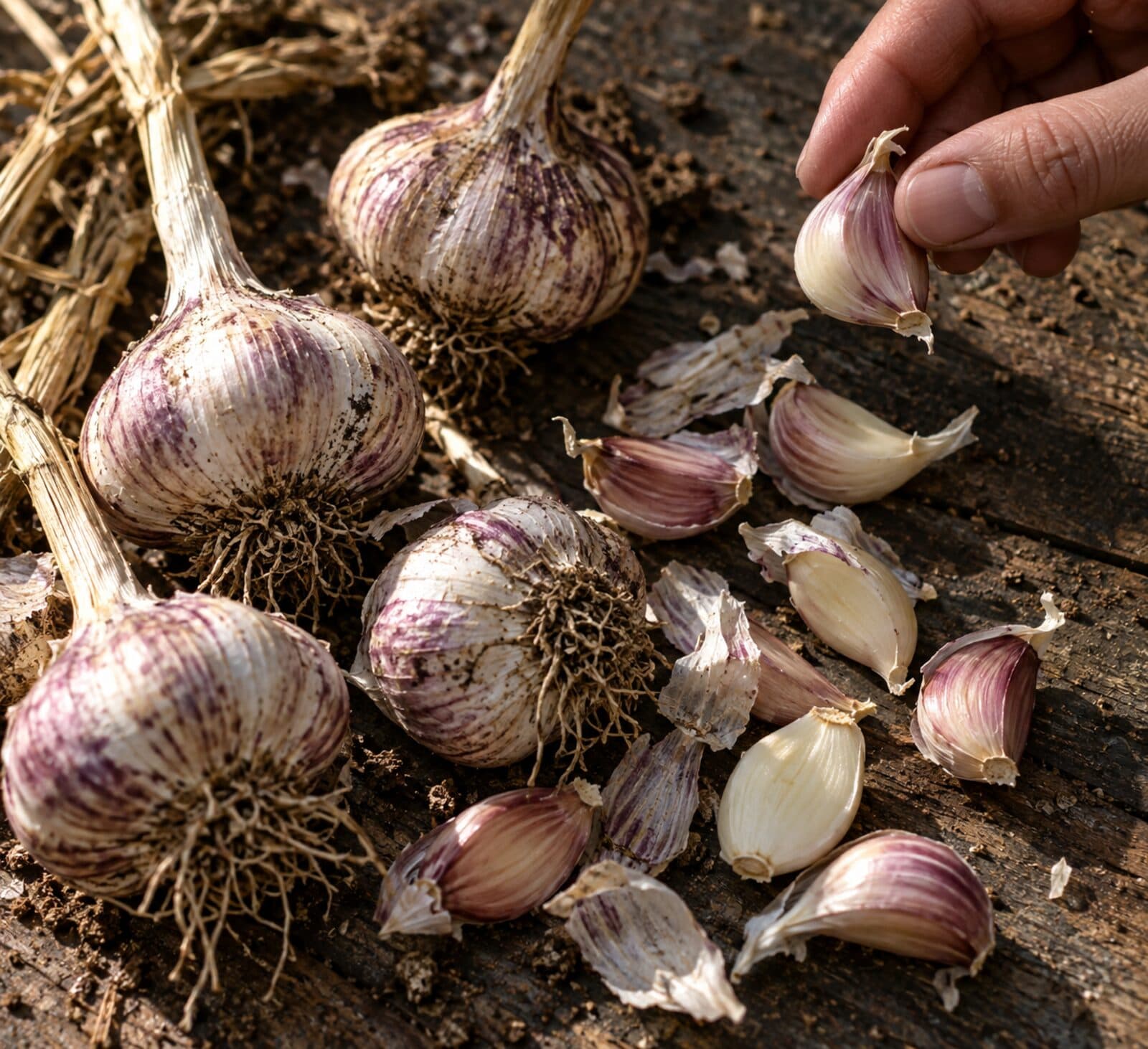
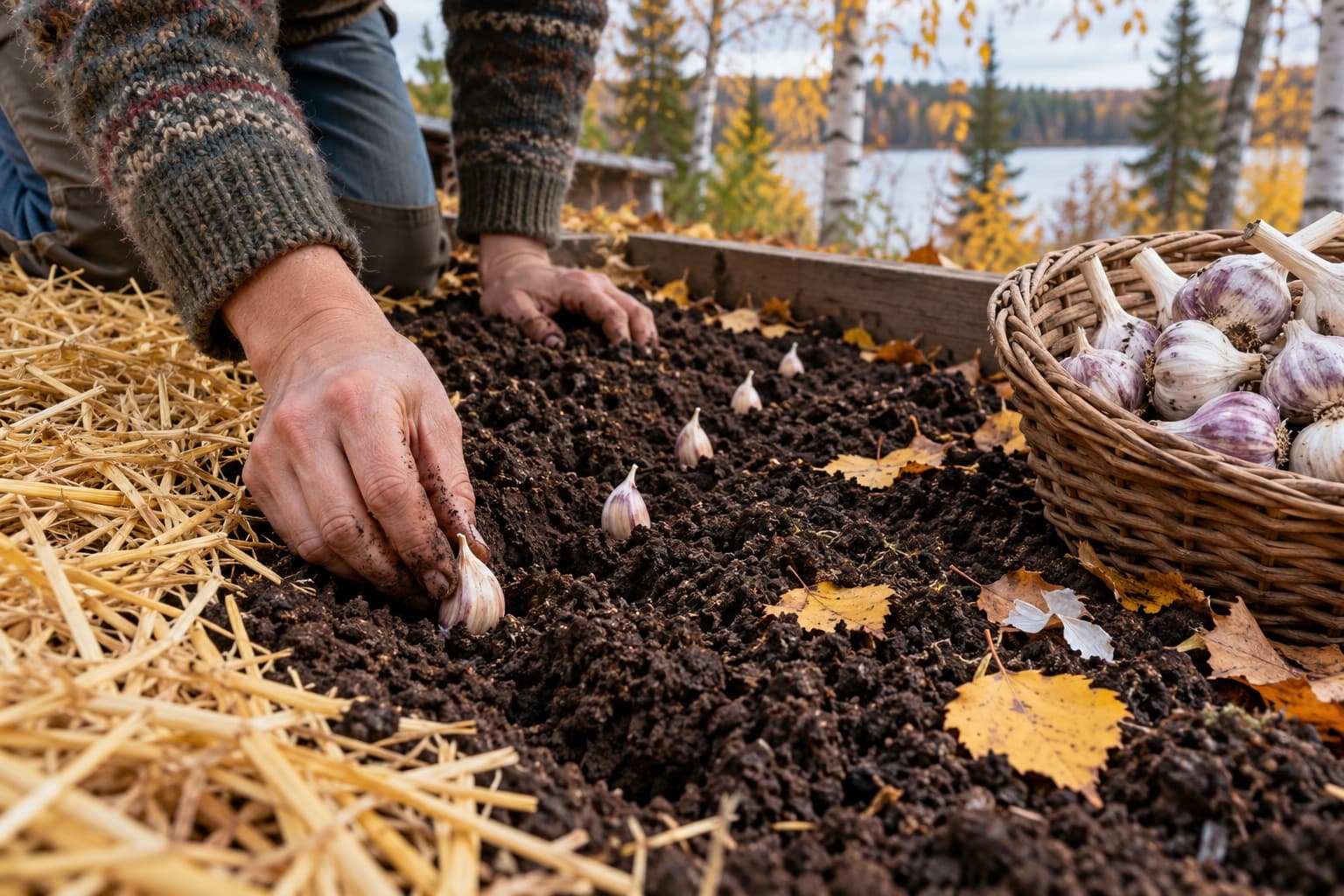
Separate large, firm bulbs just before planting. Point the cloves upward. Dane County recommends 2 to 4 inches deep and 5 to 8 inches apart. Wisconsin Horticulture recommends 2 to 3 inches deep and about 6 inches apart.
Dane County Extension and Wisconsin Horticulture give the planting depths and spacing.
Check air frost and frozen soil separately
NWS Duluth defines a freeze as air temperature at or below 32°F. It defines a hard freeze as typically 28°F or lower for at least an hour. Frost can form on surfaces when the air is above freezing. These definitions describe air conditions, not soil temperature around a clove.
UW Extension's older fresh-market guide A3785 recommends planting 6 to 8 weeks before the ground freezes. It applies winter straw after the soil freezes. Dane County mulches after planting. These are separate schedules. Do not count A3785's planting interval back from the first air frost or mix its mulch timing with Dane County's instructions.
Start with the northern or southern planting dates. Check that you can work the bed without smearing wet soil, and watch the forecast if shoots are exposed. Neither home-garden source gives a soil-temperature threshold for planting.
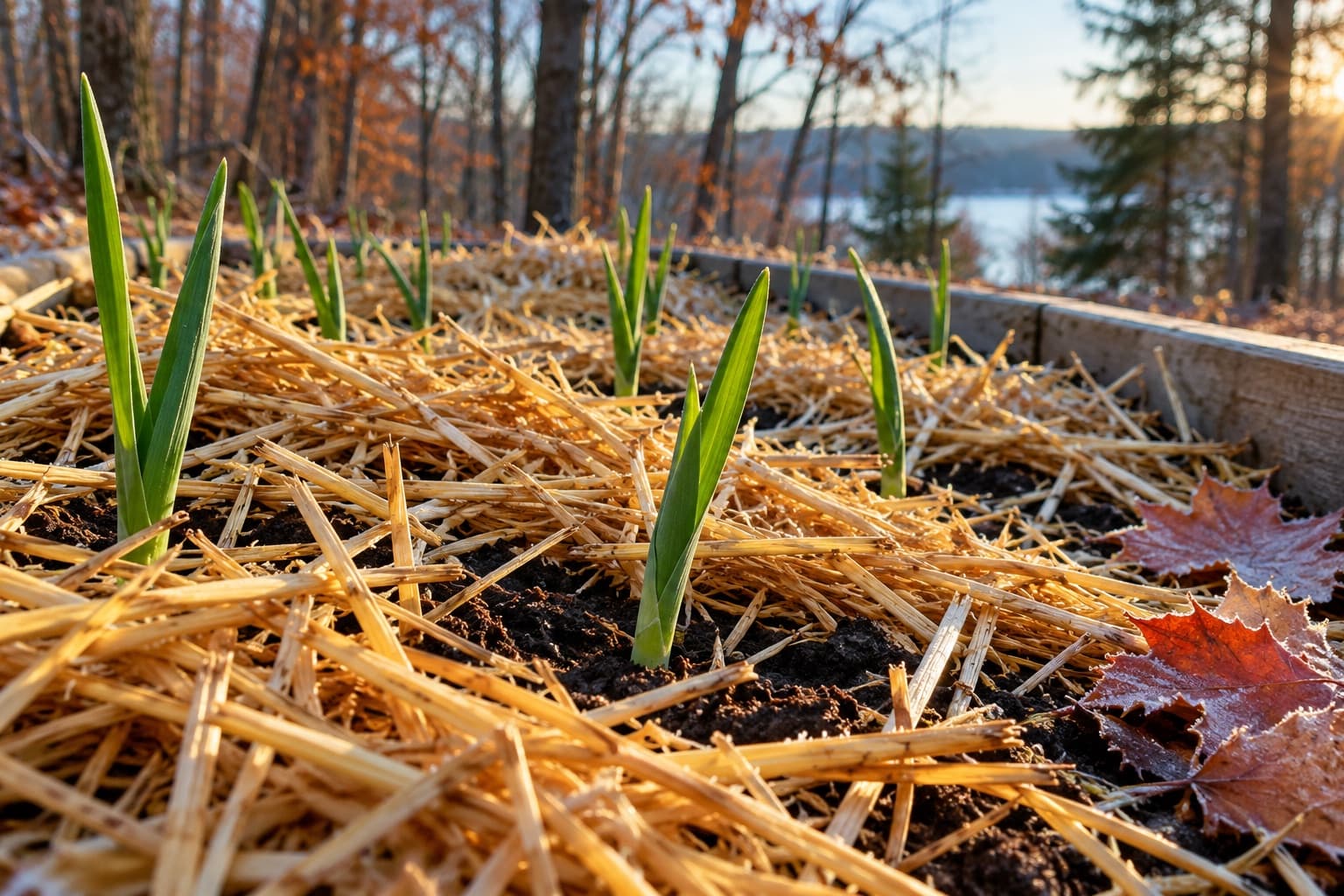
Fall shoots alone do not mean your garlic has failed. Dane County accepts fall growth. Leave the cloves in place so you do not disturb their roots.
Follow Dane County's instructions by mulching after planting and watering the bed. If cloves sprout, add a thicker layer after the first hard frost. Dane County does not give a depth for that extra layer.
Check that mulch has not formed a dense, wet mat. Wisconsin Horticulture warns that heavy mulch can keep soil cold and wet or stop water reaching the soil.
Dane County gives the fall-shoot advice. Wisconsin Horticulture explains the risks of heavy mulch.
When to remove mulch in spring
Dane County recommends uncovering early in spring
Dane County removes mulch early in spring to warm the soil. Once leaves appear, spread about 4 inches around them to reduce weeds and retain moisture. This depth is for spring mulch.
Wisconsin Horticulture waits until hard freezes have passed
Wisconsin Horticulture removes mulch after the threat of hard freezes passes. Replace it when shoots are about 6 inches tall. In an exposed northern garden, check for hard freezes in the forecast before uncovering the bed.
Dane County recommends hardneck for northern Wisconsin because it survives cold winters better than softneck. Buy a named strain from a local grower who can describe its results in conditions like yours.
Wisconsin Horticulture lists Music, German Extra Hardy and Russian Red as cold-climate choices. Common California garlic sold in grocery stores may grow poorly in Wisconsin. A name such as Italian does not tell you whether a strain survives local winters.
Softneck can store longer and yield well if it survives winter. Try a small southern planting with a strain that local growers have used successfully before planting the whole bed with it.
Dane County explains winter survival. Wisconsin Horticulture lists the varieties and advises against grocery-store planting stock.
Missed the fall window? Check the soil first
You are late, but the soil is workable
You can try a late fall planting in a well-drained bed while the soil is workable. Plant soon and follow the local winter mulch instructions. This is a fallback after the recommended dates.
Roots have less time to grow, so the harvest may be smaller. The Wisconsin sources give no estimate of the loss and do not promise a normal harvest.
The Wisconsin sources explain the need for roots to grow before winter. They do not give an extra late-planting date.
The ground is frozen or too wet to prepare
Wait if the soil is frozen or too wet to work. You can try an early-spring planting with suitable stock or plant fresh stock next fall.
Wisconsin Horticulture warns that most spring-planted garlic produces weak shoots and poorly developed bulbs without prior cold treatment. It recommends Artichoke types for spring planting. Ask your supplier about the strain and any treatment it needs.
Wisconsin Horticulture explains spring planting and cold requirements. It does not give one chilling treatment for all varieties.
FAQ
Questions about Wisconsin garlic
Check fall dates and what to do if garlic sprouts or you plant late.
When should I plant garlic in northern Wisconsin?
Dane County Extension recommends the second or third week of October. Use hardneck stock and 4 to 6 inches of clean straw or marsh hay after planting. Check local conditions, since the advice covers a region rather than individual towns.
Can southern Wisconsin gardeners plant in November?
Dane County allows planting through the beginning of November in the south. Later planting leaves less time for roots to grow. If the soil is still workable, a late attempt may succeed, but the source does not promise a normal harvest.
Will autumn shoots ruin my garlic harvest?
Dane County says fall growth does not reduce next year's yield. If cloves sprout, it recommends thicker mulch after the first hard frost. The article does not identify the research trial behind the claim, so treat it as extension advice, not a yield guarantee.
Why does the statewide guide tell me to wait for frost?
Wisconsin Horticulture recommends growing roots while keeping shoots below ground before the first hard freeze. Dane County accepts fall shoots and favours earlier root growth. Follow the mulch instructions that go with your chosen timing. Both require well-drained soil.
When should I remove winter mulch?
Dane County removes mulch early in spring and spreads it around leaves once they emerge. Wisconsin Horticulture waits until the threat of hard freezes passes and replaces mulch when shoots are about 6 inches tall. Check the forecast before uncovering a cold, exposed bed.
Can I recover a missed fall window with spring planting?
Spring planting is a fallback. Wisconsin Horticulture warns of weak shoots and poorly developed bulbs if most garlic varieties receive no prior cold treatment. It suggests Artichoke types and planting as early as possible. Ask the supplier how to prepare your strain.
Wisconsin planting and weather references
Wisconsin Extension gives the growing advice. NWS Duluth defines frost and freeze conditions.