GROWERBUDDY

Minnesota fall garlic planting

When to plant garlic in Minnesota

Plant garlic before the soil freezes so the cloves have time to grow roots. Cover the bed for winter, then check for shoots in spring.

Plant garlic 1 to 2 weeks after your usual first killing frost. UMN Extension's 2021 advice places that frost in late September in northern Minnesota and early October in the south. In a warm fall, keep your usual planting schedule while the soil is workable rather than waiting for a delayed frost.

Find your fall window

Last updated 2026-10-14

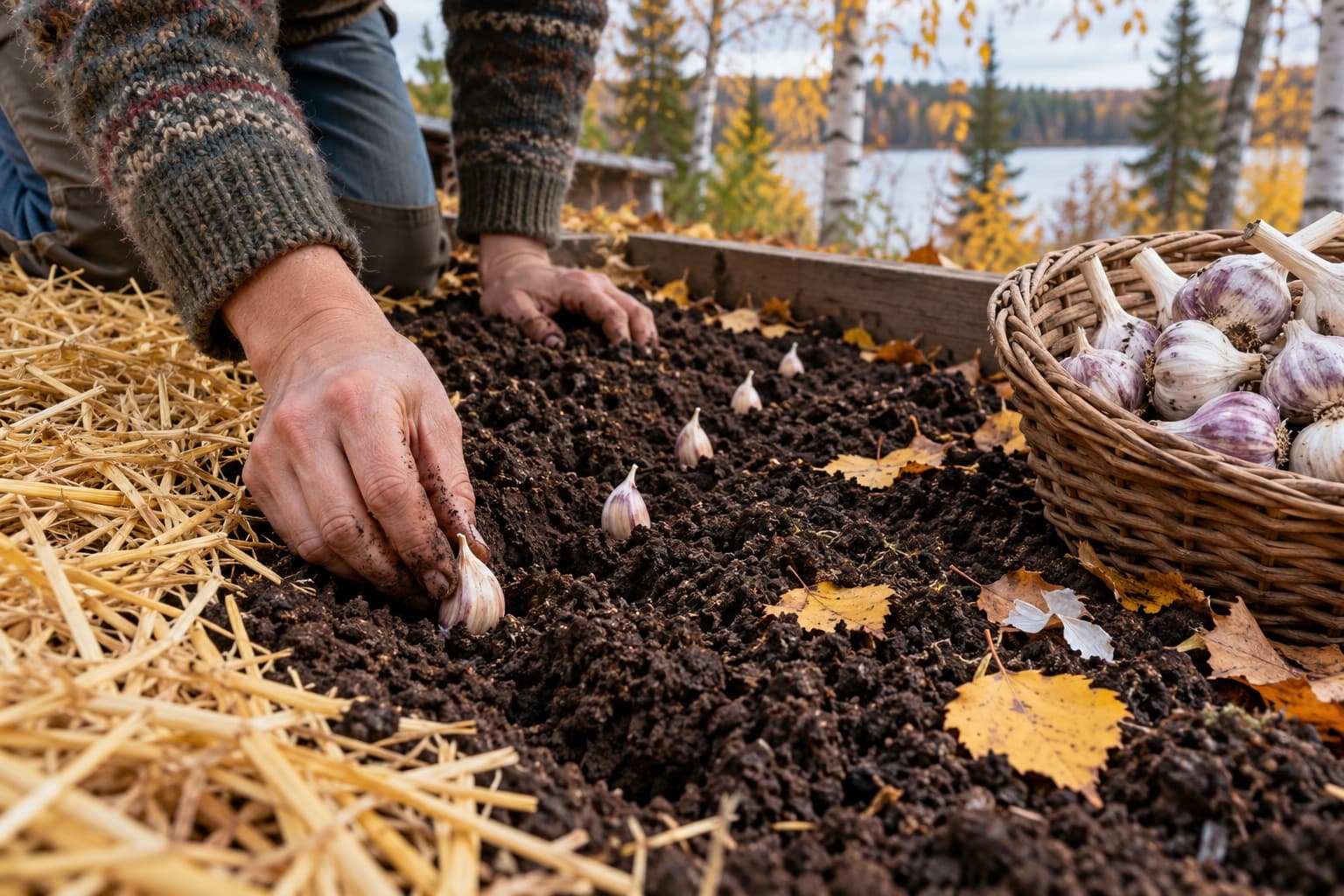
Hands planting a garlic clove in dark soil beside straw and hardneck bulbs.

1 to 2 weeks

UMN Extension usually recommends planting after the first killing frost. Give roots time to grow before winter while keeping most shoot growth below ground.

University of Minnesota Extension, Growing garlic in home gardens.

01 / Fall planting dates

Planting dates in northern and southern Minnesota

Colder zone 3 gardens and parts of zone 4

Northern Minnesota

1 to 2 weeks after the usual late-September killing frost

UMN's 2021 advice gives late September as the usual northern killing-frost period. Count the planting interval from that local frost season. If frost is unusually late, keep the normal planting schedule and protect early shoots with straw.
Much of zone 4 and warmer zone 5a areas

Southern Minnesota and the Twin Cities

1 to 2 weeks after the usual early-October killing frost

UMN's 2021 advice gives early October as the usual southern killing-frost period. Sheltered city gardens can cool more slowly than exposed rural beds, so use your garden's usual timing rather than a date for every town.

The warm-autumn exception

If autumn frost is late

In its 2021 warm-fall advice, UMN Extension says to plant on the usual schedule even if a killing frost has not arrived. Waiting can leave too little time for roots to grow before winter.

Plant near your usual fall date while you can still work the soil. Cover early shoots with straw. Stop if the planting soil is frozen, even if the afternoon air feels warm.

Minnesota has USDA zones 3 through 5a. The map describes winter minimum temperatures. It does not give your first frost date or an exact day to plant garlic.

02 / Winter care and harvest

Four jobs between planting and harvest

After planting and through winter

3 to 4 inches

Cover the bed for winter

Cover with leaves or weed-free straw to reduce soil temperature swings and weeds. Keep the bed well drained so melting snow can drain away.

UMN Extension gives this mulch depth to protect against winter temperature changes.

Spring

After hard freezes

Manage mulch when shoots emerge

UMN Extension says shoots usually stay below ground until spring. After the threat of hard freezes passes, pull mulch back to warm the soil. You can also leave it for weed control and moisture retention. Weed shallowly to avoid damaging bulbs.

UMN Extension's home-garden guide gives the spring emergence and mulch instructions.

Early summer

First curl

Cut the curling scapes

Hardneck garlic produces a flower stalk called a scape. Cut it just after it begins to curl. Scapes are edible. Keep checking soil moisture while the bulbs grow. A scape does not mean the bulb is ready to harvest.

UMN Extension recommends removing scapes just after they begin to curl.

Summer harvest

Late June to late July

Check leaves and dig a sample bulb

Start checking when the lower leaves are brown and half or a little more of the upper leaves remain green. Dig a sample bulb. Harvesting early gives smaller bulbs. Waiting too long lets cloves separate from their wrappers.

UMN Extension gives this harvest period and describes the leaf signs to check.

Choose hardneck planting stock grown in a cold climate

  • Rocambole
  • Purple Stripe
  • Porcelain

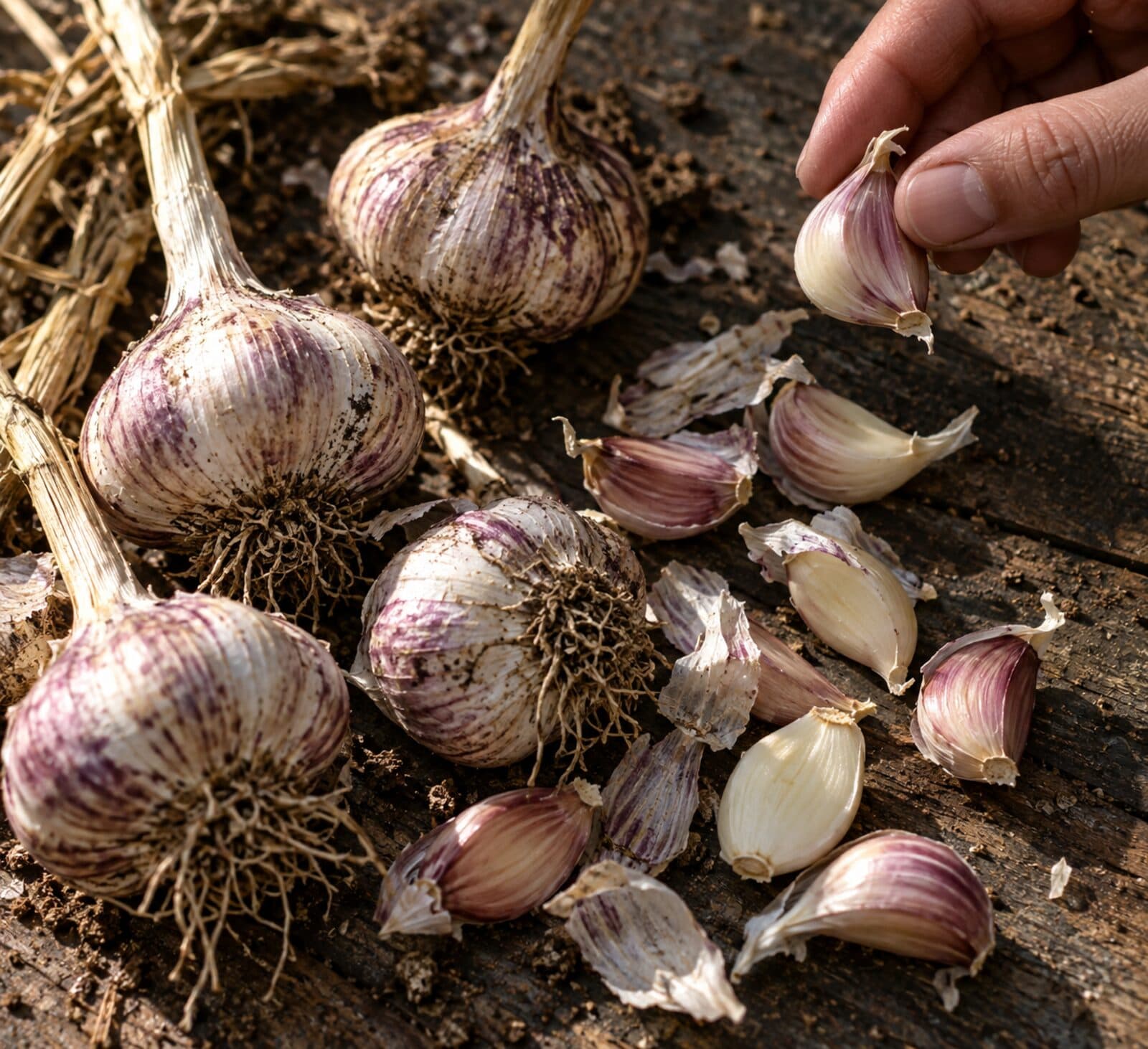
UMN Extension lists Rocambole, Purple Stripe and Porcelain as common hardneck types. Buy clean stock from a grower who can name the variety and describe local results.

Much commercial softneck garlic grows in the mild climate of northern California. Try a small planting in Minnesota unless a local grower can confirm that the strain survives winter and forms bulbs. Grocery-store garlic usually gives you neither the strain nor its growing history.

UMN Extension's local seed guide recommends stock from nearby growers with successful crops. Ask whether the planting stock has tested negative for garlic bloat nematode. Infected stock can bring the pest into your soil.

Check my local weather
FAQ

Questions about Minnesota garlic

Check fall timing and what to do when shoots or harvest signs appear.

Can I plant garlic in Minnesota in spring?

Fall planting gives cloves time to grow roots and receive winter cold before summer bulbing. Spring planting leaves a shorter growing season. Expect less than you would from an established fall crop.

Is October too late in northern Minnesota?

October can fit the usual 1 to 2 week planting interval after a late-September killing frost in the north. If you have missed your normal window, plant only while the soil is workable and use straw cover. Later planting gives roots less time before the ground freezes.

Should I wait for frost in an unusually warm fall?

UMN Extension says to keep the usual schedule in a warm fall. Waiting for a delayed frost can leave too little time for roots to grow before winter.

Which hardneck garlic types should I look for?

UMN Extension lists Rocambole, Purple Stripe and Porcelain. Choose a named strain from clean stock grown in a northern climate. Ask the seller how it survives local winters.

When is Minnesota garlic ready to harvest?

UMN Extension gives late June through late July, depending on variety and climate. Check a bulb when the lower leaves are brown and half or a little more of the upper leaves remain green.