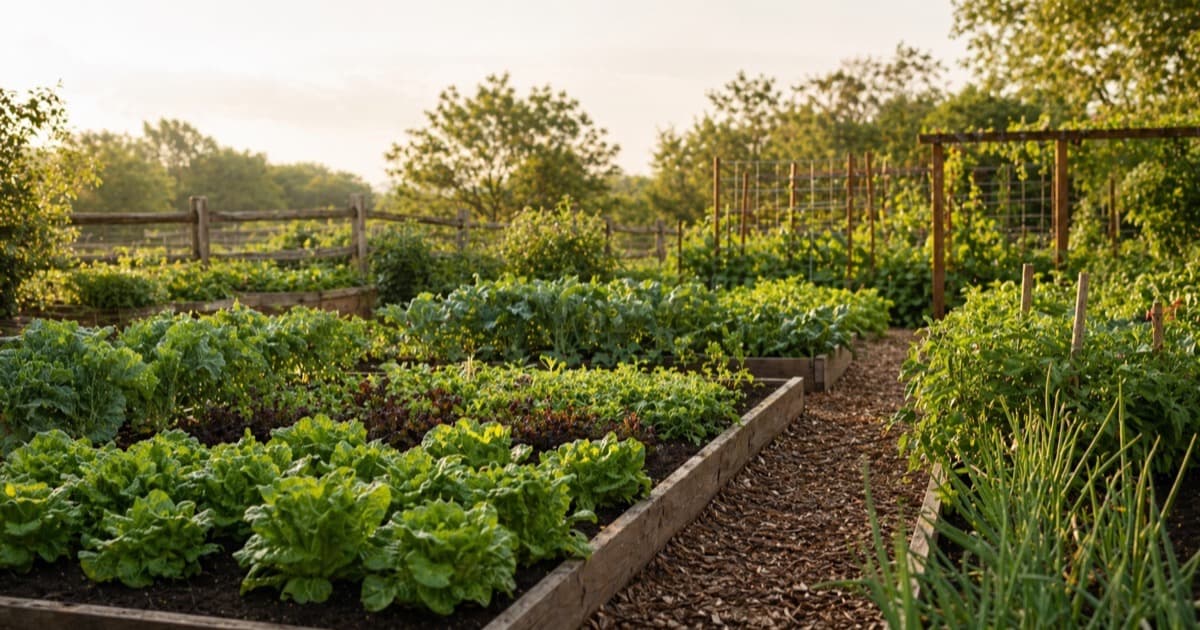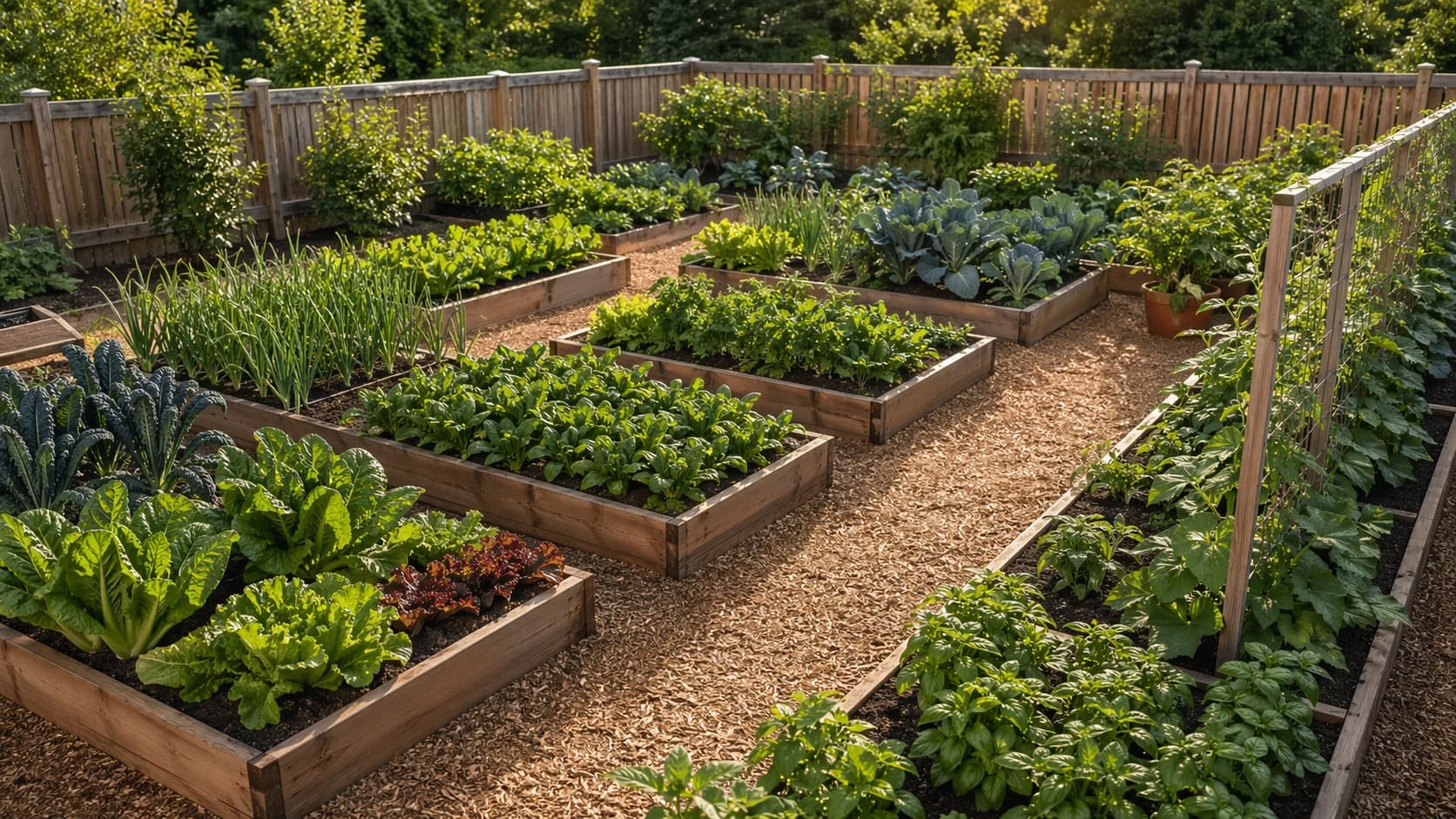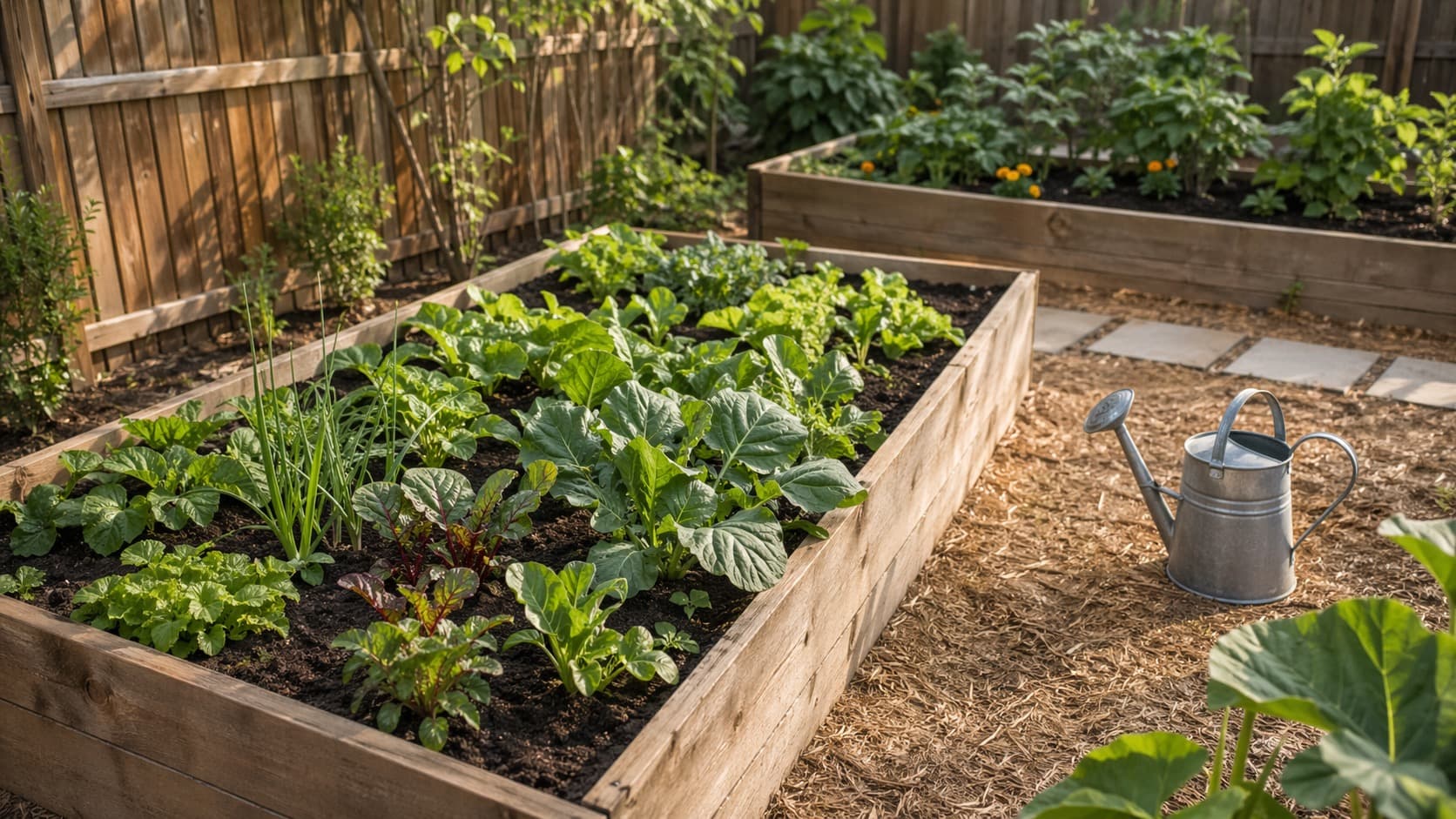
Uma horta para iniciantes funciona melhor com escopo realista do que com uma lista enorme de culturas.
Sol, água e solo manejável importam antes e mais do que discussões sobre variedade.
A primeira temporada deve ensinar como o local responde, não lotar cada espaço desde o início.
Escolha o local antes de escolher os cultivos
Um bom local resolve muitos problemas futuros logo no começo. Procure uma área com sol consistente, drenagem razoável e acesso prático à água para que o manejo de verão continue viável.
Muita gente escolhe o canto mais bonito do quintal, e não o mais útil. Se a horta fica longe, encharcada ou desconfortável, cada tarefa pesa mais e o acompanhamento cai.
- Priorize sol e praticidade acima da estética.
- Confirme de onde virá a água antes de montar canteiros ou vasos.
- Evite começar na área mais fria, mais encharcada ou cheia de raízes do quintal.
Comece com um tamanho que você realmente consiga cuidar
Uma horta pequena e produtiva ensina mais do que uma grande e caótica. O primeiro ano serve para entender quanto tempo vão consumir rega, capina e observação.
Por isso um ou dois canteiros modestos, uma fileira curta ou um conjunto pequeno de vasos costuma funcionar melhor do que um plano grande demais.
- Deixe a primeira temporada consolidar rotina antes de ampliar.
- Guarde espaço para crescer depois em vez de construir tudo de uma vez.
- Começar pequeno não é timidez; é estratégia.
Prepare o solo para que as raízes trabalhem bem
Um bom solo para hortaliças precisa permitir que as raízes avancem, reter umidade e nutrientes sem ficar pesado e se manter estável ao longo da estação. Composto e matéria orgânica útil geralmente ajudam mais do que misturas complicadas.
Nem sempre é preciso trocar todo o solo. Muitas vezes a melhor decisão é melhorar o que já existe, entender a drenagem e evitar compactar quando ainda está muito molhado.
- Adicione matéria orgânica antes de buscar produtos especiais.
- Não cave nem revolva com força quando o solo está pegajoso.
- Canteiros elevados ajudam, mas não corrigem sozinhos solo ruim ou rega ruim.
Plante uma mistura inicial que ensine como a horta funciona
O melhor plano inicial não é o que coloca mais plantas. É o que ensina época de plantio, espaçamento e ritmo de colheita sem ficar pesado demais.
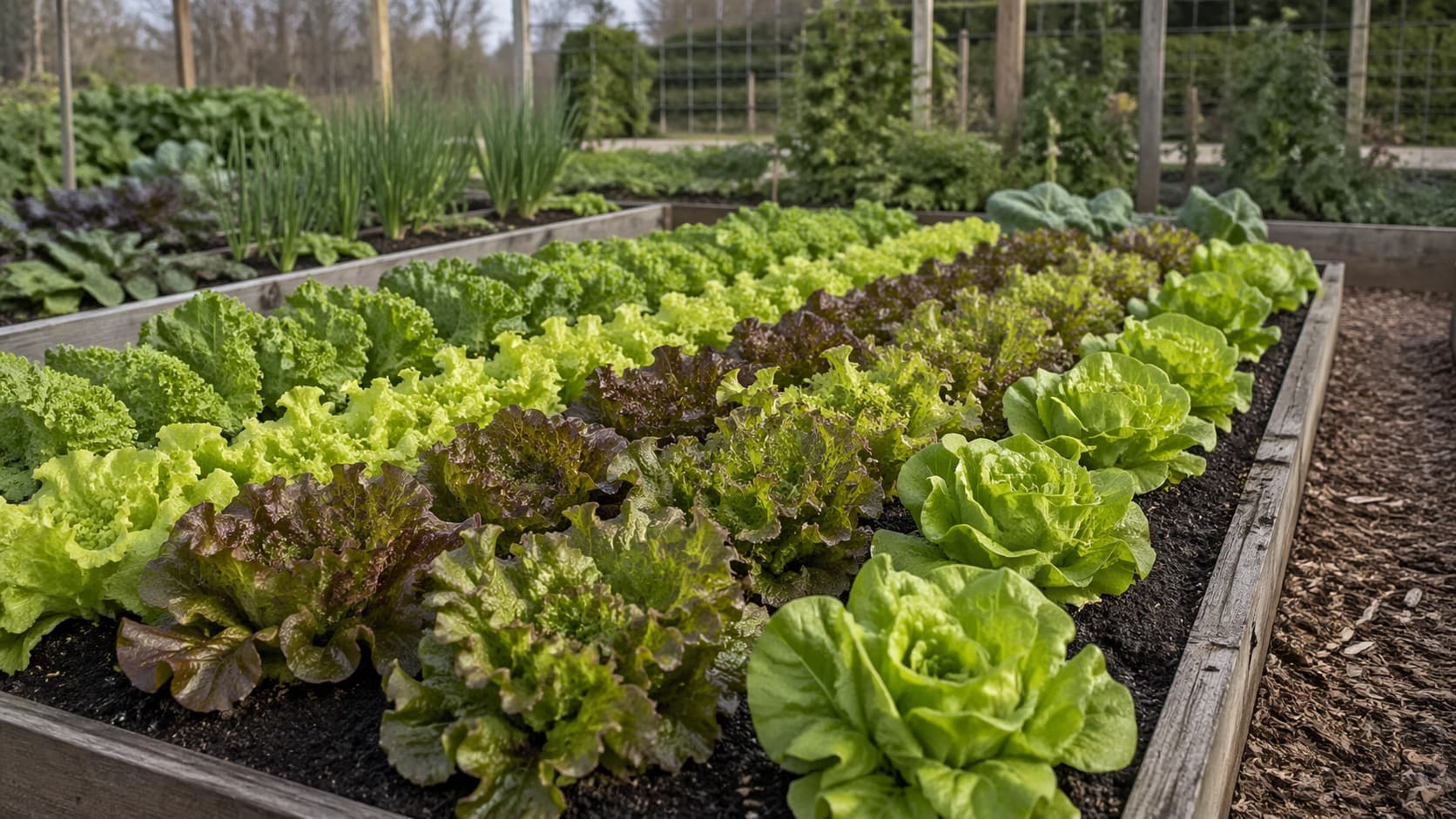
Folhosas de ciclo curto, cenouras, cebolas e alguns cultivos de verão bem tutorados costumam ensinar mais do que tentar copiar uma grande horta logo na primeira estação.
- Use culturas fáceis para aprender tempo e espaçamento.
- Misture culturas rápidas com alguns cultivos âncora.
- Faça um plano prático o bastante para observar e corrigir durante a temporada.
Pense no primeiro ano como base, não como prova final
A primeira temporada não precisa parecer perfeita. Ela precisa gerar informação útil: onde seca mais rápido, quais culturas apertaram demais, qual canteiro funcionou melhor e o que precisa mudar.
Esse olhar reduz frustração. Quando o objetivo é aprender bem o local, cada erro pequeno vira um ajuste claro para a temporada seguinte.
- Anote o que foi fácil e o que exigiu atenção demais.
- Observe como sol, água e acesso mudam ao longo das semanas.
- Repetir e ajustar melhora mais a horta do que redesenhar tudo a cada ano.
Comece com uma horta que você consiga visitar, regar e colher sem esforço extra
Quando localização, tamanho e solo combinam com sua rotina real, a horta ganha ritmo. Quando não combinam, cada tarefa vira mais um atrito.
- Escolha primeiro o local e o acesso à água.
- Comece pequeno e deixe espaço para crescer.
- Use a primeira temporada para aprender o lugar com calma.
A orientação deste artigo usa as referências listadas abaixo.
Respostas rápidas antes de voltar ao jardim
Estas são as perguntas que geralmente surgem quando o guia se torna trabalho real de jardim.
Qual é o melhor lugar para começar uma horta de hortaliças?
Uma área com sol confiável, acesso fácil à água e solo com drenagem razoável. A praticidade real do local pesa muito mais do que parece no começo.
Qual tamanho deve ter uma horta para iniciantes?
Pequena o bastante para conseguir regar, capinar e observar com constância. Para muita gente, um ou dois canteiros pequenos são um começo melhor do que um desenho grande.
Preciso de canteiros elevados para começar?
Nem sempre. Eles ajudam com estrutura e acesso, mas também é possível começar no solo ou em vasos se o local e a drenagem forem bons.
O que devo plantar primeiro?
Cultivos simples e claros de manejar, como folhosas, cenouras, cebolas e alguns cultivos de verão fáceis de tutorar. O principal é que eles ajudem você a aprender o ritmo da horta.