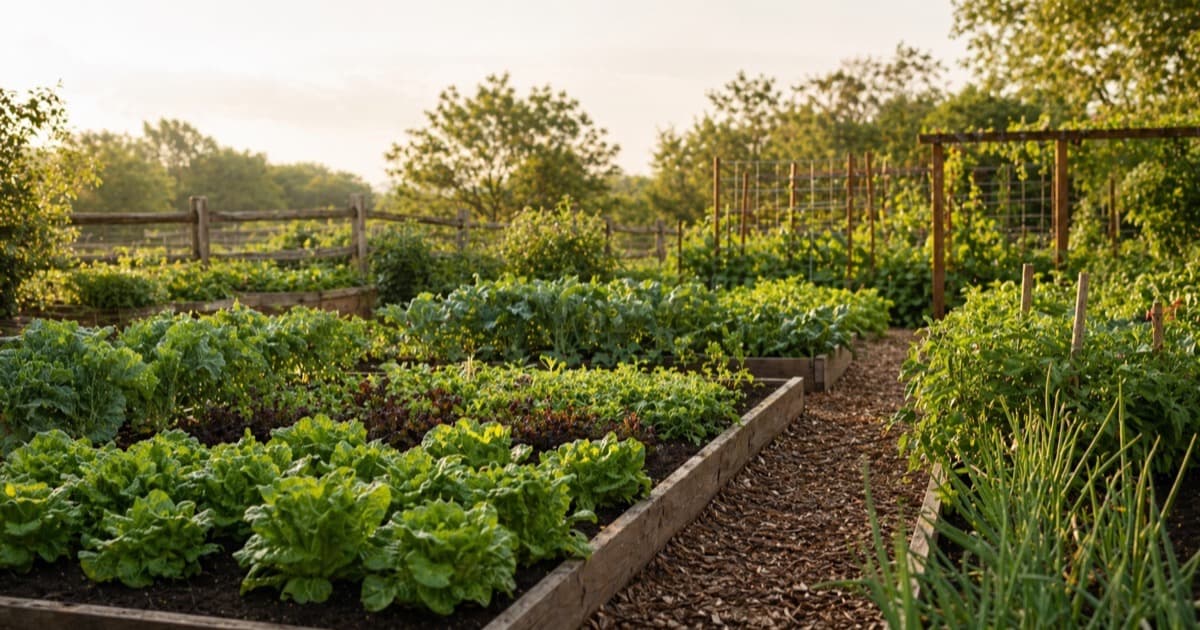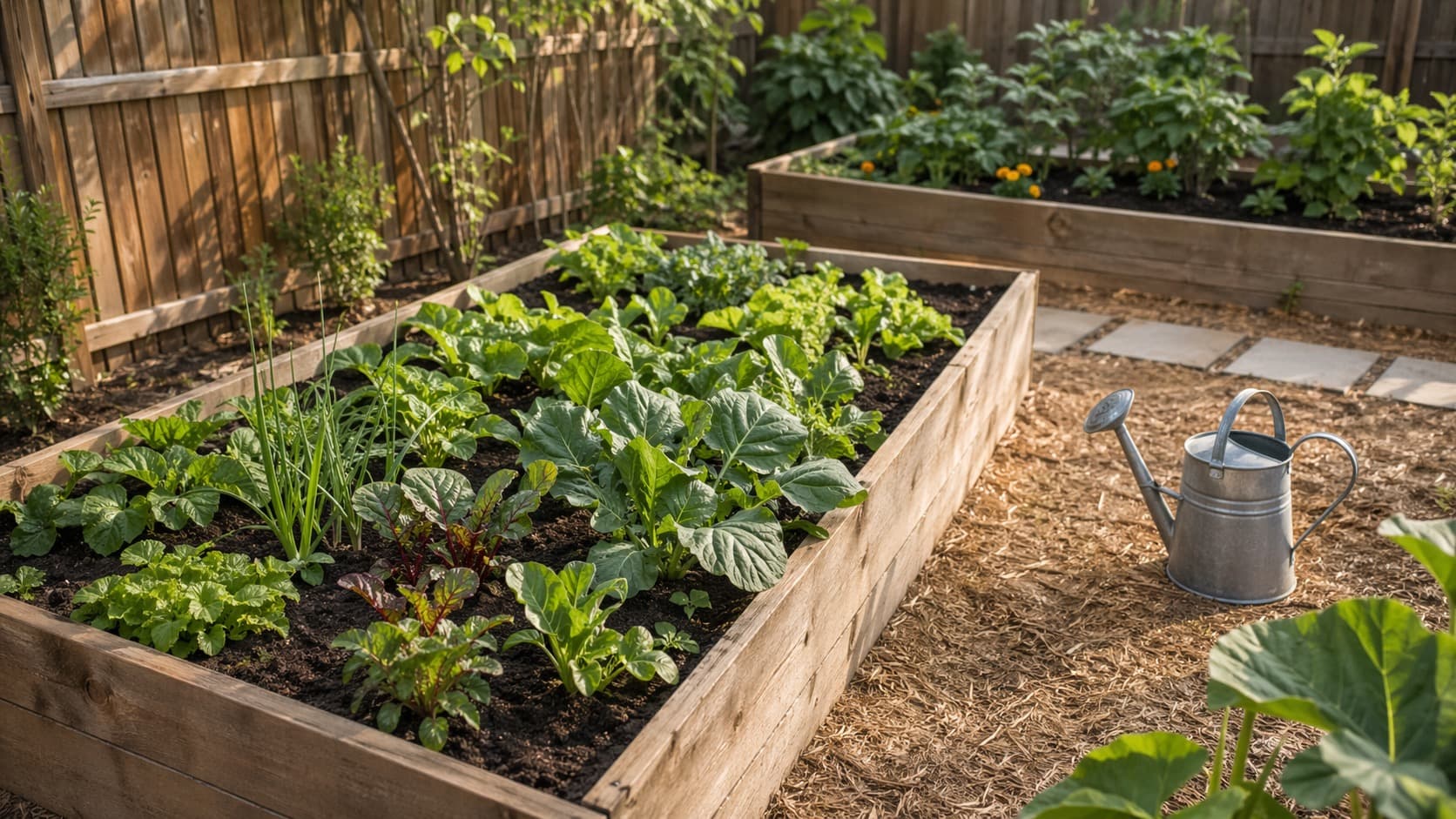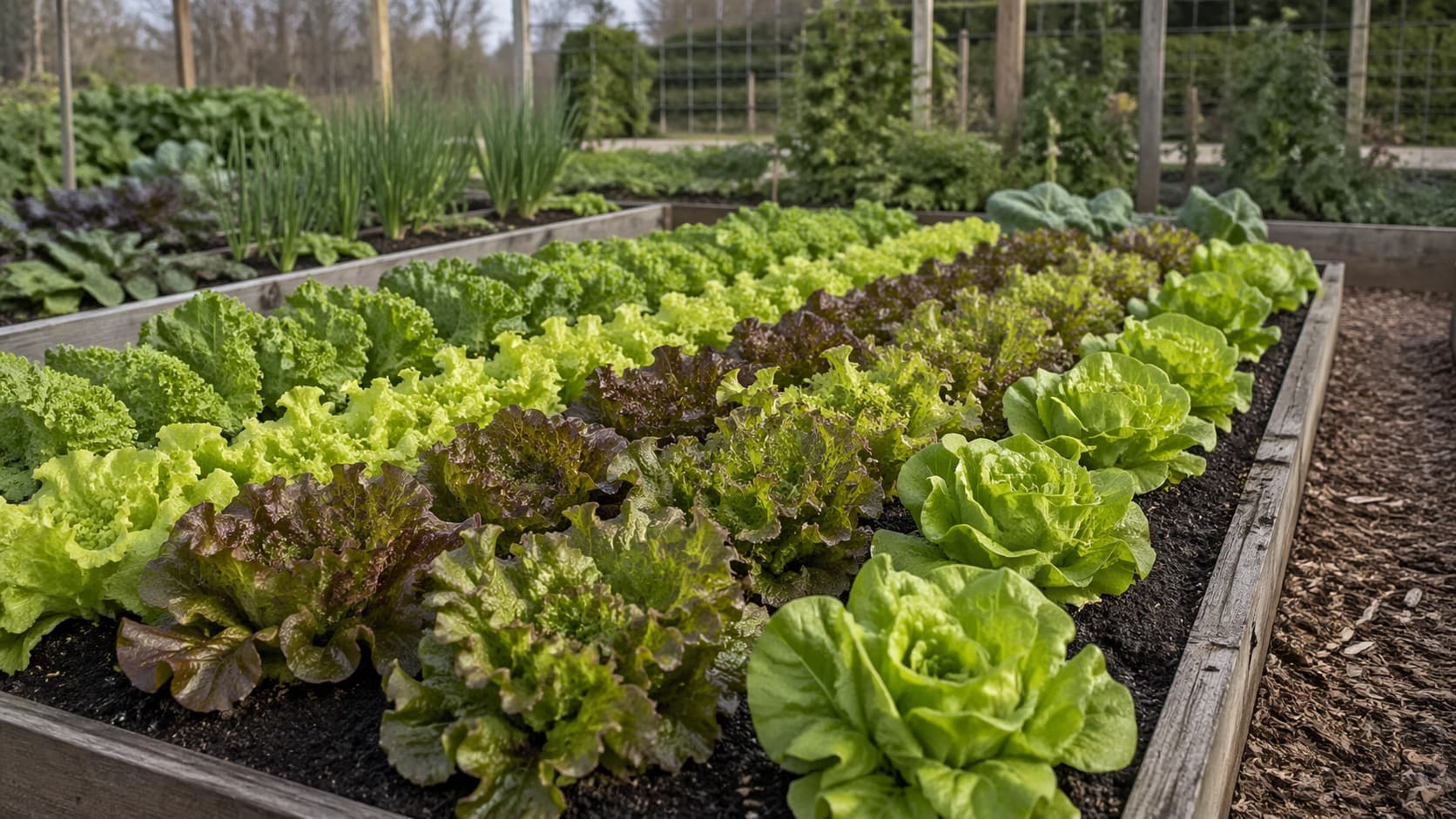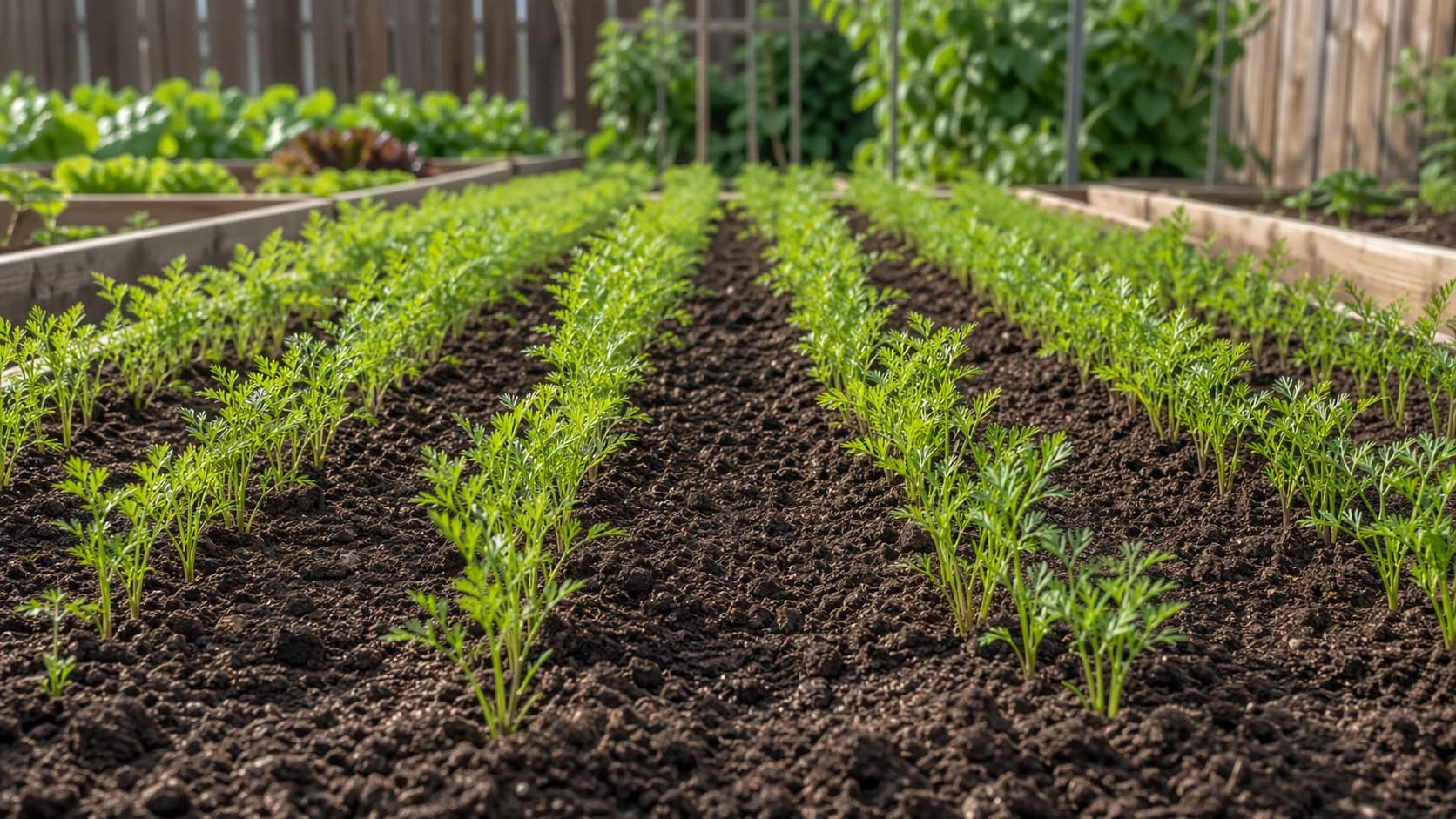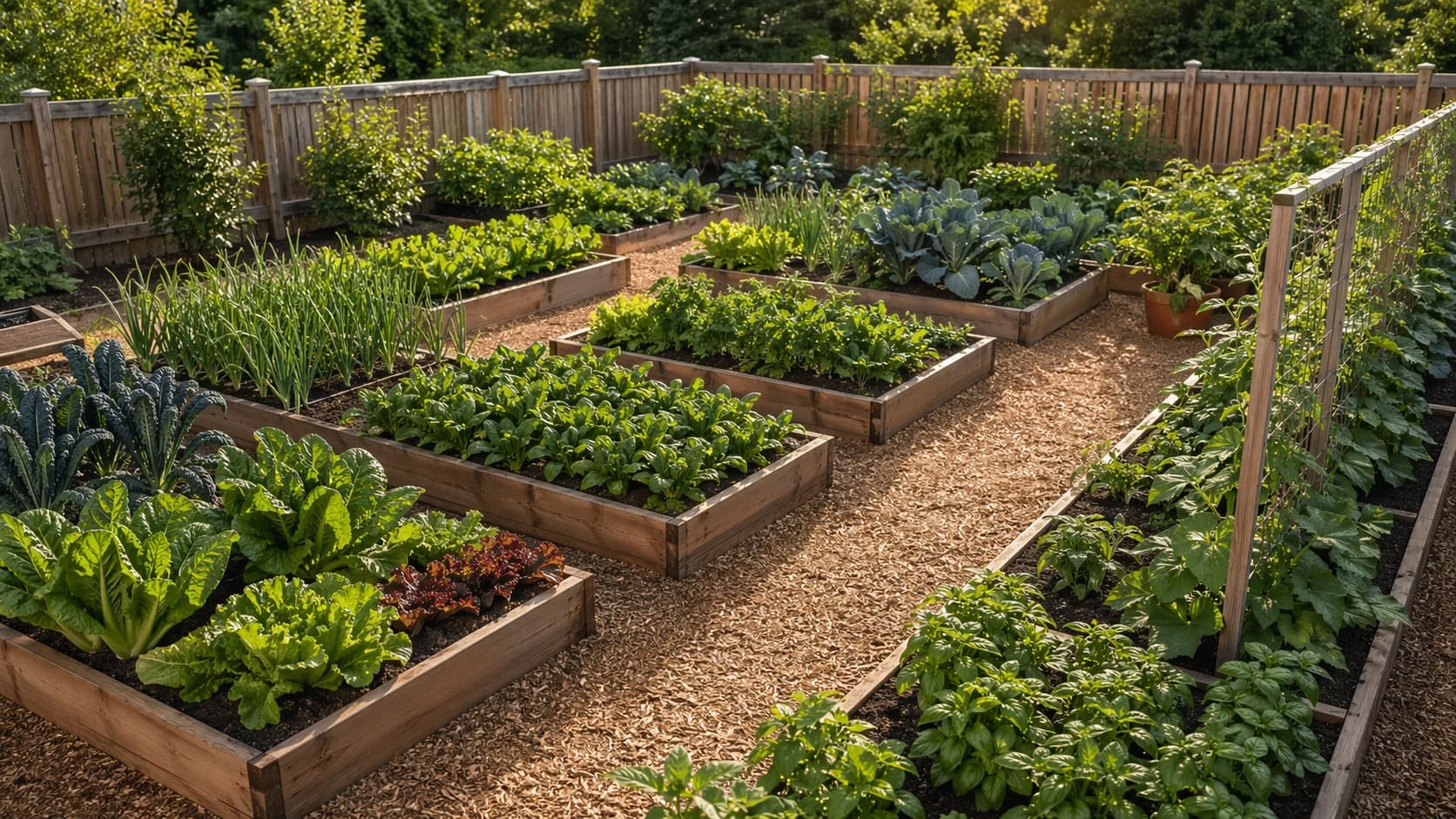
A strong starter layout is usually one or two 4-foot-wide beds with clear 18 to 24 inch paths.
Crop grouping by height and season prevents many later shading and crowding problems.
Draw mature spacing and support into the layout before deciding how many crops fit.
Use starter dimensions that work in most home gardens
A reliable beginner baseline is a bed about 3 to 4 feet wide so you can reach the middle from either side without stepping into the soil. Many home gardeners start with one or two 4 by 8 foot raised beds, but the more important number is width, not length.
Paths should usually be at least 18 to 24 inches wide so watering, harvesting, and carrying a bucket still feel normal once plants lean outward. If you want easier movement or wheelbarrow access, 30 to 36 inches is better. Put tall or trellised crops on the north side, or the back side if that matches your light, so shorter crops keep their sun.
- Use 3 to 4 foot beds so the center stays reachable from either side.
- Keep everyday paths 18 to 24 inches wide, or 30 to 36 inches for easier access.
- Place tall or trellised crops where they will not shade the lower planting.
Group crops by height, season, and maintenance rhythm
A mixed vegetable garden becomes easier to manage when crops with similar behavior live near each other. Tall crops and trellised vines should not casually shade low growers that still need sun. Quick spring crops should not be trapped where summer giants will soon take over. Heavy-feeding or frequently harvested crops should sit where you naturally pass them often.
Grouping by maintenance rhythm matters more than it sounds. A crop that needs constant checking belongs where it is easy to see, not hidden behind sprawling vines or tucked into the least convenient bed.
- Put tall or trellised crops where they will not steal light from lower crops.
- Keep quick-turn cool-season crops in beds you can reset easily.
- Place high-attention crops where you already walk often.
Leave room for mature spacing and support systems
Spacing and support belong on the layout plan, not as last-minute fixes. Tomatoes, cucumbers, and other vigorous crops can consume far more visual and physical space than their transplants suggest in spring. Cages, stakes, and trellises also widen the real footprint of a planting.
This is one reason simple plans usually outperform complicated ones. When the support needs are clear and the spacing is honest, the garden feels calmer all season. When they are improvised, the bed starts closing in on itself.
- Draw support systems into the plan, not just plant circles.
- Honor mature spacing even when spring beds look empty.
- A little empty space in May often becomes exactly right by July.
Use layout to make succession and season changes easier
A beginner garden layout should be able to change with the season. Spring lettuce, carrots, and onions do not occupy the garden in the same way as summer tomatoes, peppers, or cucumbers. If you place crops with seasonal transitions in mind, bed turnover becomes much cleaner.
That does not require a complex rotation spreadsheet for the first year. It just means the layout should leave you some logical ways to replant a bed, reset a section, or keep one crop from blocking the next one.
- Let early crops live where later replanting will be straightforward.
- Design a few clean bed transitions instead of one locked-in yearly map.
- A seasonal layout is more useful than a static diagram.
The best beginner layout is the one you can repeat and improve
You do not need a clever layout to start well. You need one clear enough that you can remember what worked, what crowded the bed, and what should move next year. Repetition is useful because it turns each season into a better version of the last one instead of a full redesign from scratch.
That is why simple rectangles, clean crop blocks, and consistent pathing often beat highly decorative plans. The more legible the layout is, the easier it becomes to improve it.
- Choose a layout you can evaluate honestly after one season.
- Simple structure makes future improvements easier to see and apply.
- Good layout is less about novelty and more about clear function.
A layout that is easy to reach usually stays productive
A vegetable garden layout should still work at peak growth, not just on planting day. Bed width, path width, support, and mature plant size all belong in the first draft.
- Start with bed and path dimensions before crop count.
- Group crops by season and maintenance needs.
- Let future support and mature spacing shape the plan early.
The guidance here draws on the references listed below.
Quick answers before you head back outside
These are the questions that usually come up once the guide turns into real garden work.
What is the easiest vegetable garden layout for beginners?
For most beginners, one or two rectangular beds about 4 feet wide with straight 18 to 24 inch paths is the easiest place to start. Put tall or trellised crops on the north or back side and keep quick, lower crops where they stay easy to reach.
How wide should vegetable garden beds be?
Most vegetable garden beds work best at 3 to 4 feet wide. That keeps the center reachable from either side without stepping into the soil.
Should tall crops go on one side of the garden?
Usually yes. Putting tall or trellised crops on the north side, or the back side if that fits your light, helps protect sun and airflow for lower crops.
Can I mix a lot of vegetables in one bed?
Yes, but only if mature spacing, height, and harvest access still stay workable. Mixed beds fail when too many crops are added before the bed dimensions and path access are settled.