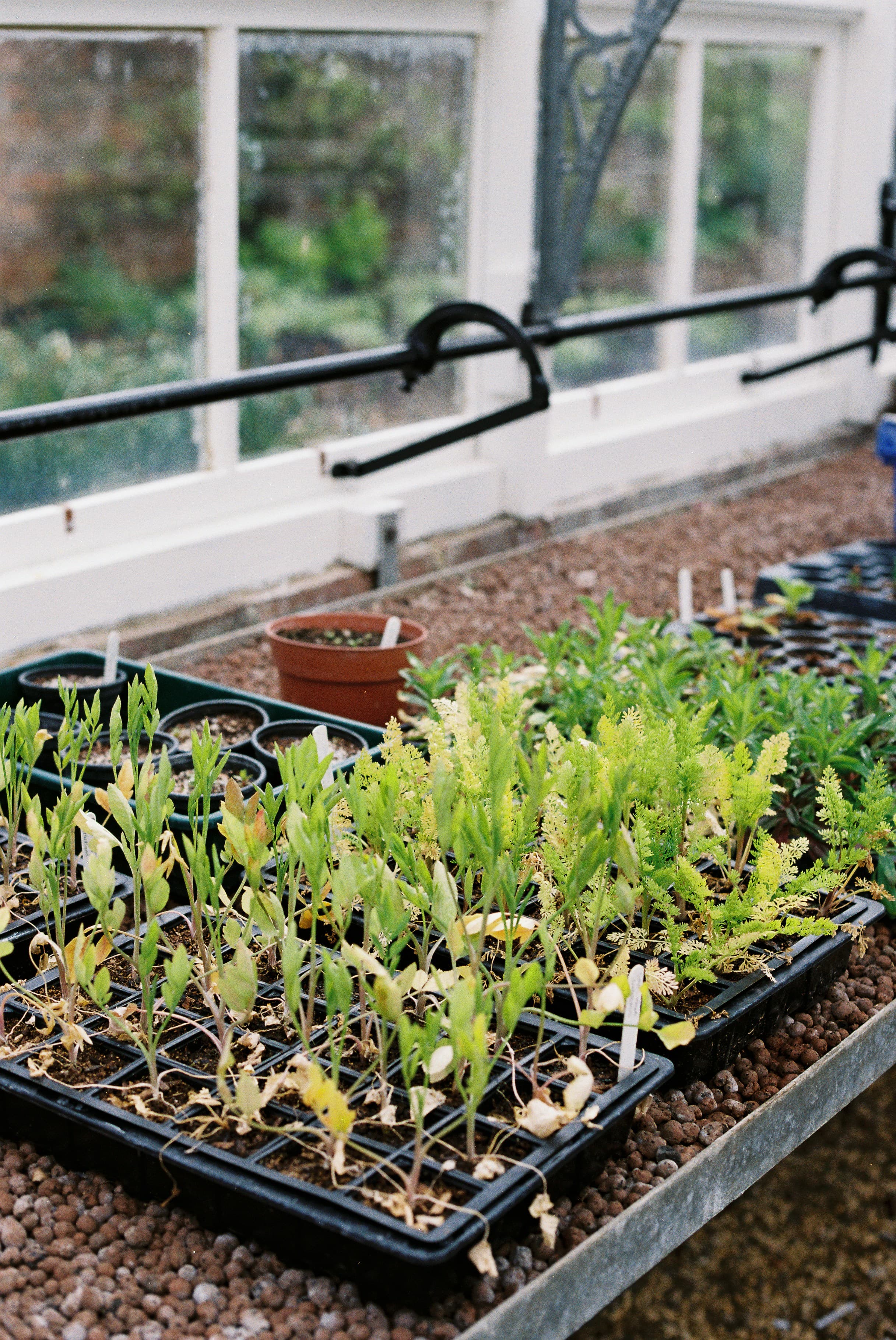
Uma barra de LED de loja simples e perto das plantas supera um painel caro pendurado alto demais.
Deixe as luzes de cultivo de 14 a 16 horas por dia e dê às mudas um período real de escuro toda noite.
Suba a luz conforme as plantas crescem, mantendo-a sempre perto o bastante para os caules ficarem curtos e firmes.
Por que um parapeito ensolarado normalmente não basta
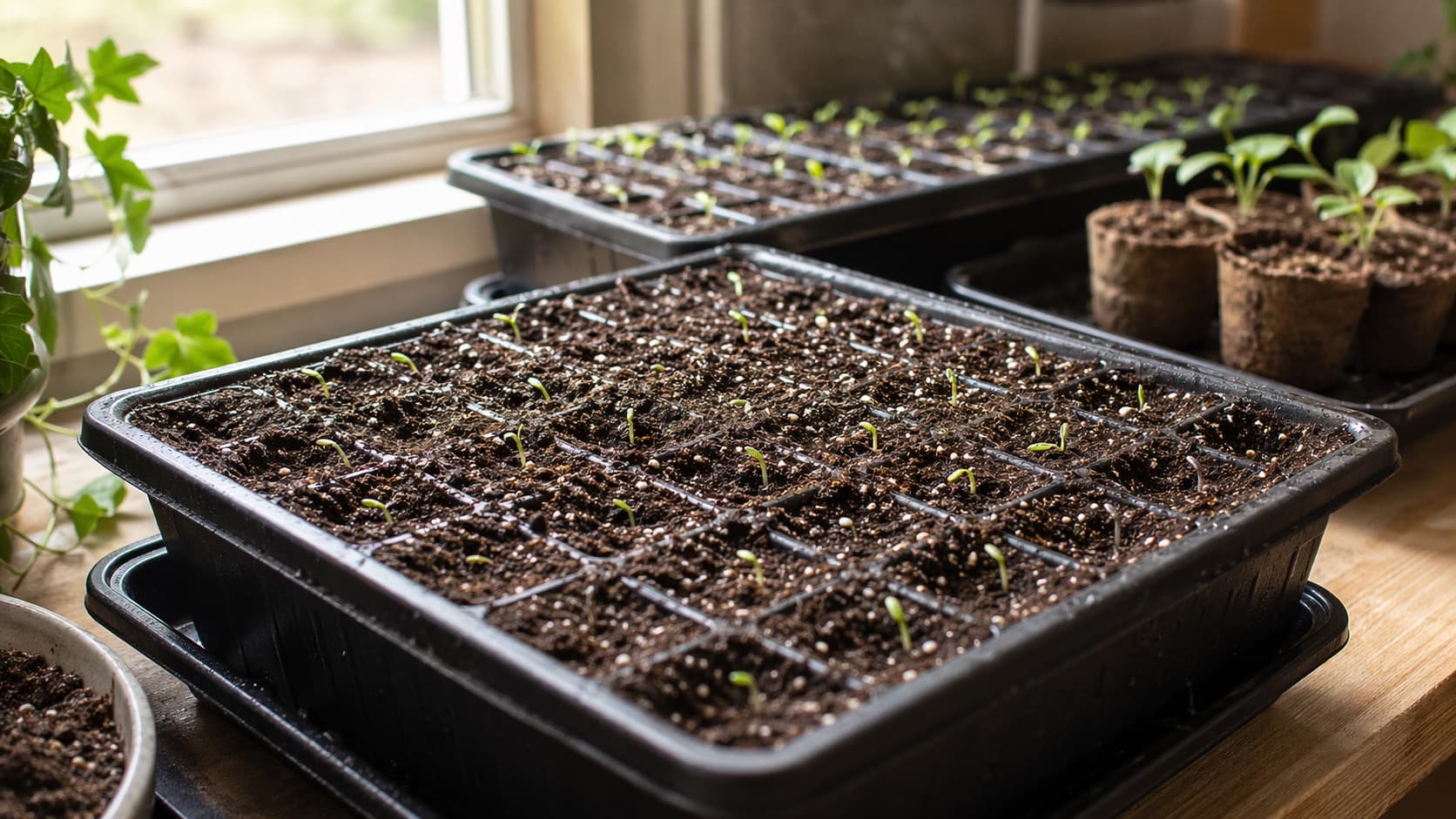
Mesmo um parapeito claro voltado para o norte entrega muito menos luz que o sol de fora. O vidro filtra a intensidade, as janelas esfriam o ar em volta das mudas à noite e as plantas se inclinam para o vidro produzindo crescimento de um lado só, do qual é difícil recuperar no transplante.
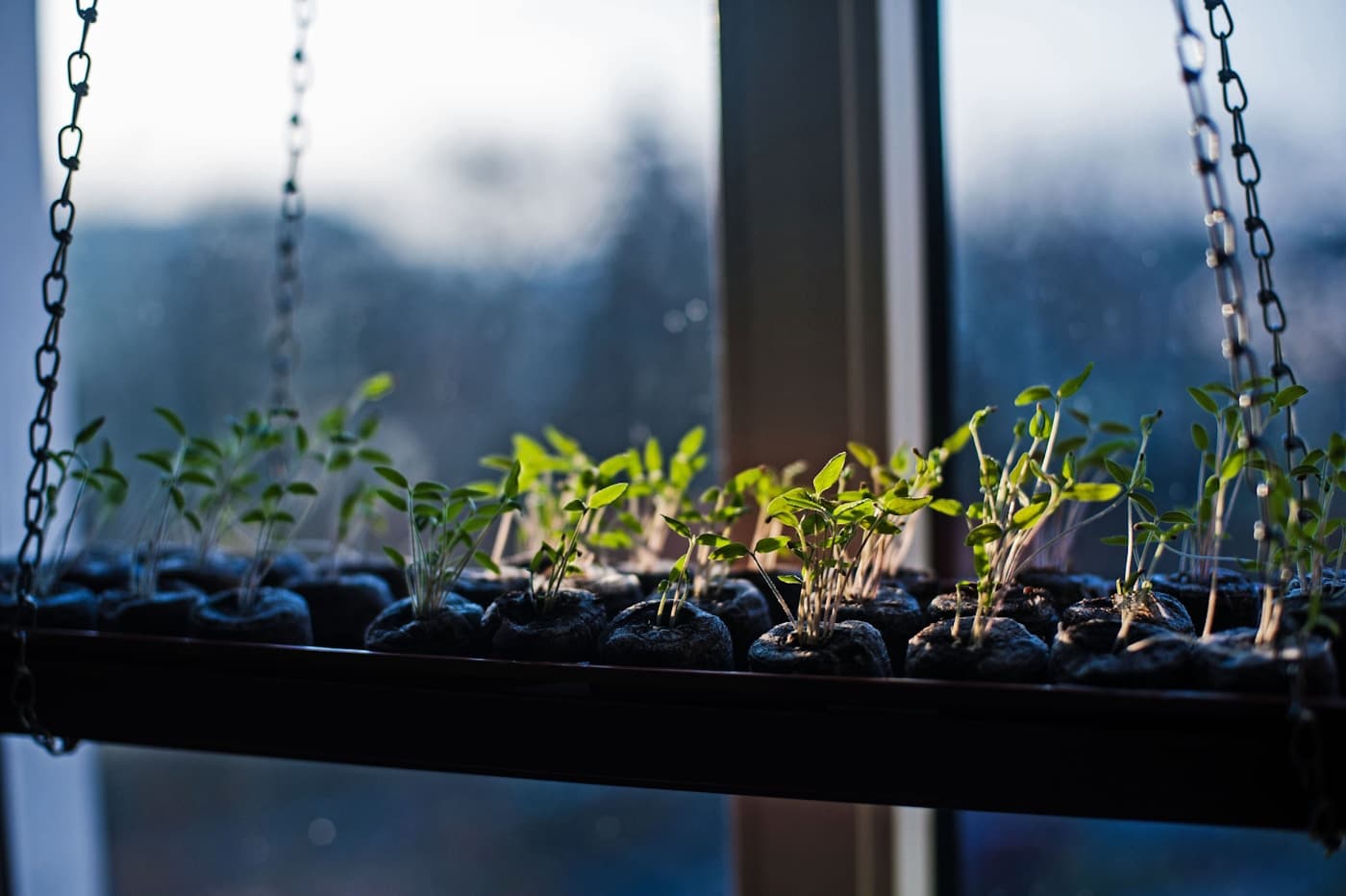
Uma estrutura simples de luz de cultivo sobre uma prateleira ou mesa dá controle sobre a qualidade e a duração da luz. Esse controle é o que mantém os caules curtos, as folhas verde-escuras e as raízes crescendo em vez de se esticar para uma fonte distante.
- A luz de uma janela cai muito a poucos centímetros do vidro.
- Mudas sob luzes de cultivo ficam mais compactas e se recuperam mais rápido depois do transplante.
- Um temporizador básico deixa a constância de luz sem esforço.
Barras de LED de loja contra painéis de cultivo dedicados
Para quase todo mundo que semeia em casa, uma barra de LED de loja de espectro completo de 1,2 m na faixa de 4000K a 6500K funciona bem e custa muito menos que um painel de cultivo especializado. Procure luzes de cerca de 2000 a 5000 lúmens por unidade. Duas unidades lado a lado cobrem melhor que uma única barra estreita.
Painéis de cultivo dedicados, com mais potência e espectro ajustável, valem a pena se você semeia muitas bandejas, continua cultivando plantas além da fase de muda em ambiente interno, ou tem uma estrutura em que as luzes precisam ficar bem acima da folhagem.
- Barras de LED de loja de espectro completo (4000K-6500K) atendem quase todas as necessidades das mudas.
- Duas unidades em paralelo melhoram a cobertura e reduzem a inclinação das plantas.
- Painéis dedicados ajudam quando as luzes precisam ficar mais altas ou quando você cultiva até o tamanho de transplante em ambiente interno.
A que distância pendurar a luz e por quanto tempo deixá-la ligada
A distância importa mais que a potência. A maioria das mudas precisa da fonte de luz de 5 a 10 cm acima das folhas. Se a luz estiver longe demais, os caules esticam finos e pálidos. Se estiver perto demais, as folhas podem descolorir ou enrolar por estresse de calor. Ajuste a altura algumas vezes por semana conforme as mudas crescem.
Deixe as luzes de cultivo de 14 a 16 horas por dia. As plantas precisam de um período de escuro para crescer normalmente, então não deixe as luzes ligadas o dia inteiro. Um temporizador de tomada ajustado para ligar às 6h e desligar às 22h elimina a necessidade de lembrar todo dia e mantém o ritmo estável.
- Pendure as luzes de 5 a 10 cm acima das mudas e suba conforme as plantas crescem.
- Deixe de 14 a 16 horas por dia com um temporizador para manter a constância.
- Se os caules esticam pálidos e finos, a luz está longe demais ou as horas são poucas.
Quando as mudas estão prontas para deixar as luzes de cultivo
As mudas estão prontas para seguir adiante quando têm pelo menos dois pares de folhas verdadeiras, os caules estão firmes e não moles, e o clima externo se aproxima das condições de transplante. Nesse ponto, comece a aclimatação levando as bandejas para fora em períodos crescentes ao longo de 7 a 10 dias, para que os caules engrossem e as folhas se adaptem ao sol e ao vento reais.
Não leve as mudas das luzes de cultivo direto para a horta. O salto da luz interna estável para o sol pleno de fora queima as folhas, a não ser que as plantas sejam expostas aos poucos. Alguns dias de tempo crescente ao ar livre sob sol filtrado ou de manhã bastam para preparar mudas firmes para a horta de verdade.
- Leve as mudas para fora de forma gradual ao longo de 7 a 10 dias.
- Comece a aclimatação com sol filtrado ou de manhã, não com a exposição plena da tarde.
- Dois pares de folhas verdadeiras e caules firmes são o mínimo antes de transplantar.
A melhor luz de cultivo é a que fica perto o bastante
Mesmo uma barra de LED de loja modesta pendurada a 5-8 cm acima das mudas dá resultados melhores que um painel caro montado a 45 cm de altura. A distância é a variável que mais passa despercebida no começo.
- Confira a altura a cada poucos dias e ajuste conforme as mudas crescem.
- Se os caules estão esticando, a luz precisa chegar mais perto ou ficar ligada mais horas.
- Um temporizador é a melhoria mais barata que você pode fazer em qualquer estrutura de luz.
A orientação daqui usa as referências listadas abaixo.
Respostas rápidas antes de voltar ao jardim
Estas são as perguntas que geralmente surgem quando o guia se torna trabalho real de jardim.
Qual temperatura de cor é melhor para luzes de cultivo de mudas?
Para a maioria das mudas de hortaliças funciona bem um LED de espectro completo na faixa de 4000K a 6500K. A luz mais fria (perto de 6500K) favorece crescimento compacto, enquanto um espectro mais quente acompanha a floração mais adiante na vida da planta.
Posso usar lâmpadas LED comuns em vez de luzes de cultivo?
Sim, mas a cobertura da estrutura importa. Lâmpadas LED domésticas comuns em suportes de prender podem servir para poucas mudas se ficarem bem perto, mas uma barra de loja de 1,2 m dá cobertura muito mais uniforme para uma bandeja inteira.
Como sei se minha luz está perto demais?
Folhas que descolorem, enrolam para cima ou desenvolvem bordas marrons e secas podem estar recebendo calor ou intensidade de luz demais. Suba a luz alguns centímetros e observe se melhora nos dias seguintes.
As luzes de cultivo devem ficar ligadas à noite?
Não. As mudas precisam de um período de escuro de pelo menos 6 a 8 horas para respirar e crescer normalmente. Deixar as luzes ligadas 24 horas pode estressar as plantas e desperdiçar energia.