La referencia habitual de primavera está en torno a 2 a 4 semanas antes de la última helada.
Muchas zonas tienen una segunda buena ventana para zanahoria en otoño.
El estado del bancal influye tanto en el éxito como la fecha del calendario.
La respuesta corta: siembra en primavera fresca y repite en otoño si tu temporada lo permite
En muchos huertos, la primera siembra de zanahoria entra unas 2 a 4 semanas antes de la última helada media, cuando el bancal ya puede prepararse fino y uniforme.
Para otoño, una referencia frecuente es sembrar unas 10 a 12 semanas antes de la primera helada media, ajustando según variedad y clima local.
- Usa 2 a 4 semanas antes de la última helada como base de primavera.
- Usa 10 a 12 semanas antes de la primera helada como base de otoño.
- Recuerda que la zanahoria se siembra directa y depende mucho del semillero.
El bancal importa tanto como la fecha
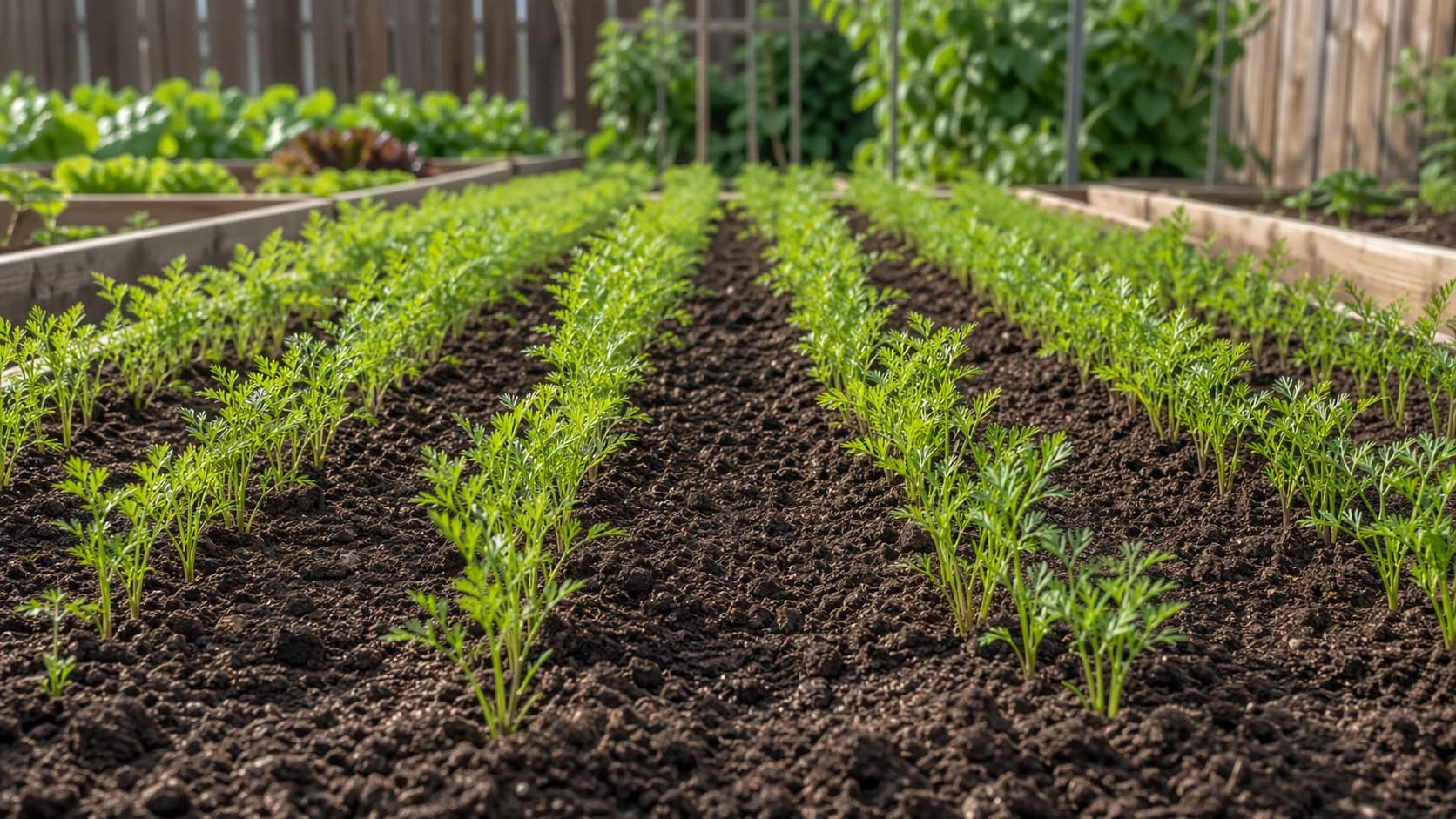
Las zanahorias exponen muy rápido un mal semillero. Si el suelo está apelmazado, con terrones o se encostra, la nascencia se vuelve irregular y las raíces sufren desde el inicio.
Por eso la pregunta de cuándo sembrar zanahorias casi siempre va unida a si el bancal ya está listo para recibir la semilla.
- No siembres en un bancal que aún necesita una preparación grande.
- Busca una textura fina y uniforme cerca de la superficie.
- La preparación paciente suele compensar más que sembrar unos días antes.
Qué debe sentirse en una buena siembra temprana
Una buena siembra temprana de zanahoria no requiere calor fuerte, pero sí un bancal trabajable y una superficie que no se seque de golpe.
La idea no es esperar demasiado, sino evitar un comienzo forzado en un entorno que todavía no favorece una germinación limpia.
- La primavera fresca es buena si el suelo ya colabora.
- No confundas suelo frío con suelo imposible.
- La humedad del semillero durante la germinación es decisiva.
La ventana de otoño puede ser incluso mejor
En muchas zonas, la zanahoria de otoño funciona muy bien porque el suelo sigue templado para germinar, pero el final de temporada favorece un desarrollo de raíz más dulce y constante.
Esa segunda oportunidad es especialmente útil si la siembra de primavera salió irregular o si quieres dejar un hueco en el plano para una segunda tanda.
- No pienses la zanahoria solo como cultivo de primavera.
- Germinación con suelo templado y acabado fresco suele ir muy bien.
- Deja espacio en el huerto si quieres aprovechar la segunda ventana.
Un bancal bien preparado pesa más que sembrar unos días antes
La zanahoria agradece una fecha correcta, pero todavía agradece más un semillero limpio, fino y con humedad estable.
- Trata la estructura del bancal como parte del calendario de siembra.
- Mantén la superficie húmeda hasta completar la nascencia.
- Aprovecha la ventana de otoño cuando tu clima lo permita.
La orientación de aquí se basa en las referencias que aparecen a continuación.
Respuestas rápidas antes de volver al jardín
Estas son las preguntas que suelen surgir cuando la guía se convierte en trabajo real de jardín.
¿Puedo plantar zanahorias a principios de primavera?
Sí. Como base general, unas 2 a 4 semanas antes de la última helada media, siempre que el bancal ya esté listo para siembra directa y no se compacte al trabajarlo.
¿Las zanahorias se trasplantan bien?
Normalmente no. La zanahoria suele ir mucho mejor con siembra directa para no alterar la raíz principal.
¿Cuándo plantar zanahorias para otoño?
Como referencia, unas 10 a 12 semanas antes de la primera helada media. Después conviene ajustar según duración de la variedad y tiempo restante de tu estación.
¿Por qué germinaron mal mis zanahorias?
Suele deberse a humedad irregular, superficie demasiado áspera o un bancal que todavía no estaba listo. Muchas veces el problema está en el arranque, no en la semilla.
Productos a considerar
As an Amazon Associate I earn from qualifying purchases.
Estos productos apoyan las tareas de jardinería tratadas más arriba. Si compras a través de un enlace, GrowerBuddy puede recibir una comisión sin costo adicional para ti.
El nivel de precio es una orientación aproximada de la posición habitual de este producto en su categoría, no un precio en vivo. Consulta el precio y la disponibilidad actuales en Amazon.