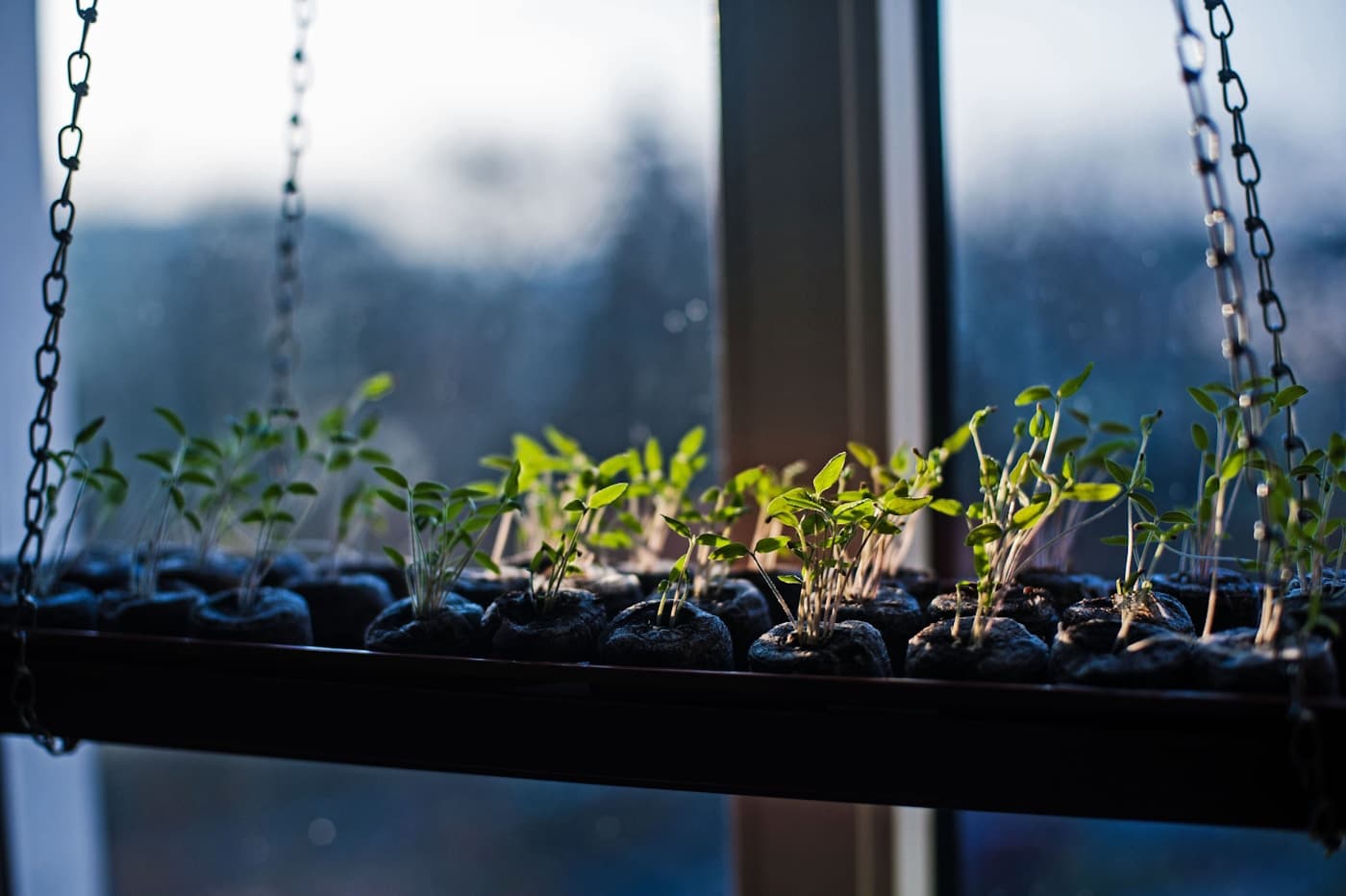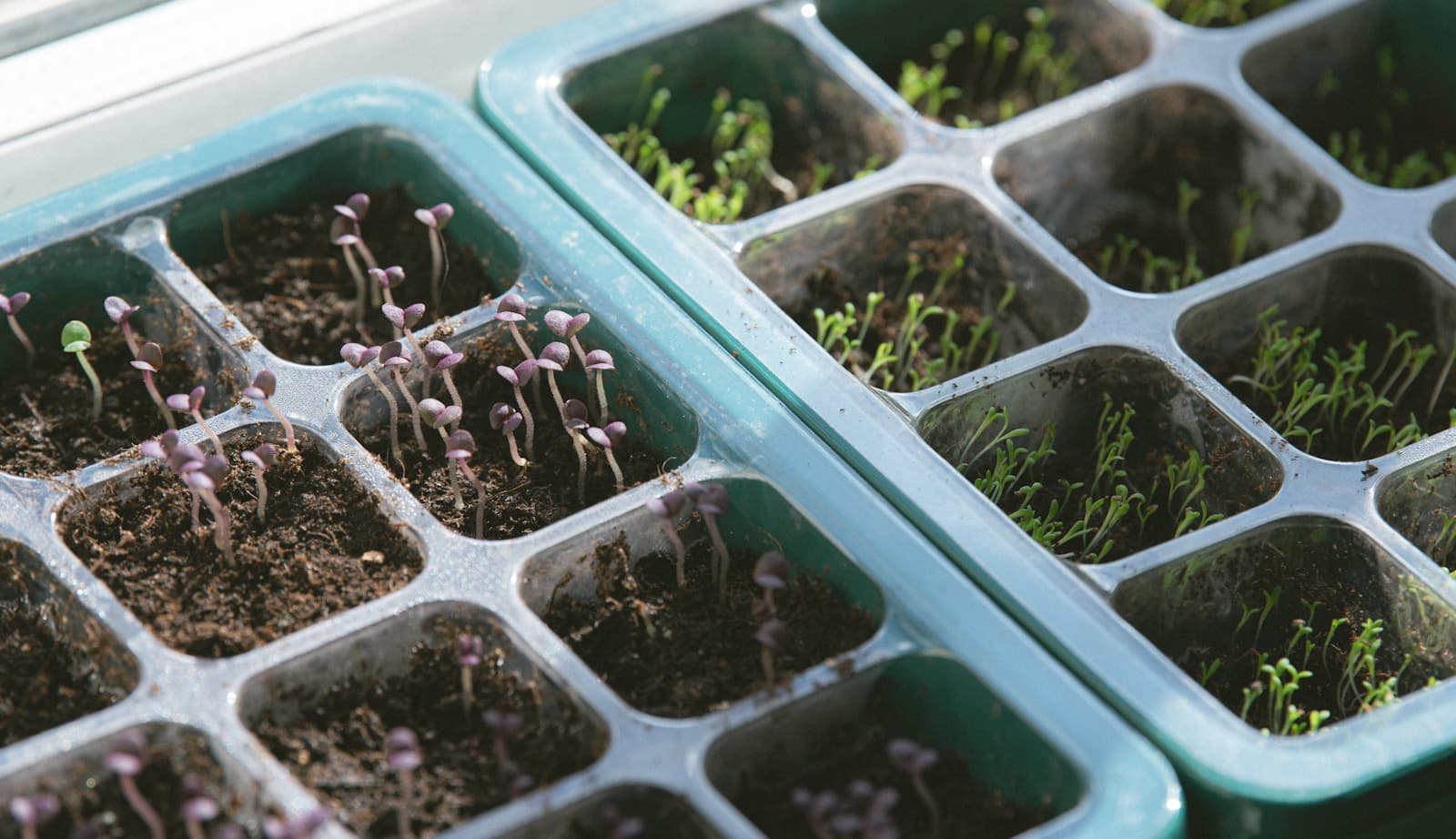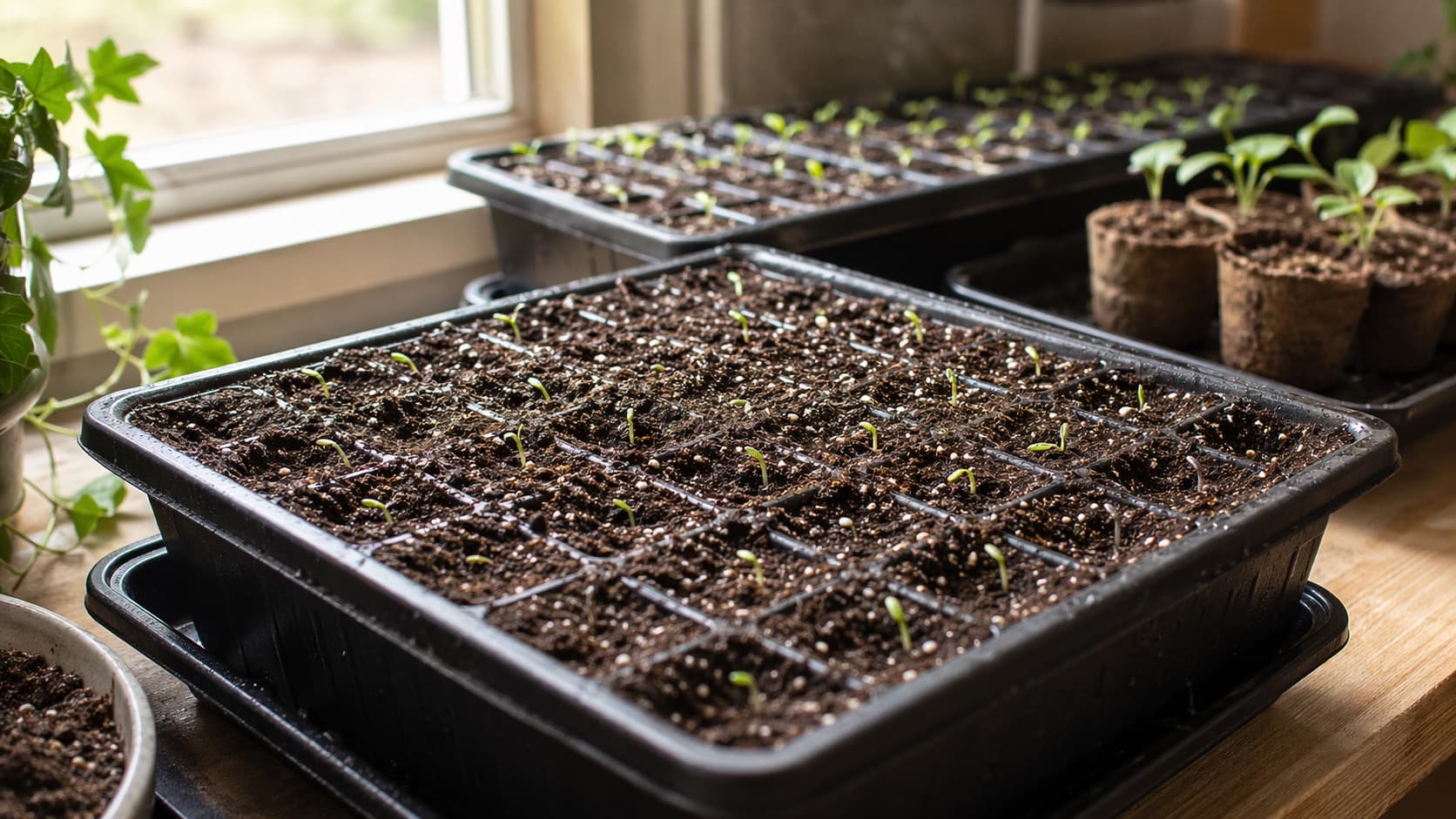
El sustrato de inicio debe ser limpio, fino y con drenaje rápido, pero capaz de mantener humedad pareja.
La tierra del jardín y los sustratos pesados causan más problemas de plántulas de los que resuelven.
La mezcla correcta reduce damping-off, mejora raíces y hace el riego más predecible.
Qué debe hacer realmente un sustrato de inicio
El sustrato para iniciar semillas está pensado para la primera etapa: germinación, raíces pequeñas y tallos delicados. Eso significa que debe mantenerse húmedo de forma pareja para ablandar la cubierta de la semilla, pero con suficiente aire para que las raíces nuevas no queden sentadas en agua compactada. Una buena mezcla se siente ligera en la mano y drena sin convertirse en barro.
Eso es distinto de una mezcla pensada para sostener un trasplante grande en una maceta final. Las plántulas tempranas no necesitan un medio denso ni muy fertilizado. Necesitan un lugar limpio y estable donde brotar y enraizar sin estrés extra.
- Piensa primero en germinación y oxígeno en la raíz, no en máxima fertilidad.
- La textura fina importa porque semillas y raíces pequeñas sufren en medios muy gruesos.
- Una buena mezcla queda húmeda de forma uniforme sin sellarse por arriba.
Por qué fallan la tierra del jardín y los sustratos pesados
La tierra del jardín casi nunca es la herramienta correcta para bandejas en interior. Puede traer semillas de malezas, plagas o enfermedad, y suele compactarse lo suficiente como para que las plántulas nazcan desparejas o se frenen poco después de emerger. Aunque se vea buena en el bancal, se comporta de otra forma en una bandeja poco profunda y bajo condiciones interiores.
Un sustrato común también puede fallar si es muy grueso, muy leñoso o retiene demasiada agua para celdas pequeñas. Lo que sirve en una maceta de patio puede quedarse demasiado mojado en una bandeja de plugs y dejar raíces lentas, pálidas y vulnerables.
- No confundas buena tierra de jardín con buen rendimiento en bandeja.
- Las mezclas gruesas crean siembra irregular y humedad despareja.
- Los medios pesados suelen provocar exceso de riego antes de que el cultivador lo note.
Qué buscar en una buena mezcla
La mejor mezcla para iniciar semillas es estéril o muy limpia, suelta y capaz de mover tanto agua como aire. Debe humedecerse con facilidad, sostener suficiente humedad para una germinación pareja y drenar lo bastante rápido como para que la bandeja no se sienta pantanosa durante mucho tiempo. También debe ser uniforme para que las semillas pequeñas no caigan en huecos profundos ni queden enterradas al azar.
Por eso muchos cultivadores prefieren una mezcla específica para inicio de semillas en lugar de improvisar con lo que haya cerca. El medio correcto simplifica el resto del flujo: siembra más fácil, emergencia más uniforme y menos rescates después.
- Busca mezclas etiquetadas para inicio de semillas o propagación interior.
- Prefiere textura fina y uniforme, no trozos aleatorios de corteza o palos.
- Humedece la mezcla antes de sembrar para arrancar parejo y no por parches.
Cómo la mezcla afecta el riego y la presión de enfermedad
Muchas pérdidas de plántulas que se atribuyen a mala luz o falta de fertilizante empiezan en realidad en el medio. Si la superficie se seca al instante mientras el fondo sigue empapado, el cultivador suele sobrecorregir regando demasiado seguido. Ese patrón favorece algas, damping-off y raíces que nunca encuentran un ritmo estable.
Una mejor mezcla vuelve el riego menos dramático. Absorbe la humedad de forma más uniforme, deja salir el exceso de agua y ofrece suficiente aire para que las raíces aprovechen el agua que aplicas.
- Una buena mezcla reduce el patrón de bandejas que pasan de secas a empapadas.
- Las celdas encharcadas son tan problema del medio como del riego.
- La presión de enfermedad sube cuando la humedad estancada dura más que la necesidad de la plántula.
Cuándo repicar y pasar a una mezcla más rica
El sustrato de inicio es para la etapa de arranque, no para toda la temporada. Cuando las plántulas ya están establecidas y piden más espacio de raíces, muchos cultivos mejoran al pasar a una mezcla de trasplante un poco más rica. Ese cambio les da más apoyo sin obligar a que la germinación ocurra en un medio demasiado pesado desde el principio.
La clave es el orden. Usa la mezcla de inicio para lograr un arranque limpio y luego pasa las plántulas más fuertes antes de que superen la bandeja y antes de que los riegos repetidos degraden demasiado el medio.
- No esperes que una mezcla de inicio sostenga plántulas grandes durante demasiado tiempo.
- Repica cuando raíces y parte aérea ya piden espacio, no solo cuando la planta se ve mal.
- La idea de usar la mezcla correcta es justamente lograr un inicio limpio.
La mezcla correcta evita problemas antes de que salgan a la superficie
Un sustrato de inicio debería hacer que el riego, la emergencia y el desarrollo radicular se sientan predecibles. Si cada bandeja se vuelve una adivinanza de humedad, el medio casi siempre es parte del problema.
- Empieza con una mezcla fina y estéril en lugar de improvisar con tierra del patio.
- Humedece el sustrato antes de sembrar para que se asiente de forma pareja.
- Pasa a una mezcla más rica solo después de que la plántula salga de la etapa de germinación.
La orientación de aquí se basa en las referencias que aparecen a continuación.
Respuestas rápidas antes de volver al jardín
Estas son las preguntas que suelen surgir cuando la guía se convierte en trabajo real de jardín.
¿Puedo usar sustrato común en lugar de mezcla para iniciar semillas?
A veces sí, pero solo si ese sustrato es lo bastante fino y ligero para bandejas. Muchas mezclas comunes son demasiado gruesas o retienen demasiada agua para una germinación pareja.
¿Puedo usar tierra del jardín para iniciar semillas en interior?
Normalmente no conviene. La tierra del jardín se compacta en bandejas, puede traer plagas o enfermedad y rara vez ofrece la textura limpia y aireada que necesitan las plántulas.
¿La mezcla de inicio necesita fertilizante?
Muy poco al principio. Su trabajo principal es equilibrar humedad y aire para la germinación. El abonado ligero puede llegar más tarde, cuando ya hay hojas verdaderas y crecimiento activo.
¿Por qué mi mezcla de inicio tiene algas o queda siempre empapada?
Eso suele indicar una mezcla que retiene demasiada agua en la bandeja, sumado a poco flujo de aire o superficie mojada con demasiada frecuencia. El problema de fondo suele ser el medio junto con el patrón de riego.
Productos a considerar
As an Amazon Associate I earn from qualifying purchases.
Estos productos apoyan las tareas de jardinería tratadas más arriba. Si compras a través de un enlace, GrowerBuddy puede recibir una comisión sin costo adicional para ti.
El nivel de precio es una orientación aproximada de la posición habitual de este producto en su categoría, no un precio en vivo. Consulta el precio y la disponibilidad actuales en Amazon.
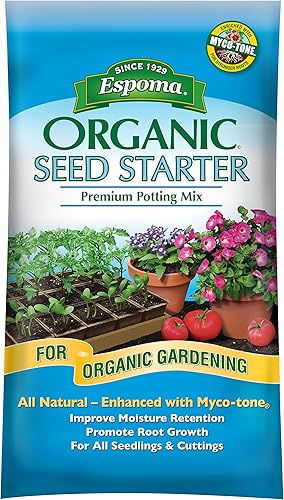
Espoma Organic Seed Starter
Una mezcla fina de inicio con la textura ligera que necesitan las raíces jóvenes.
Ver en Amazon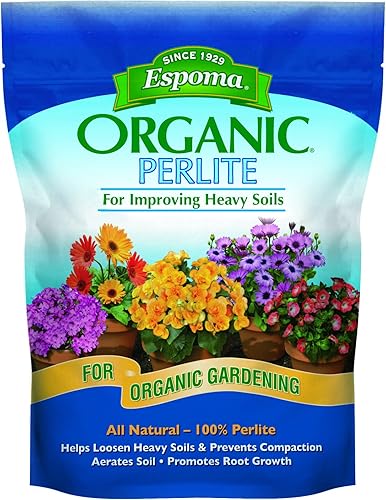
Espoma Organic Perlite
Mezcla perlita en sustratos pesados para abrir el drenaje alrededor de las raíces jóvenes.
Ver en Amazon