Best Grow Lights for Seedlings
Every lamp sold for seed starting can raise a transplant. What separates them is how close they can hang above the tray, and how many hours they need to run there — two numbers that decide the purchase before the brand does. Start from the amount of light a tray needs in a day, then check whether the fixture you are looking at can deliver it from your shelf.
At a glance
- What a tray needs
- About 12 moles of light per square meter per day, the figure extension services use for vegetable transplants.
- Where the cost hides
- Not in the fixture. Four shelves of shop lights draw about 256 W at 16 hours a day, and that is the part of the purchase that bills every month.
- Shape that works almost anywhere
- A pair of linkable LED bars hung 2–4 inches above the tray, or a shop light kept under a foot, on an outlet timer.
- Verification
- Lamp figures and running costs checked on 2026-09-28.
About 12
moles per square meter, per day
The same target on a meter
About 200
µmol per square meter per second
The number a seedling tray is working from
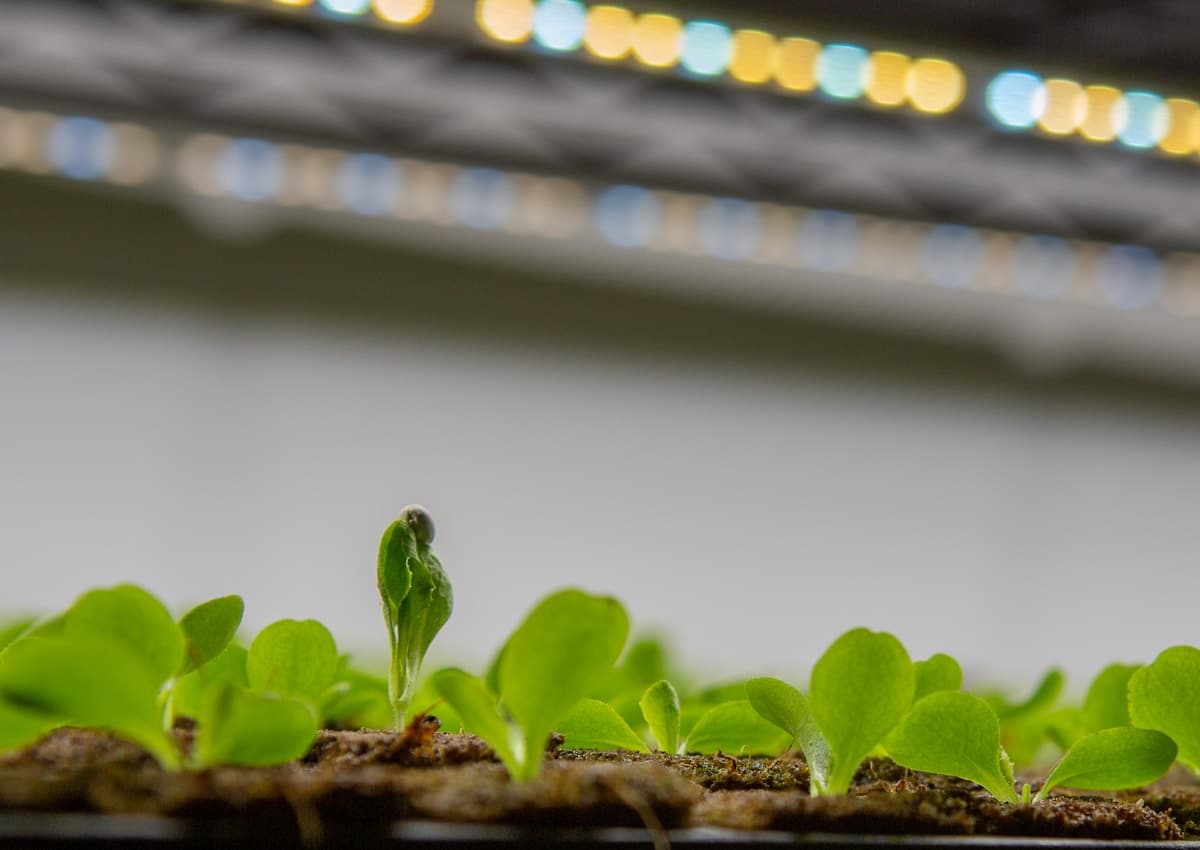
Light accumulates over a day: intensity at the leaf multiplied by the hours the lamp runs. Growers call the daily total the daily light integral, and vegetable transplants are raised to roughly 12 moles per square meter per day. No lamp box prints that number, so two fixtures at the same price can need schedules that differ by hours. Three things set it: how many photons the fixture emits, how far they have to travel, and how long it runs.
Daily light integral used for seedling growth in UNH Extension's seedling-lighting fact sheet. Species differ, and tomatoes and peppers sit at the demanding end of the range.
The same target divided over a 16-hour day comes out at about 200 µmol per square meter per second, which is the unit a fixture's published light output uses, so a listing's figure can be held against it.
Fixed at purchase
A fixture's photons per second are decided when you buy it. Cheap lamps emit fewer per watt, and purple LEDs vary far more than white ones.
Paid back in hours
Intensity falls off sharply with distance, so every inch of hanging height comes back as run time. A lamp cannot make up in price what it loses in height.
The dial you own
Run time is the only factor left once the lamp is on the shelf, and the schedule can only ask for as many hours as a day holds.
Start with these three moves
- Measure the gap you can give a lamp before you shop, because that gap is what the fixture has to make up for.
- Read the nameplate, not the box. Wattage, tube output, and rated life are printed on the fixture; "equivalent" and "full spectrum" are not figures you can compare between two listings.
- Set the timer to 14–16 hours and lower the fixture until stems stop stretching. Height is the adjustment that does the work, and it is free.
Four fixtures, compared on the numbers that decide the schedule
Read down a column to compare one figure across all four lamps, or across a row for a single fixture. Each row names where its figures came from, including the hanging height, which is the one that sets how long a lamp has to run.
| Fixture | Light output | Draw | Rated life | How close it hangs | Best for |
|---|---|---|---|---|---|
| T8 fluorescent shop light, 4 ft, two tubesLumens, wattage, and tube life: University of Maryland Extension. Hanging height and the run time it forces: UNH Extension. | 2,800 lumens per tube, 5,600 for the pair | 32 W per tube, 64 W for the pair | 30,000–40,000 hours, with about 10% of output gone by 7,000 | Under 12 inches above the leaves, and the tubes run cool — but the ballast runs hot along one stretch of them | The cheapest way to light a whole shelf of trays, provided you can hang it low. |
| T5 fluorescent fixture, 4 ft, two tubesLumens, wattage, and tube life: University of Maryland Extension. Hanging height and ballast heat: UNH Extension. | 5,000 lumens per tube, 10,000 for the pair | 54 W per tube, 108 W for the pair | About 30,000 hours | Close, like a T8, with the same hot ballast along the tube | Faster, sturdier growth than a T8, at roughly the electricity of a 100 W panel. |
| Linkable LED bar, 2 ft or 4 ftClose hanging, and what happens to the schedule when a bar is hung higher: UNH Extension, which also notes that output per watt varies more between LED models than between fluorescent tubes. | Usually not published in lumens. Buy on the nameplate wattage and the area the bar claims, in that order. | Printed on the bar: it is the figure the monthly bill follows, which the coverage claim is not. | Rated per model by the maker, and it varies between listings too much to screen on | 2–4 inches above the tray, because the bar runs cool | Shelves where the lamp has to sit close and move up as the plants grow. |
| Dimmable LED panel, 2×2 ft coverageCoverage, wattage, and rating: the manufacturer's specification — which is also the only place a panel's hanging height comes from, because intensity at a given height differs by panel. | Sold by coverage rather than output: a panel this size is meant to light 2 by 2 feet of canopy | Around 100 W for the panels sold to home growers | Rated around 50,000 hours by the makers of the 2×2 panels | Higher than a bar by design, so take the height from the maker — every inch of it is paid back in run time | A grow tent, or a shelf lit year round. One spring tray does not use the coverage it charges for. |
Hung higher, the same lamp needs a longer day
Each bar is one fixture reaching the light a seedling tray needs, at the height named beside it. A bar that crosses the dashed line is describing a schedule longer than a day.
A linkable LED bar
8 inches above the tray
8h
Close enough that one bar covers a tray evenly, on a schedule a timer handles without thinking.
A commercially sold LED bar tested by UNH Extension reached the seedling target in 8 hours a day at 8 inches.
A good purple LED
The maker's height
10h
Red and blue diodes are efficient, and this is the shortest schedule on the board.
UNH Extension: a high-quality purple horticultural LED may need only 10 hours a day to reach the same total.
The same linkable LED bar
20 inches above the tray
16h
The same bar as the 8-inch row, hung twice as high, needs twice the run time. Nothing about the lamp changed.
The same tested bar, at 20 inches, needed 16 hours a day for the same seedling target.
A four-bulb T8 shop light
Under 12 inches
22h
Cheap to buy and it works, on the longest schedule a home setup can actually keep. The tubes stay close for the whole run.
UNH Extension: a four-bulb T8 fluorescent shop light kept under a foot from the tops needs about 22 hours a day to reach the seedling target.
A cheap purple LED
As advertised
34h
Beyond a dayThis is the fixture the price hides: the schedule it needs cannot be run, because a day is 24 hours.
UNH Extension: a cheap purple LED may need 34 hours a day, which is more than a day holds.
The dashed line marks 24 hours. Nothing above it can be run, whatever the price tag says.
What a shelf takes to build, and what it costs to run
Each case lists the parts and the electricity. The monthly figure is the nameplate draw at 16 hours a day on the average American rate, so your own rate moves all three numbers together.
One tray, on a table
A single 1020 tray, about 1 by 2 feet
Parts
- One 2-foot linkable LED bar
- A chain or wire, so the bar can move down and back up
- An outlet timer
- Draw
- 20 W for one bar, in this worked example
- Electricity
- About $1.76 a month
- Fixture cost
- $ Budget
The right start for a handful of tomatoes and peppers. Move up when a second tray needs light of its own.
20 W running 16 hours a day for 30 days, at the U.S. average residential price of 18.31 cents per kilowatt-hour in July 2026 (EIA).
One shelf, two trays
Two 1020 trays side by side, lit by one fixture
Parts
- One 4-foot two-tube T8 shop light
- Two hooks and a chain, one at each end
- One timer for the shelf
- Draw
- 64 W, both tubes
- Electricity
- About $5.62 a month
- Fixture cost
- $ Budget
The cheapest way to light a full shelf. It is also the reason to check your own rate before scaling, because a rack is this fixture over and over.
64 W running 16 hours a day for 30 days, at the U.S. average residential price of 18.31 cents per kilowatt-hour in July 2026 (EIA).
A four-shelf rack
Up to eight trays, one fixture per shelf
Parts
- Four 4-foot two-tube T8 shop lights
- A chain and a pair of hooks per shelf
- One timer, checked against the draw of everything plugged into it
- Draw
- 256 W across four shelves
- Electricity
- About $22.50 a month
- Fixture cost
- $$ Mid-range
Worth it when the rack runs from late winter into spring. For one six-week round of starts, two shelves do most of the job for half the electricity.
256 W running 16 hours a day for 30 days, at the U.S. average residential price of 18.31 cents per kilowatt-hour in July 2026 (EIA).
What the pick would buy
As an Amazon Associate I earn from qualifying purchases.
These products fit the needs covered above. If you buy through a link, GrowerBuddy may earn a commission at no extra cost to you.
The price tier is a rough guide to where this product usually sits in its category, not a live price. Check Amazon for the current price and availability.
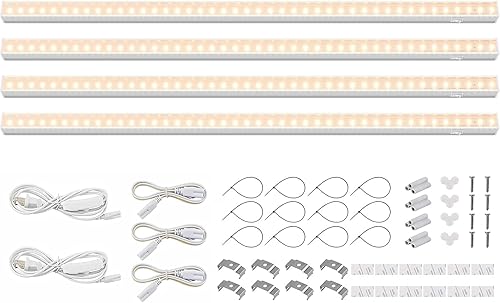
Barrina T5 LED Grow Light (4-pack, 2ft)
Bright, daisy-chainable strips that mount under any shelf — the default choice for home seed starting.
View on Amazon
Spider Farmer SF-1000
Full-spectrum dimmable panel with excellent output — worth it if you want one light that covers a 2×2 area.
View on Amazon
LED Grow Light (2 ft, linkable)
An affordable 2 ft strip for a single tray or a first seed-starting setup.
View on AmazonPhrases that decide nothing, and what to read instead
These lines appear on the boxes of fixtures that work and fixtures that do not, so each one needs translating into the figure it leaves out.
- On the listing“Full spectrum”
- What it actually tells you
Every white LED sold for plants says this, and it describes colour, not output. It tells you the light will look white instead of purple. It says nothing about how many photons reach the tray, which is what sets the schedule.
- On the listing“5,000K–6,500K”
- What it actually tells you
A colour temperature: it describes how blue or how warm the white looks. That is a quality of the light rather than an amount of it, so two lamps can print the same figure and deliver completely different totals to the tray.
- On the listing“1,000 W equivalent”
- What it actually tells you
Panel listings borrow the language of high-pressure lamps, and the figure is not the power the fixture draws. Read the nameplate wattage and the coverage area, and work out which trays the panel actually covers at the height you can hang it.
- On the listing“Red and blue is what plants use”
- What it actually tells you
True, and a good purple lamp is efficient enough to run ten hours a day. The problem is the range: the same description covers fixtures UNH Extension puts at 10 hours and at 34 hours, and the listing will not say which one is in the box.
- On the listing“Runs cool”
- What it actually tells you
A cool-running fixture is the one you can hang two inches above the leaves, which is the whole advantage. On a fluorescent fixture the ballast stays hot along one stretch of the tube, and the seedlings under it dry out faster than the rest of the tray.
- On the listing“Peel-and-stick strips”
- What it actually tells you
Adhesive strips cannot be raised. Seedlings gain height every few days through the whole indoor season, and once the canopy reaches a fixed strip there is no adjustment left in the setup.
Why a windowsill is not a light plan
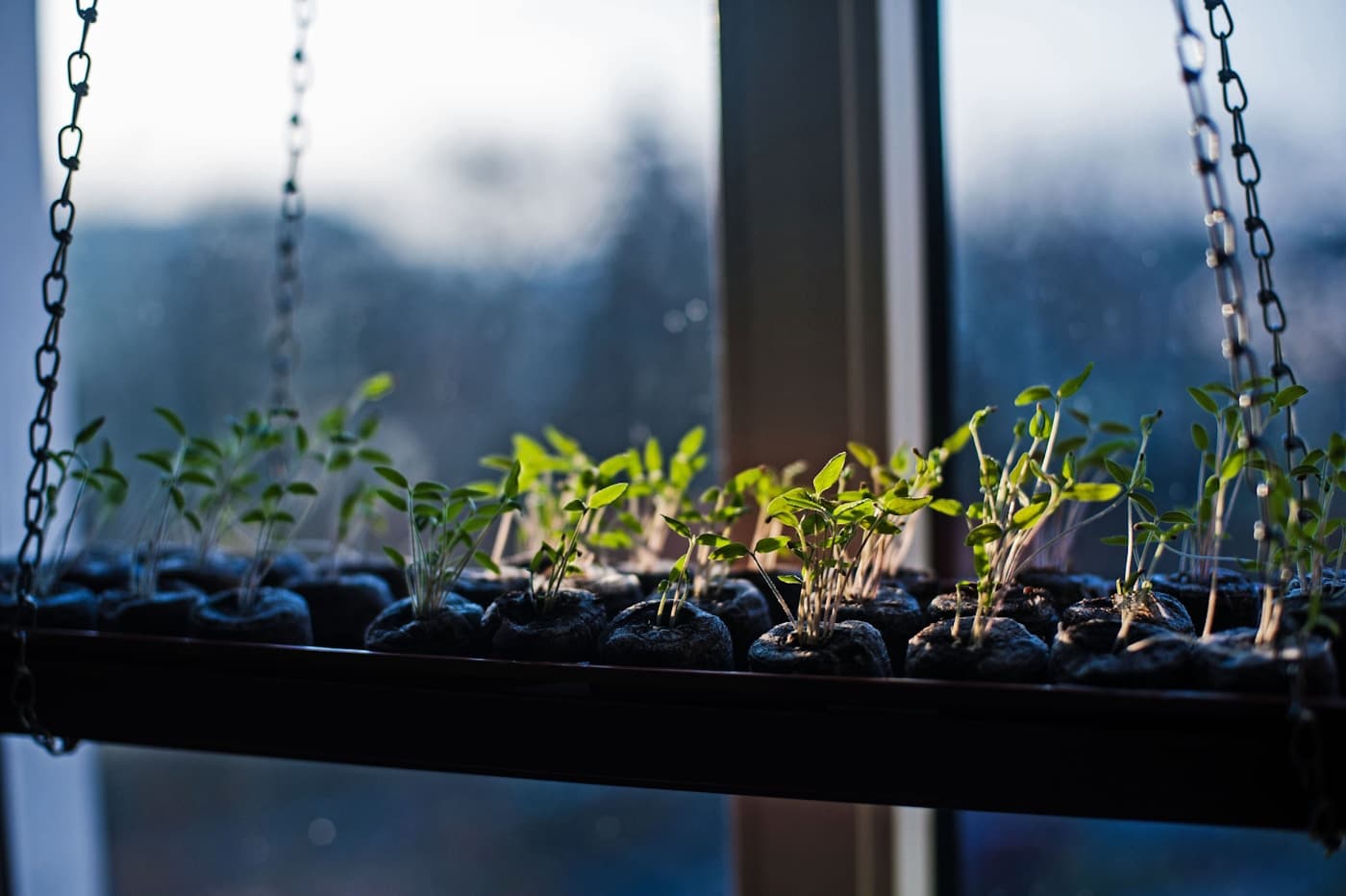
A bright windowsill looks like plenty of light because your eyes adjust to it. What reaches a leaf is a different figure: photons over a day, and glass cuts that sharply even a few inches back from the pane. The light also arrives from one direction, so stems lean toward the window, and the indoor season runs through the shortest daylight weeks of the year.
A plant that stretches is short of light, not of water or food. More light stops a stem stretching further and does not shorten what already grew, so the fixture is worth getting right at the start of the season.
- A windowsill delivers a fraction of the light a seedling tray is working from.
- Stretch does not reverse, so a fixture that is too weak or too far away leaves a mark through transplant time.
- One-sided light produces seedlings that lean and stay floppy after they move outdoors.
What each number on a listing tells you
Wattage is the power the fixture draws, and it is the number that decides the monthly bill. It is not a light figure: a 100 W panel and a 100 W incandescent bulb draw the same power and put out entirely different amounts of usable light. Lumens are a light figure, weighted toward what the human eye sees and published per tube, not per tray.
The number that settles whether a fixture works for you appears on no listing at all: the light reaching the leaf at the height your shelf can give it. That is why the hanging height matters more than the wattage printed at the top of the page, and why a dimmer is only useful if the fixture can also sit close.
- Watts: what the fixture costs to run.
- Lumens per tube: what it emits, and rarely quoted at all for LED bars.
- Hanging height: what turns those figures into a daily schedule.
The part of the purchase that bills every month
A seedling light is cheap to buy and then bills for as long as the season runs, which is what separates one tray on a table from a rack of four shelves. The arithmetic is one multiplication: wattage divided by a thousand, times the hours it runs, times thirty days, times the price on your own bill.
At the national average of 18.31 cents per kilowatt-hour, a single 20 W bar costs about $1.76 a month and the four-shelf rack about $22.50. Rates vary widely between states, so the figure that matters is the one on your own statement, and a fixture that needs 22 hours to reach the target costs about half again as much to run as one that reaches it in 14.
- A timer earns its place on the bill as much as on the plants: nothing runs all night by accident.
- Long schedules are the expensive way to make up for a weak lamp or a high shelf.
- Check your own rate before scaling from one shelf to four, because the fixture count multiplies the bill.
One question settles the purchase
Can this fixture put the light a tray needs onto the leaves, from the height your shelf allows, in a schedule a timer can run? A lamp that needs 22 hours at the only height available fails that question whatever it costs, and a bar at a third of the price can pass it.
Read the maker's hanging height before the wattage.
Work out the monthly cost from the nameplate draw, not the number in the title.
Raise the tray when seedlings grow toward a fixture that cannot move.
A light setup buys weeks of indoor growing, but only if the sowing date matches the weather the transplants will meet. The planting calendar works that date out for your location.
These references inform the selection criteria, safety notes, and growing context in this guide.
Quick answers before you buy or upgrade anything
These are the questions that usually come up when growers translate general advice into one buying decision.
How much does it cost to run a grow light each month?
At the U.S. average residential price of 18.31 cents per kilowatt-hour, a 20 W LED bar on for 16 hours a day costs about $1.76 a month, a 64 W two-tube shop light about $5.62, and a rack of four of those lights about $22.50. Multiply the nameplate wattage by the hours, then by the rate on your own bill: state averages vary widely, so the national figure is a starting point, not a quote.
How many watts does one tray of seedlings need?
Wattage on its own cannot answer that, because height is half of the equation. A 20 W bar three inches above a tray puts more light on the leaves than a 100 W panel hung two feet up. Choose the fixture that can sit close to the plants, then check that its draw and its coverage suit the number of trays you are actually starting.
Why does the same lamp need twice as long on a different shelf?
Because intensity falls off sharply with distance. In the bar UNH Extension tested, eight hours a day at 8 inches reached the seedling target and the same bar needed sixteen hours at 20 inches. If your shelf forces the fixture higher, add a second fixture over the tray or accept the longer schedule.
Is a cheap purple grow light good enough for seedlings?
It can be, and the risk is that one description covers an enormous range. Extension guidance on seedling lamps puts a good purple LED at about 10 hours a day and a cheap one at 34, which is more than a day holds. A white LED is also easier to work under, because leaf colour and pest damage stay visible.
Do I need a light meter to get the height right?
No. Extension services answer this from the plants instead: keep the fixture as close as its maker allows, raise it as the seedlings grow, and watch the stems. Stretching means not enough light, and moving the lamp closer costs nothing. A meter helps only if you would rather calculate the daily total than observe it.
Can I hang a grow light on a shelf I already own?
Yes, if the shelf lets you change the height. Hooks, a chain, or shelf pegs you can move one notch at a time all work, and so does raising the tray on a box. A fixture fixed in place with a tray that cannot move leaves no adjustment for the weeks when seedlings grow fastest, which is where working setups usually stop working.
More reading on the same garden job
Each guide keeps the buying decision tied to the crop, timing, and garden job behind it.
Topic
Garden Tools and Supplies
A focused hub for choosing trays, hand tools, and feeding inputs that actually fit a home vegetable garden.
Guide
How to Start Seeds Indoors
A beginner setup for lights, trays, warmth, and the first week after germination.
Tools & Supplies
Best Seed Starting Trays for Home Gardeners
Choose the right tray size, cell depth, and durability for tomatoes, peppers, brassicas, herbs, and short indoor starts.
Guide
How to Harden Off Seedlings
A practical hardening-off routine for vegetable seedlings before they move from indoor comfort to outdoor wind, sun, and cooler nights.