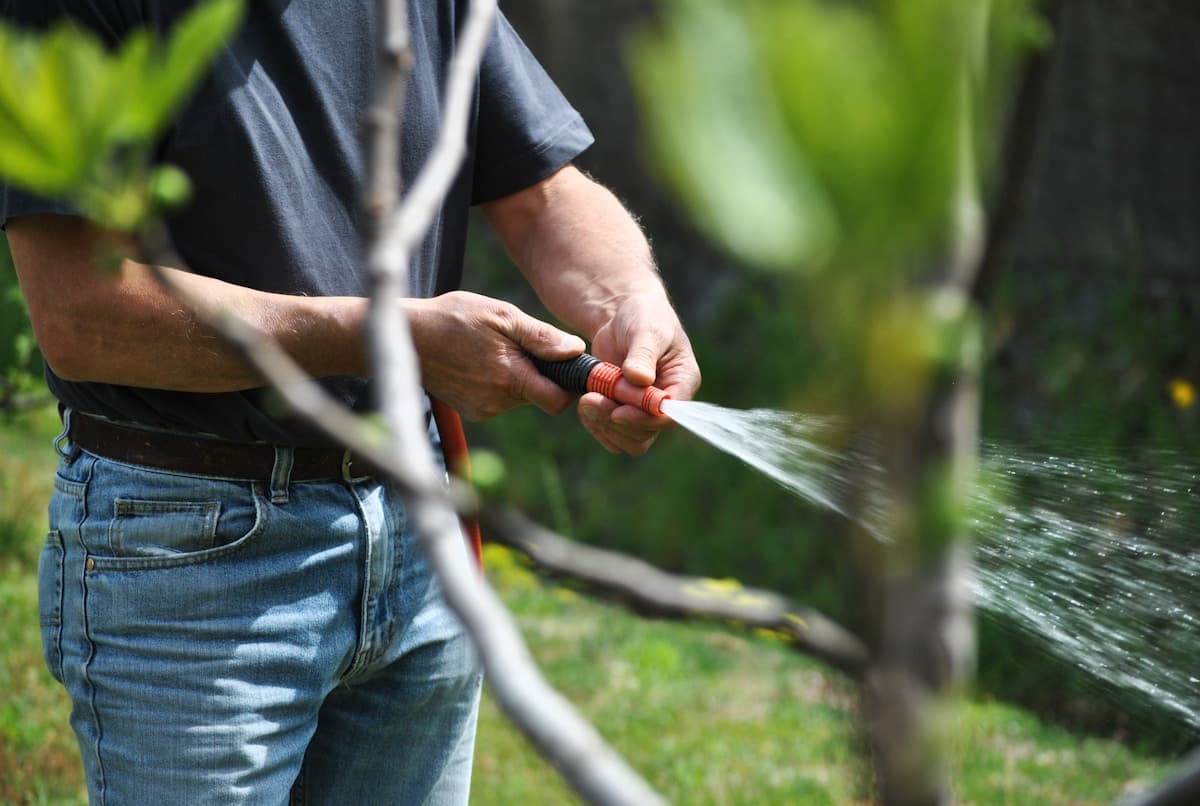
A shorter, lighter hose gives you more control than a long heavy one when watering raised beds.
Kink resistance and fitting quality matter more than burst pressure for home garden use.
Rubber and hybrid polymer hoses outlast vinyl and stay flexible in cool weather.
Why raised beds need a different kind of hose
Raised beds are usually close together, near walls or fences, and planted densely. Dragging a heavy, stiff hose between them crushes plants, pulls over trellises, and makes watering a chore instead of a routine. A lighter hose with good flexibility lets you water each bed precisely without collateral damage.
Raised beds also reward gentle, targeted watering — either at the base of plants or through a watering wand. That means you need a hose that delivers consistent pressure without surging, and fittings that do not drip onto paths or leak when you swap attachments.
- Raised-bed layouts reward lightweight, flexible hoses over heavy-duty contractor models.
- Dense planting means the hose needs to move between beds without crushing anything.
- Good fittings reduce drips and leaks that waste water on paths.
Length: shorter is usually better
A 25-foot hose covers most backyard raised-bed setups and is dramatically easier to handle than a 100-foot coil. If your spigot is farther away, a 50-foot hose is the practical maximum before weight and drag become problems.
Excess hose length means more weight, more kinking, and more coiling after every session. Measure the actual distance from your spigot to your farthest bed and add ten feet — that is the hose you need, not longer.
- Measure your real distance before buying — most raised-bed gardens need 25–50 feet.
- Shorter hoses kink less, weigh less, and coil more easily.
- Excess length just creates drag and storage problems.
Material: rubber, hybrid, or vinyl
Rubber hoses are the most durable and kink-resistant, but they are also the heaviest. For a short 25-foot run, that weight is manageable and the durability is worth it. For longer runs, hybrid polymer hoses offer a good balance of flexibility, kink resistance, and lighter weight.
Vinyl hoses are cheap and light, but they kink easily, crack in sun and cold, and rarely last more than one or two seasons. For a garden you plan to use for years, the cost difference between vinyl and rubber pays for itself quickly.
- Rubber is most durable but heaviest — best for short runs.
- Hybrid polymer hoses balance weight and kink resistance well.
- Avoid cheap vinyl if you want a hose that lasts more than a season.
Fittings and connections
The fitting is where most hose problems start. Cheap plastic fittings crack, cross-thread easily, and leak. Brass or nickel-plated fittings last longer, seal better, and thread onto spigots and attachments without stripping.
If you use a watering wand, quick-connect fittings save time and reduce wear on threads. A good quick-connect set costs a few dollars and makes swapping between a wand, a sprinkler, and a shut-off valve much easier.
- Brass or nickel fittings outlast plastic and seal better.
- Quick-connect adapters make swapping attachments easier.
- Check fitting compatibility with your existing spigot and accessories.
How to choose the right hose without overthinking it
For most raised-bed gardens, a 50-foot hybrid or rubber hose with brass fittings is the sweet spot. Add a shut-off valve at the nozzle end so you can pause water without walking back to the spigot, and use a watering wand for gentle, targeted delivery at the soil line.
If your beds are within 20 feet of the spigot, a 25-foot lightweight hose is even better. Buy the shortest hose that reaches, not the longest one on the shelf.
- A 50-foot hybrid hose with brass fittings covers most setups.
- Add a shut-off valve and watering wand for precise raised-bed irrigation.
- Buy the shortest length that reaches your farthest bed.
Products worth considering
As an Amazon Associate I earn from qualifying purchases.
These products fit the needs covered above. If you buy through a link, GrowerBuddy may earn a commission at no extra cost to you.
The price tier is a rough guide to where this product usually sits in its category, not a live price. Check Amazon for the current price and availability.

Flexzilla Garden Hose (5/8" × 50 ft)
Extremely flexible hybrid polymer that stays kink-free in heat and cold — the go-to lightweight hose for raised beds.
View on Amazon
Dramm ColorStorm Rubber Hose (50 ft)
Heavy-duty rubber with excellent kink resistance and brass fittings — built to last decades of daily garden use.
View on Amazon
Water Right 400 Series Slim & Light (50 ft)
Ultra-lightweight 7/16-inch polyurethane hose that is easy to handle between tight raised beds — drinking-water safe.
View on AmazonA good hose makes watering a habit instead of a chore
This guide ranks garden hoses for raised beds by the things that actually matter for daily use: weight, kink resistance, fitting quality, and practical length. Burst pressure ratings and contractor features are not the point here.
- Rank by weight, flexibility, and fitting quality over raw pressure specs.
- Match hose length to actual garden distance — shorter is better.
- Check the fitting type and material against your spigot and storage before buying a length.
These references inform the selection criteria, safety notes, and growing context in this guide.
Quick answers before you buy or upgrade anything
These are the questions that usually come up when growers translate general advice into one buying decision.
Is a soaker hose better than a regular hose for raised beds?
Soaker hoses work well for consistent, hands-off watering in straight beds. But a regular hose with a wand gives you more control and flexibility, especially if your beds have mixed crops with different water needs.
Do expandable hoses work for raised beds?
They are lightweight and store small, but most expandable hoses have lower water pressure and shorter lifespans. A quality compact rubber or hybrid hose is usually a better long-term investment.
What diameter hose do I need?
A standard 5/8-inch hose delivers good flow for hand watering. If you want something even lighter, a 7/16-inch hose like the Water Right Slim works well for raised beds but delivers less volume per minute.
How do I prevent kinking?
Choose a kink-resistant material, avoid sharp bends near the spigot, and store the hose loosely coiled or on a reel. Cheap vinyl kinks the most; rubber and hybrid polymer kink the least.