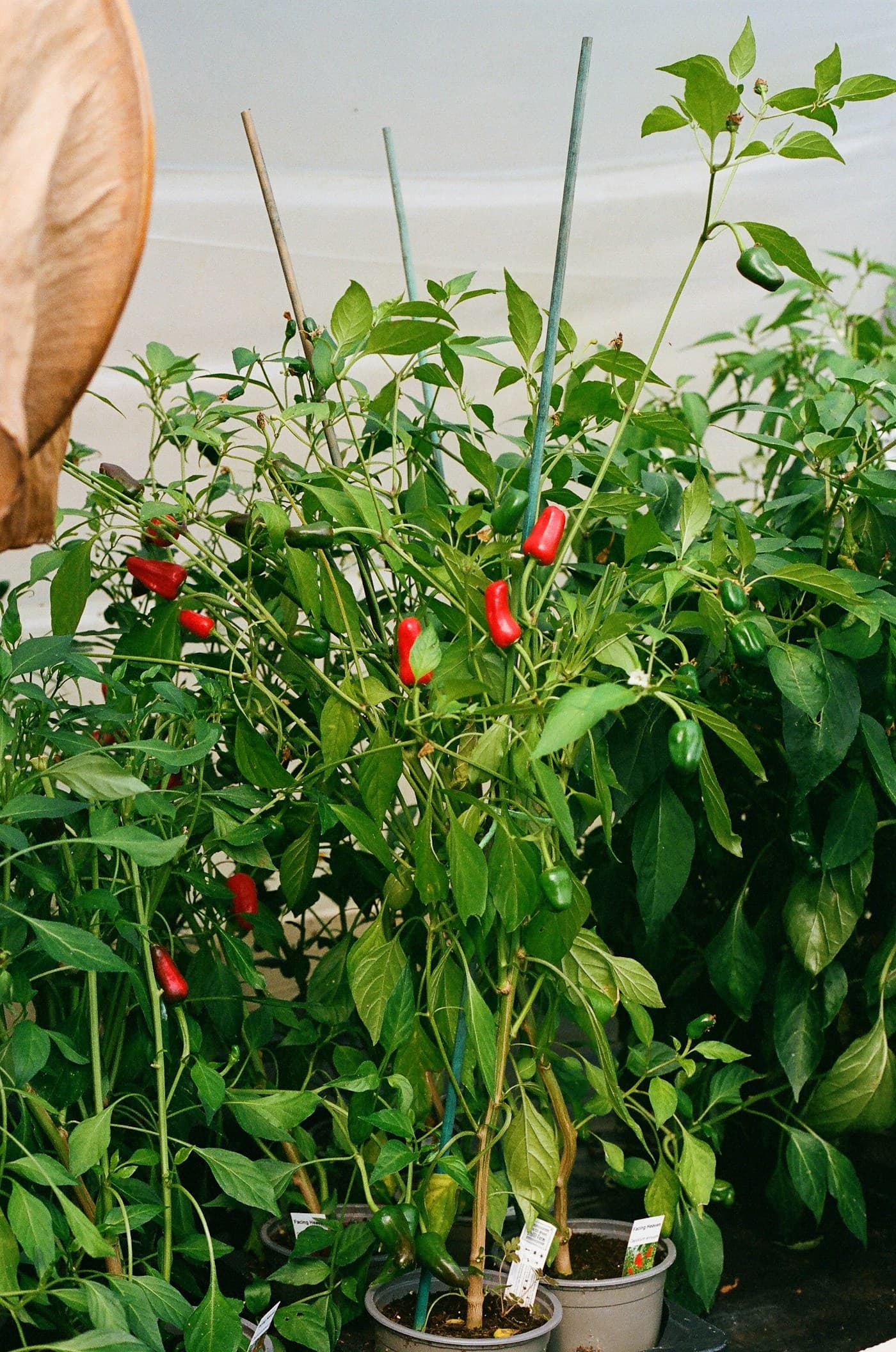
Bigger pots create a wider margin for error on both watering and summer heat.
A loose, fast-draining mix works better than heavy garden soil packed into a container.
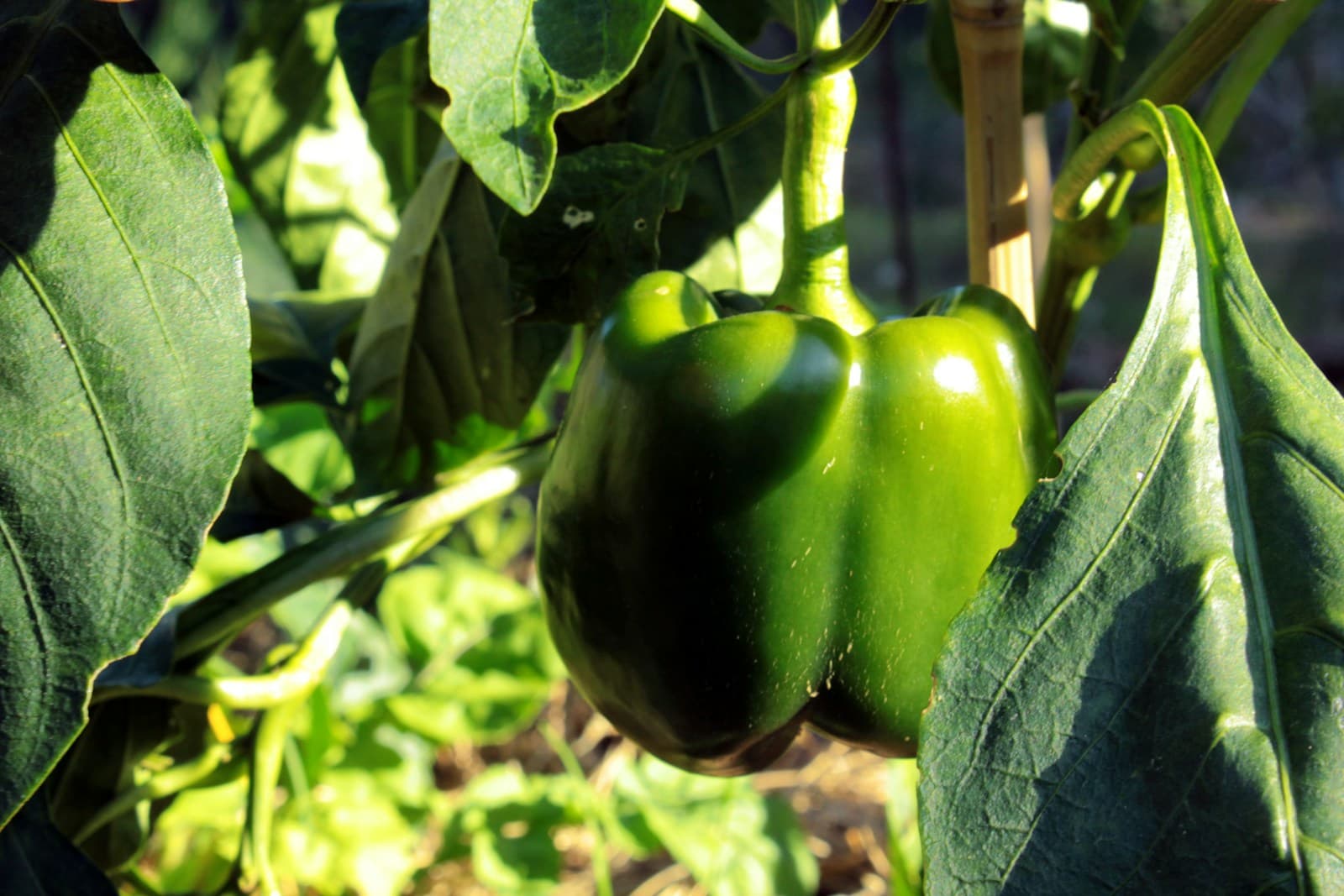
Peppers stay productive when water and feeding stay steady instead of extreme.
Choose a pepper variety that matches your container space
Compact sweet peppers, jalapenos, shishitos, and many patio-type varieties adapt well to pot culture, but almost any pepper can work if the container is large enough. The mistake is assuming a small nursery plant will stay small forever. Once weather turns hot and the plant starts setting fruit, roots need space to support both top growth and consistent moisture.
Match the plant to the pot before you buy anything else. One healthy pepper in a properly sized container almost always outperforms several crowded plants competing for the same volume of mix. Containers also make it easier to move peppers into warmer microclimates at the beginning and end of the season.
- Use one pepper per pot unless the container is exceptionally large.
- Choose compact or patio varieties when space is limited.
- Treat the plant tag as a clue, not a guarantee, about final size.
Build a container that drains fast but does not dry out instantly
The right potting mix matters more than the container material. Peppers need oxygen around the roots as much as they need water, so use a quality container mix instead of digging up garden soil. Heavy soil compacts in pots, sheds water unevenly, and can stay soggy around the root ball long after the top looks dry.
Drainage holes are mandatory, but faster drainage does not mean you want a tiny pot. Small containers dry out so quickly in full summer sun that the plant swings from stress to recovery every few days. A larger container gives roots more insulation, more stable moisture, and more room to support a serious harvest.
- Choose pots with multiple drainage holes and a stable base.
- Skip gravel in the bottom; it reduces root space without improving drainage.
- Top-dress with mulch if containers bake in direct afternoon sun.
Give peppers the warmest bright spot you can manage
Peppers crave warmth. A pot that receives full sun near a patio wall, driveway edge, or other warm surface often outperforms one set in a cooler exposed corner of the yard. Early in the season, moving containers to chase the warmest part of the day can noticeably improve growth.
That said, reflected heat should help, not cook the plant. In the hottest part of summer, some regions benefit from a little late-afternoon shade so blossoms do not abort and pots do not overheat. The balance is bright sun, warm roots, and enough moisture that the plant does not spend every afternoon in recovery mode.
- Rotate the pot every week or two so growth stays balanced.
- Use a simple stake early if the variety carries heavy fruit.
- Move containers out of strong wind, which dries mix faster than most beginners expect.
Water and feed on a steady rhythm
Container peppers prefer a consistent cycle: water thoroughly, let the upper layer dry slightly, then water again before the entire root ball becomes dusty and hot. Frequent shallow sips are not enough. Water until it drains from the bottom, then wait until the surface has started drying before you repeat.
Because nutrients leach out of containers, peppers usually benefit from light regular feeding once they are growing strongly. The best plan is a measured fertilizer routine that supports flowering and fruit set without forcing weak, oversized leaf growth. If plants stay dark green and leafy but do not set fruit, feeding is often too strong or nights are still too cool.
- Check moisture with a finger instead of watering by the calendar alone.
- Expect to water more often during fruiting and hot windy weather.
- Reduce fertilizer strength rather than doubling down if the plant is all leaves and no peppers.
Harvest often and keep the plant moving
Peppers become more productive when you pick mature fruit regularly. Leaving too many ripe peppers on the plant can slow new flowering, especially in containers where root space is limited. Harvest sweet peppers green for earlier use or let them color fully if the plant is healthy and the season is long enough.
As the season progresses, watch for signs of root crowding, salt buildup, or moisture stress. A pot that dries out in hours, accumulates crusty residue on the surface, or produces smaller leaves may need a stronger watering flush, more mulch, or a better feeding rhythm next season.
- Use clean snips or twist fruit carefully so branches do not snap.
- Pick damaged or sunburned fruit early so the plant can redirect energy.
- If nights cool sharply in fall, move the container to the warmest protected spot available.
Most pepper pot failures start with containers that are too small
Tiny pots look manageable in spring, but by midsummer they create a constant emergency cycle of dry roots, stalled growth, and missed fruit set. Starting larger is the simplest way to make peppers easier.
- Upsize containers before roots circle heavily and the mix dries out in a single hot afternoon.
- Mulch the surface to slow evaporation once weather turns hot.
- Treat irrigation and fertilizer as small regular maintenance jobs, not rescue missions.
The guidance here draws on the references listed below.
Quick answers before you head back outside
These are the questions that usually come up once the guide turns into real garden work.
Can peppers stay in black nursery pots all season?
They can survive, but productivity is usually limited because root space and moisture buffering are both too small. Moving them into a larger final pot usually improves growth quickly.
How often should I water peppers in pots?
There is no single schedule that fits every deck or weather pattern. Check the top inch of mix and water deeply when it dries, then adjust as heat, wind, and fruit load increase.
Why are my pepper flowers dropping?
Flower drop often shows up when nights are too cool, roots are staying too wet, containers are drying too hard, or heat swings are severe. Look at the full growing conditions before assuming the plant needs more fertilizer.
Do peppers need staking in containers?
Many do. Even compact varieties can lean once fruit loads build, so a simple stake or ring support helps keep stems from cracking in wind or after heavy watering.
Products to consider
As an Amazon Associate I earn from qualifying purchases.
These products support the garden jobs covered above. If you buy through a link, GrowerBuddy may earn a commission at no extra cost to you.
The price tier is a rough guide to where this product usually sits in its category, not a live price. Check Amazon for the current price and availability.
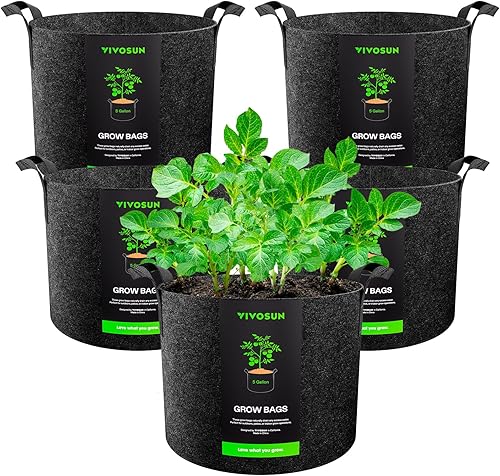
VIVOSUN 5-Gallon Fabric Grow Bags (5-pack)
Breathable 5-gallon fabric pots give roots the space and drainage containers need.
View on Amazon
Espoma Organic Potting Mix
A light, well-draining mix for pots and raised beds.
View on Amazon
Espoma Garden-Tone (18 lb)
A balanced organic feed for peppers that are growing and flowering.
View on Amazon