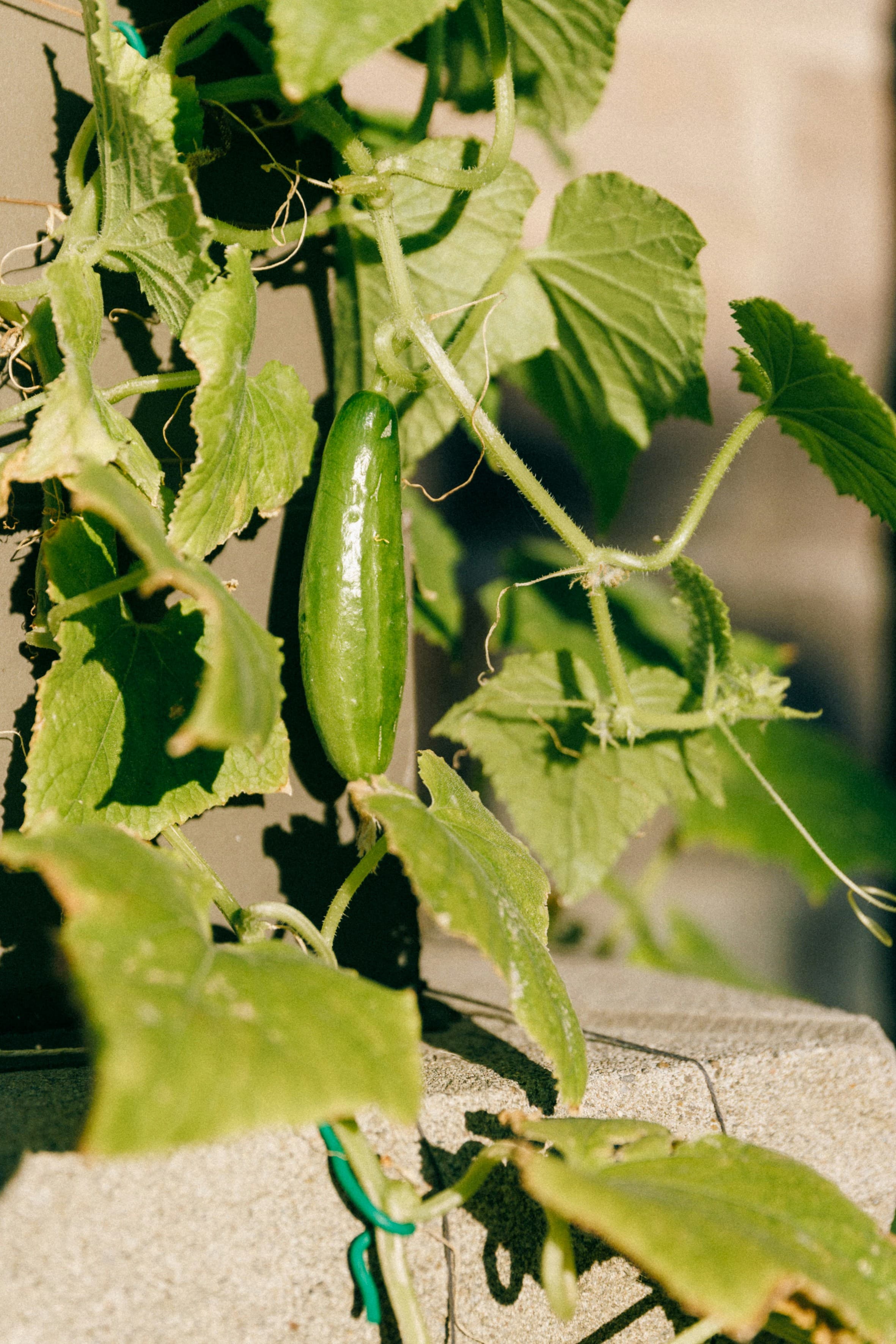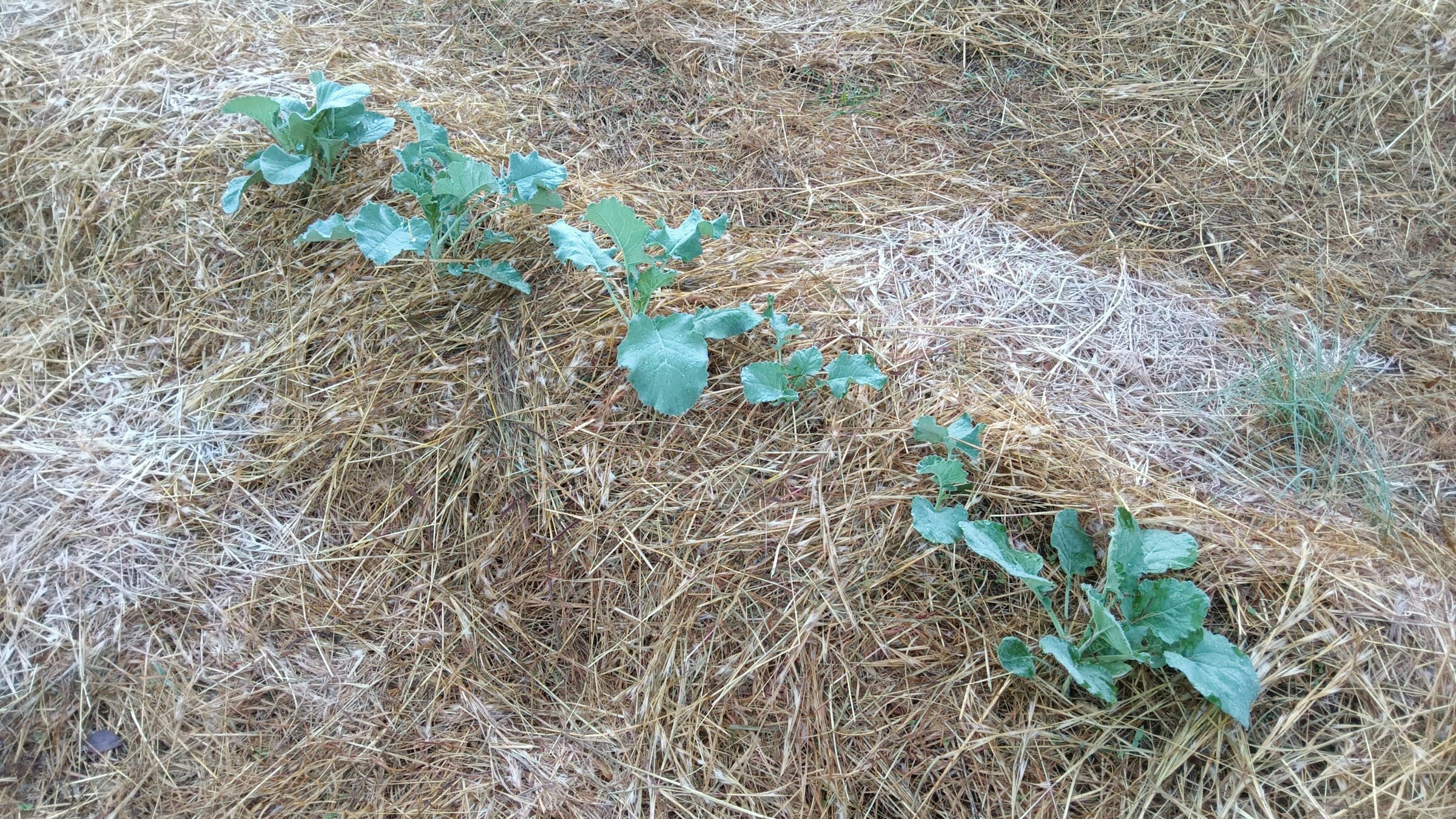
A good home-garden baseline is about 12 inches for trellised cucumbers, 18 to 24 inches for bush types, and 36 to 48 inches for sprawling plants.
Trellising lets cucumbers live closer, but you still need bed space for airflow and picking access.
If a bed is already tight, thinning or redirecting vines early is safer than waiting for midsummer crowding.
The short answer: how far apart to plant cucumbers
For most home gardens, a good starting point is about 12 inches between vining cucumbers on a trellis, about 18 to 24 inches between bush cucumbers, and about 36 to 48 inches between sprawling ground-grown plants or hills. Those numbers are what usually keep leaves drying faster and fruit reachable later.
In raised beds, many gardeners do best with one trellised row along the back or north side of the bed instead of multiple crowded rows. Leave enough room to reach in, pick fruit, and guide vines before the canopy closes.
- Use about 12 inches between trellised vining plants.
- Use about 18 to 24 inches for bush cucumbers.
- Use about 36 to 48 inches for sprawling plants or hills.
Why spacing matters more than it seems in spring
Cucumber seedlings look modest at planting time, which is why spacing gets underestimated so often. A few weeks later, warm weather turns them into fast-moving vines that throw broad leaves, side growth, and fruit into the same small pocket of air. If the row was planned for the seedling stage instead of the mature stage, the problems show up all at once.
That crowding changes more than appearance. It slows leaf drying after watering or rain, narrows picking lanes, and makes it easier to miss early pest or disease signals under the canopy.
- Set spacing for July growth, not for the size of a new transplant.
- Cucumber vines punish tight spring layouts quickly.
- Good spacing makes every later job easier: watering, scouting, and picking.
Ground-grown cucumbers need more room than trellised plants
A cucumber allowed to sprawl on the ground naturally occupies more horizontal space and keeps more foliage in contact with humid air near the soil surface. That means in-ground or sprawling plants usually need a wider footprint than cucumbers trained vertically.
Trellising is useful because it lifts leaves and fruit, improves visibility, and often improves airflow. But it is not permission to plant with no gaps at all. Trellised cucumbers still need enough room that the vines do not collapse into one dense, wet curtain.
- Sprawling cucumbers need more horizontal room than trellised ones.
- Vertical support improves airflow best when the row is not packed too tightly.
- Choose the spacing plan that matches the way you will actually grow the vines.
Raised beds and small gardens still need real spacing
Raised beds tempt growers to fill every open square, especially when companion-crop ideas and succession plans start stacking on the same map. Cucumbers usually respond better to restraint. A bed that feels slightly sparse at planting can become exactly right once heat and fertility push the vines.
In tight gardens, one strong cucumber planting that stays manageable is usually more productive than a crowded bed that turns into a mildew trap. Leaving room for reach, harvest, and inspection is part of the yield plan, not wasted space.
- Spacing should protect future access, not just maximize seed count.
- Raised beds magnify crowding mistakes because every plant is within easy reach of the next.
- A smaller, healthier cucumber planting usually outperforms a packed messy one.
How to handle spacing if the bed is already too crowded
If cucumbers are already planted too tightly, do not panic-prune the whole patch at once. Start by guiding vines, getting them onto support if possible, and removing only the foliage that is truly blocking airflow or access. The goal is to create breathing room without shocking the plants into a stall.
You can also thin the weakest or worst-placed plants early if the crowding is obvious. That feels wasteful in the moment, but it often saves the rest of the bed from a season of low airflow and hard-to-manage disease pressure.
- Guide and support vines early before they weave into a single mat.
- Thin the weakest plants sooner rather than waiting for midsummer crowding.
- Open access paths first so you can keep scouting the patch realistically.
Spacing and timing work together
Crowded cucumbers planted into marginal weather struggle even more because cold stress slows growth while moisture and leaf contact still stay high. A well-spaced planting in a real warm window grows out cleaner than a crowded planting pushed into the season too early.
That is why spacing is not separate from timing. The plant's environment includes both the calendar decision and the physical room you gave it to breathe once summer arrives.
- A late warm planting with sound spacing often beats an early crowded one.
- Good spacing helps vines recover better from weather swings and stress.
- Treat airflow as part of crop timing, not only as a layout detail.
Give cucumbers the distance their mature vines need
If the spacing only works while the plants are small, it will not work for long. Cucumbers should be spaced for mature vines, airflow, and harvest access from the start.
- Use about 12 inches for trellised vines, more for bush or sprawling plants.
- Use trellises to improve management, not to justify crowding.
- Thin or redirect crowded plants early while the fix is still simple.
The guidance here draws on the references listed below.
Quick answers before you head back outside
These are the questions that usually come up once the guide turns into real garden work.
How far apart should I plant cucumbers?
Use about 12 inches between trellised vining plants, about 18 to 24 inches for bush cucumbers, and about 36 to 48 inches for sprawling plants or hills as a solid starting point. Then adjust a little for variety size and how you plan to support the vines.
Can I space trellised cucumbers closer than sprawling cucumbers?
Usually yes, because trellising lifts vines and reduces the amount of ground they cover. But they still need enough gap that leaves can dry and you can reach fruit without pushing through a dense wall of growth.
How do I know if my cucumbers are too crowded?
If leaves stay wet long after watering, fruit are hard to find, or you cannot reach into the planting without moving vines, spacing is probably tighter than the bed can handle well.
Should I remove plants if cucumbers are too close together?
If the crowding is obvious early, thinning weak or badly placed plants is often the cleanest fix. Waiting too long usually turns a small correction into a season-long management problem.
Does spacing help prevent cucumber disease?
It helps reduce the conditions that favor disease, especially trapped humidity and slow leaf drying. It does not eliminate disease risk, but it gives you a healthier, easier-to-monitor planting.
Products to consider
As an Amazon Associate I earn from qualifying purchases.
These products support the garden jobs covered above. If you buy through a link, GrowerBuddy may earn a commission at no extra cost to you.
The price tier is a rough guide to where this product usually sits in its category, not a live price. Check Amazon for the current price and availability.