How to tell a tomato hornworm from general chewing damage
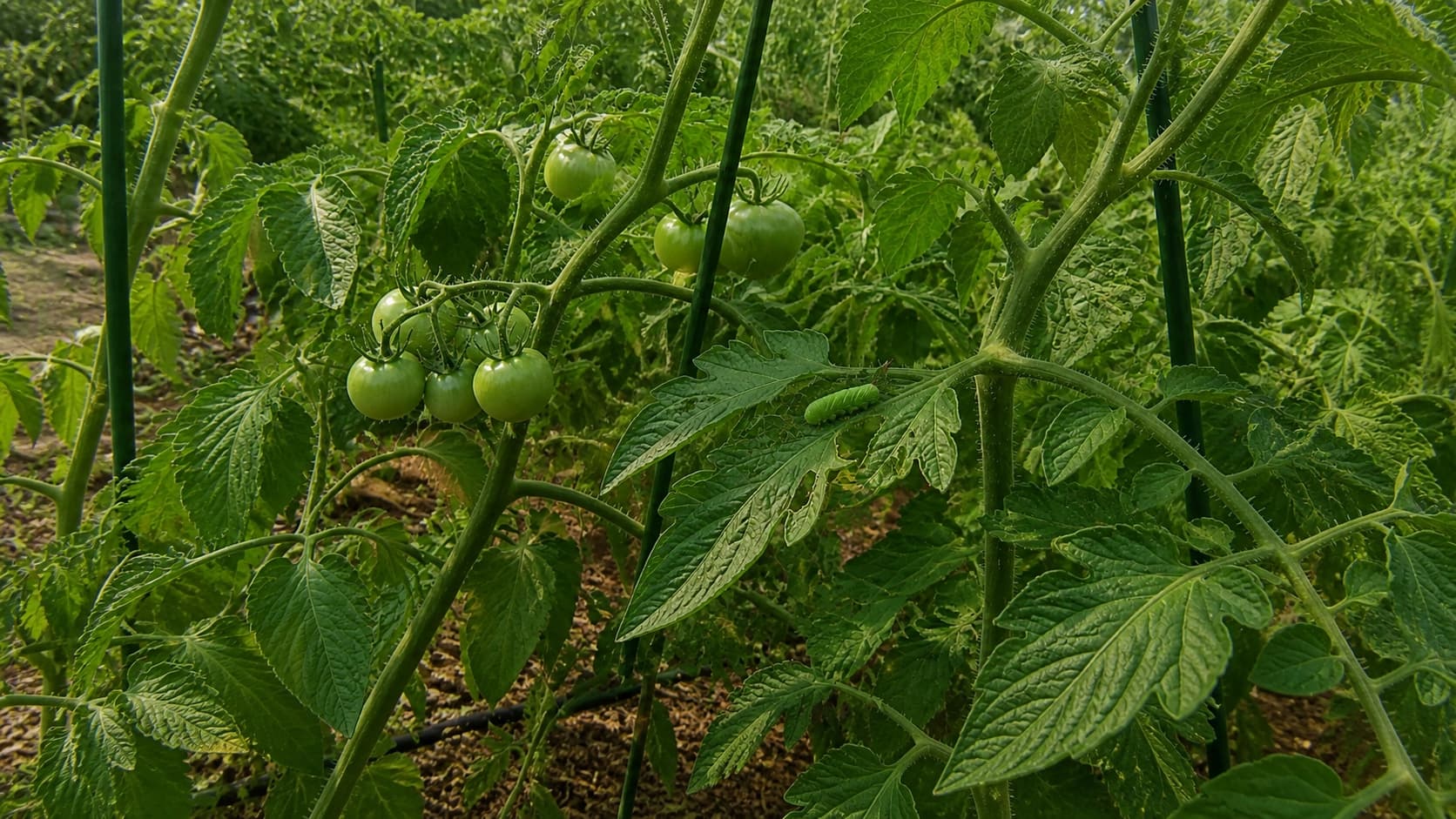
Tomato hornworms leave a distinctive pattern once you know what to look for: large sections of missing foliage, thick stems stripped of leaves, and dark pellet-like droppings on leaves or soil below the feeding site. The caterpillars themselves are big enough to miss only because they match the plant so well, not because they are truly small.
That distinction matters because gardeners often blame slugs, rabbits, or vague insect trouble first. Hornworm damage usually looks sudden and substantial, with a single caterpillar capable of doing much more damage than a small chewing pest.
- Look for droppings and stripped stems as much as for the caterpillar itself.
- Hornworms usually create larger, faster damage than minor nibbling pests.
- A single plant can hide a caterpillar surprisingly well until the chewing becomes obvious.
Where to look when you suspect hornworms
Start at the damaged section and look just above it. Hornworms often sit along stems, undersides of leaves, or interior branches where they are shaded by the canopy. Scouting is easiest in good side light or with a flashlight because the body outline becomes easier to separate from the foliage.
Checking for fresh droppings is often faster than randomly scanning every leaf. Once you see where the frass is landing, the caterpillar is usually somewhere directly above that spot.
- Trace fresh droppings upward instead of searching the whole plant blindly.
- Look along stems and interior branches where the caterpillar blends in best.
- Repeat the search after hand-picking because one hornworm often means you should check for another.
When to hand-pick and when to leave a hornworm alone
Hand-picking is the simplest and most reliable control in a home garden when hornworms are found early. These caterpillars are large, slow-moving, and easy to remove once you see them. For most backyard tomatoes, careful scouting beats broad insecticide use.
The major exception is a hornworm carrying white cocoons on its back. Those cocoons belong to parasitic wasps that are already controlling the caterpillar. Leaving that worm in place supports beneficial insects and helps reduce later hornworm pressure.
- Remove active hornworms without cocoons as soon as you find them.
- Leave parasitized hornworms in place so beneficial wasps can complete their cycle.
- Treat scouting as the main control method unless the problem becomes unusually widespread.
How much damage is worth worrying about
Tomatoes can recover from some hornworm feeding, especially if the plant is otherwise healthy and the problem is caught before large sections of the canopy disappear. The real concern rises when multiple caterpillars are feeding, stems are being stripped repeatedly, or fruit is getting chewed along with the leaves.
This is where timing matters. A vigorous midsummer plant can outgrow modest feeding. A stressed plant already dealing with heat, crowding, or disease pressure has much less cushion and can slide backward fast.
- One quickly removed hornworm is very different from repeated undetected feeding.
- Fruit feeding and repeated defoliation deserve a more aggressive scouting schedule.
- Plant stress amplifies the impact of caterpillar damage.
Reduce the chance of missing the next wave
Hornworm control is easier when tomatoes are supported and pruned enough that you can actually inspect them. Dense, tangled plants hide chewing until the damage is already dramatic. Cleaner access lanes and moderate tomato pruning make scouting realistic instead of optional.
You should also keep an eye on nearby peppers, potatoes, or related crops because hornworms and their moths do not always stay on one tomato plant. Prevention here means faster detection, not perfection.
- Support and prune tomatoes enough that you can see into the canopy.
- Check nearby related crops if hornworms are active in the patch.
- Keep scouting for a while after removal because one discovery can signal more eggs or larvae nearby.